Yemen’s ambassador to Turkey sets out aims of Fajr Yemen offensive at Istanbul news conference
 Yemen Herald News
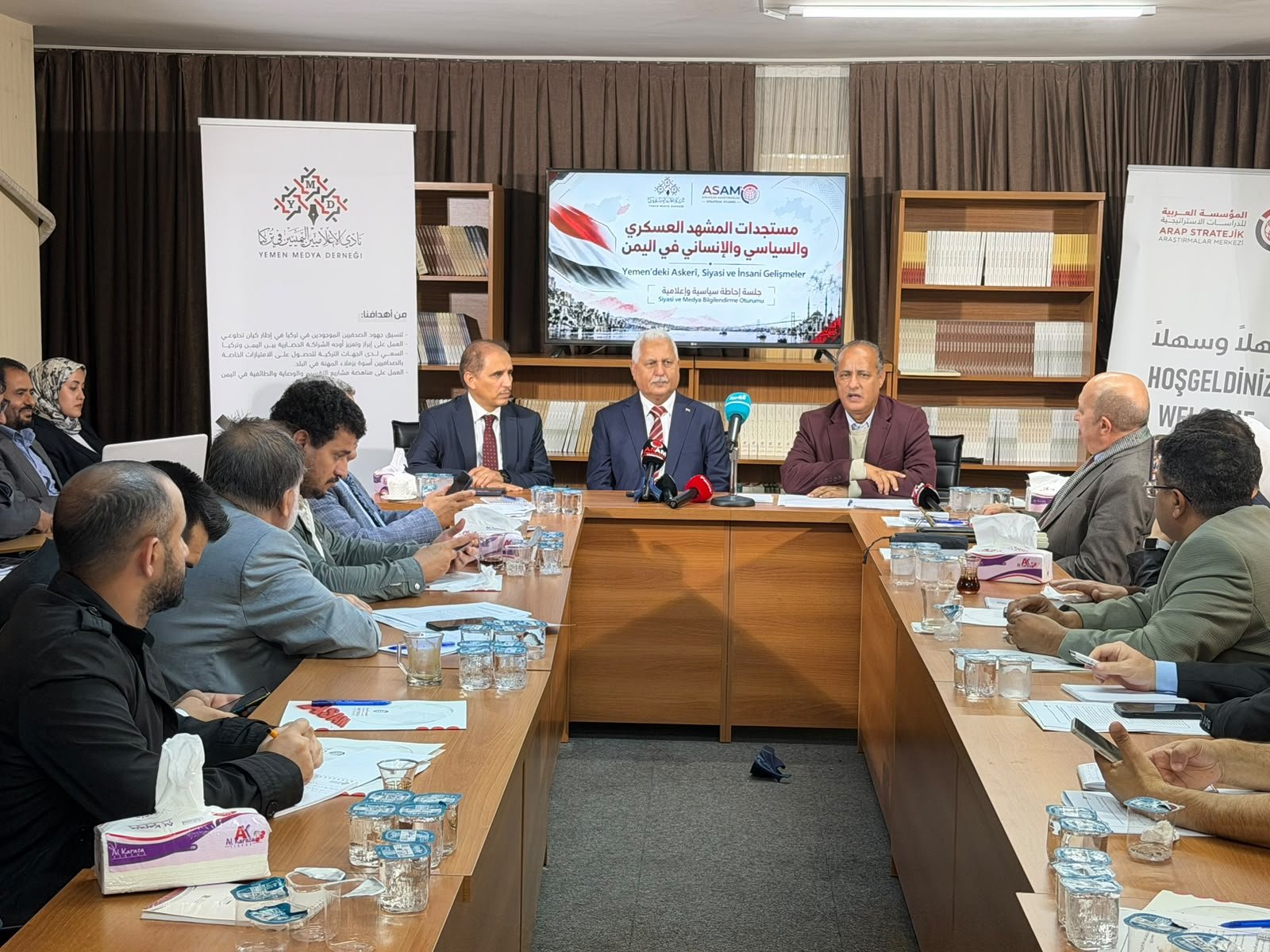
ISTANBUL, Turkey — Yemen’s ambassador to Turkey set out the aims of the government’s Fajr Yemen offensive at a news conference in Istanbul on Wednesday.
Mohammed Saleh Turaiq spoke to Turkish and Arab journalists, the state news agency Saba reported. The state broadcaster Yemen TV carried the same account.
Turaiq said the operation was a step toward restoring state institutions. He described it as “a crucial step toward restoring state institutions”, according to Yemen TV.
The ambassador said President Rashad al-Alimi announced the operation.
He said it aims to bring the whole national territory under government control and to end what he called the coup carried out by Iran-backed Houthi forces.
The Houthis reject that characterisation and describe their administration in Sanaa as the legitimate authority. Iran has denied arming or directing them.
Turaiq said the Houthis threaten maritime security in the Red Sea and the Bab al-Mandab strait. He said that carries consequences for international trade and for regional security.
He praised Saudi Arabia for political, military, economic and humanitarian support to the government.
He thanked Turkey’s leadership, government and people for backing Yemen’s unity, sovereignty and territorial integrity.
He took questions on the government’s positions and on what it describes as efforts to restore security and stability.
The account of the news conference rests on Yemeni state media. Saba and Yemen TV are both run by the internationally recognised government, and no independent confirmation of the remarks has been published.
Yemen Herald could not reach the embassy in Ankara for comment.
The news conference came during the heaviest fighting in Yemen since the truce of 2022 broke down.
Houthi forces opened an offensive along the Red Sea coast of Taiz governorate in early September, Al Jazeera reported. They took the port city of Mocha and Dhubab district.
Government forces, backed by Saudi Arabia, began a counteroffensive in early October and regained some ground, the network said.
Houthi units pressed on inland. On Oct. 4 they captured al-Turbah, severing the last main road between Taiz city and government-held areas, Al Jazeera reported.
Fuel had reached Taiz along that road from Aden. A 20-litre container of black-market petrol rose to 90,000 riyals, about 58 dollars, from 30,000 riyals, about 19 dollars, the network reported.
The European Union called on the Houthis on Wednesday to lift the siege of Taiz and allow food, water, medicine and fuel into the city. The bloc set out the demand in a post on the platform X.
Turkey has kept a diplomatic relationship with the internationally recognised government through the war. Its embassy operations for Yemen have run alongside a sizeable Yemeni community in Turkish cities.
Turaiq has used the posting to raise the government’s case in Turkish institutions. He has met the president of Turkey’s Higher Education Council on academic cooperation, and a Turkish deputy interior minister on the conditions of the Yemeni community, according to the Yemeni foreign ministry.
The ministry renders his name Turaiq. Saba and Yemen TV have used other spellings in English, including Tareq.
The war has run since 2014, when Houthi forces took Sanaa. A Saudi-led coalition intervened the following year.
Taiz governorate has been split between the two sides since 2015.
The humanitarian position has deteriorated through the year. The United Nations humanitarian plan published in March counted more than 22 million people in need of assistance.
It recorded 18.3 million people as acutely food insecure. It counted more than 2.2 million children under five as acutely malnourished, including 516,157 with severe acute malnutrition.
The plan listed 5.2 million internally displaced people. It sought 2.16 billion dollars to reach 12 million of them.
The World Food Programme has recorded some of the country’s highest levels of food insecurity in Taiz, Middle East Eye reported.
Shipping through the Bab al-Mandab strait has been disrupted since Houthi forces began attacking vessels in late 2023. Traffic through the Suez Canal, which the strait feeds, has not returned to earlier levels.
The eastern crossing from Taiz city toward Sanaa also closed, after what unnamed security sources described to Al Jazeera as attempted Houthi incursions. The Houthis had agreed to reopen it in 2024, and much of the city’s food had arrived through it.
About 2.8 million people live in the government-held parts of the governorate, said Nabil Jamil, director-general of the Taiz governorate planning and development office. He put the number of recently displaced at about 200,000.
Local authorities wrote to the United Nations asking for help and were awaiting a response, Jamil told the network.
Fifteen Yemeni and international rights organisations issued a joint statement on Sunday calling for an end to the siege and a halt to indiscriminate attacks, Middle East Monitor reported, citing Al Arabiya. They put the population of the affected districts at about 4.35 million.
The Yemeni Network for Rights and Freedoms documented 43 violations in Taiz over 24 hours and put displacement from the governorate at 172,000, Al Arabiya reported on Tuesday.
Vegetable and fruit prices in the city have doubled, Taiz resident Wafiq Saleh told Al Jazeera. He said traders held stock for several months but began raising prices as the fighting intensified.
Turaiq did not say at the news conference what further support the government is seeking from Turkey.
He did not give a timetable for the operation.
About the Author