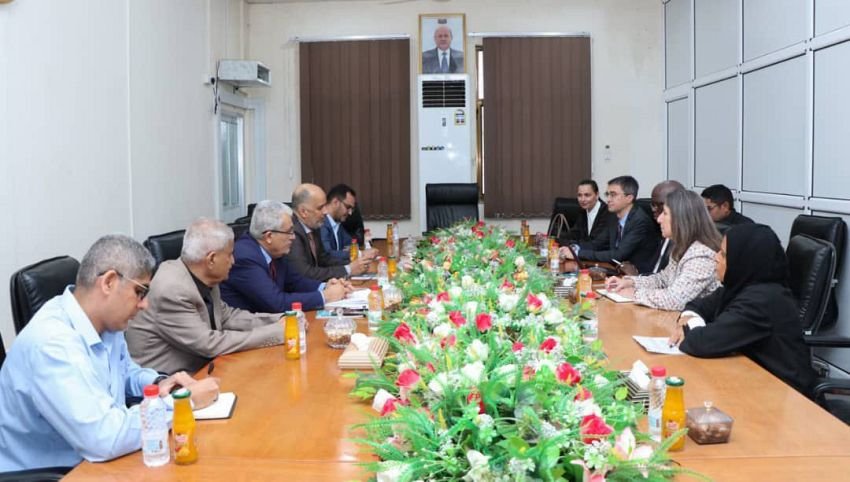
Yemen’s worsening economic crisis took center stage during high-level talks between Finance Minister Marwan Faraj bin Ghanem and Ousmane Dione, Vice President of the World Bank for the Middle East and surrounding regions. The meeting underscored the growing urgency for coordinated international support as the country grapples with mounting fiscal pressures and structural economic challenges.
A Fragile Economy Under Intensifying Pressure
Yemen’s financial system continues to face deep structural weaknesses, with public finances under strain and government revenues struggling to keep pace with rising obligations. Officials highlighted the increasing difficulty of maintaining basic state functions, including the delivery of essential services.
The discussions revealed a critical reality: economic stabilization is no longer a long-term goal—it is an immediate necessity. Without sustained intervention, the gap between available resources and public needs is expected to widen further.
Reform Efforts and Institutional Challenges
Minister bin Ghanem outlined ongoing government efforts to implement comprehensive reforms aimed at restoring fiscal balance and strengthening institutional performance. These reforms focus on:
- Improving revenue collection systems
- Enhancing transparency in public finance
- Strengthening governance frameworks
- Reducing inefficiencies across state institutions
However, progress remains constrained by limited capacity and the scale of existing challenges, making external technical and financial support essential.
Expanding Cooperation With the World Bank
The World Bank remains a key partner in Yemen’s economic recovery strategy. Current cooperation includes projects targeting:
- Modernization of public and institutional systems
- Trade facilitation and customs development
- Public finance review and restructuring
- Coordination with the International Monetary Fund on economic assessments
These initiatives are designed to address both immediate financial pressures and long-term structural inefficiencies.
Capacity Building and Long-Term Stability
A significant portion of the discussions focused on strengthening the operational capacity of Yemen’s financial institutions. Priority areas include:
- Training and development of human resources
- Upgrading financial planning systems
- Enhancing tax and customs administration
- Promoting transparency and accountability
These measures are seen as foundational steps toward building a more resilient and self-sustaining economic framework.
The Role of International Support
Minister Marwan Faraj bin Ghanem emphasized that international partnerships remain critical to navigating the current crisis. He pointed to the importance of continued backing from global institutions and regional allies, including Saudi Arabia, whose support has played a significant role in mitigating economic pressures.
The message was clear: domestic reforms alone will not be sufficient without sustained external assistance.
Outlook: Stabilization Depends on Coordination
In response, Ousmane Dione reaffirmed the World Bank’s commitment to supporting Yemen’s economic recovery. The focus remains on helping the government strengthen institutions, stabilize finances, and improve living conditions.
Yet the path forward will depend heavily on effective coordination between national authorities and international partners. Implementation—not just planning—will determine whether these efforts translate into tangible improvements.
The meeting highlights a critical juncture for Yemen’s economy. With financial pressures intensifying and reform efforts underway, the country stands at a point where timely international support and effective policy execution will shape its economic trajectory.
While challenges remain significant, strengthened cooperation with institutions like the World Bank may offer a pathway toward gradual stabilization—provided commitments are matched by concrete action.