Trump says Houthis have agreed not to fight the US as attacks on Saudi Arabia continue
 Yemen Herald News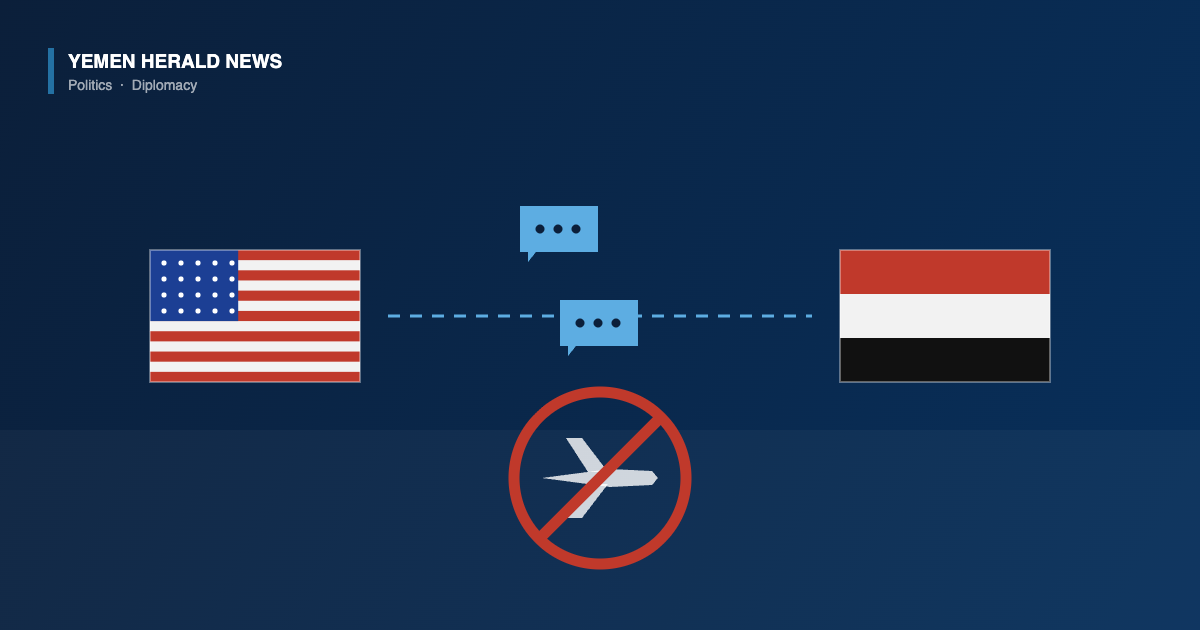
WASHINGTON, United States — President Donald Trump said Yemen’s Houthis have agreed not to attack the United States, and that Washington is in constant contact with the group.
Fox News reported the remarks on Sunday. Its correspondent Trey Yingst quoted Trump as saying the administration is in continuous communication with the Houthis and that the group had undertaken not to fight American forces or interests.
The account rests on Trump’s remarks. Yemen Herald found no independent confirmation that the Houthis have given Washington such an undertaking, and the group has issued no public comment on the statement.
It was the second time in under 10 days that Trump has described the Houthis as unwilling to fight the United States.
He told reporters in Ireland on September 12 that the group had made contact with Washington. “The Houthis called us and they don’t want to fight with us,” Trump said. “They don’t want us to go after them.”
The remarks landed as the Houthis pressed attacks on Saudi Arabia.
Saudi air defences intercepted a ballistic missile fired toward Riyadh at dawn, the Saudi military said. Houthi forces struck King Khalid International Airport on Saturday, and a fire burned at a fuel tank near the airport.
The missile attack on the Saudi capital was the first in months.
The Saudi-led coalition said separately that it downed a drone near Mecca.
Trump cut short a weekend at Camp David as the attacks unfolded.
A US embassy security alert in Israel cited the escalation between the Houthis and the Saudi-backed coalition, warning that the conflict could widen quickly.
Saudi Crown Prince Mohammed bin Salman asked Trump twice last week for American strikes on the Houthis, CNN and The Times of Israel reported. Trump declined both times.
Haaretz reported on Monday that Trump had ordered the Pentagon to prepare strikes at the crown prince’s request, then reversed the decision on Sunday as American aircraft were being readied. The White House has not addressed that account.
The administration has held its role to intelligence sharing and targeting support for Saudi Arabia, according to CNN. Direct American participation in strikes is the line it has declined to cross.
Washington has supplied Riyadh with additional intelligence and targeting data since the attacks began, CNN reported, without committing aircraft.
CNN reported frustration in Washington and Riyadh as the Houthis widened the conflict and the United States stayed out of it.
Middle East Eye reported that the two governments have no agreed plan for answering the attacks, and that the strikes exposed gaps in Saudi air defences.
American officials met Houthi representatives at the US Embassy in Muscat on September 14, Reuters and Axios reported. Oman helped arrange the meeting.
Neither side announced the meeting at the time.
Axios reported that the contacts were held as the crisis in the Red Sea deepened.
The Houthis told the officials they did not intend to attack American ships and considered themselves bound by the ceasefire they reached with Washington in May 2025, according to those reports.
They also said they would spare Israeli and other commercial vessels, excluding Saudi ones.
American forces struck Houthi targets from March to May 2025 in a campaign aimed at reopening the Red Sea to commercial traffic. Oman brokered the truce that ended it.
The Houthis began attacking merchant ships in the Red Sea in late 2023, saying the campaign was tied to the war in Gaza.
The Trump administration designates the Houthis a foreign terrorist organisation. The designation remains in force.
The administration returned the Houthis to the terrorist list in 2025, reversing a delisting made four years earlier.
The contacts follow a Houthi advance along Yemen’s Red Sea coast this month. The group took the port city of Mokha on September 10, then seized Perim Island and the Hanish Islands, Al Jazeera and Euronews reported.
Mokha is a Red Sea port that government forces had held since 2017.
The advance pushed Saudi-backed units off the coastline, Reuters reported.
The gains left the Houthis holding positions along the Bab al-Mandab strait, the southern entrance to the Red Sea.
The European Union naval mission Aspides raised its alert level in the strait this month, the bloc’s foreign policy chief, Kaja Kallas, said.
Yemen’s internationally recognised government disputes Houthi accounts of the fighting. The Houthis present their operations as a response to Saudi and American action.
The UN Security Council condemned the attacks on Saudi Arabia last week and called for de-escalation. Secretary-General Antonio Guterres and the Gulf Cooperation Council’s secretary-general, Jasem Albudaiwi, condemned them in New York.
The United Nations says about 18,000 families, roughly 125,000 people, have been displaced in Yemen since the start of September. More than 2,400 crossed the sea to Djibouti.
The UN humanitarian office said aid stocks along the coast are low and that access to several areas has been halted.
Yemen’s humanitarian response plan for 2026 counts more than 22 million people in need of assistance, including 18.3 million who are acutely food insecure.
The Houthis seized Sanaa in 2014. The war that followed has continued since.
Fighting went on in Taiz and Lahj governorates over the weekend, with both sides reporting gains.
Oman has mediated between Washington and the group before, including in the contacts that produced the 2025 ceasefire.
About the Author