Foreign Minister Afrah al-Zouba discusses resuming Kuwait Fund financing for Yemen
 Yemen Herald News
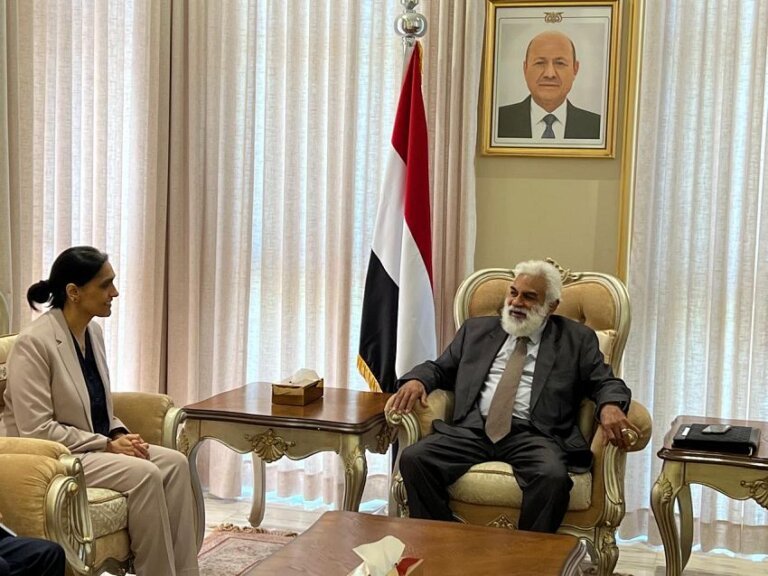
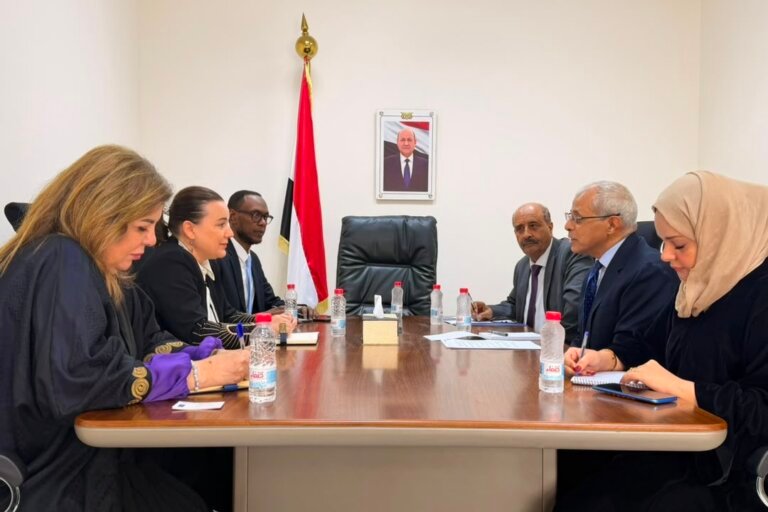
KUWAIT CITY, Kuwait — Yemeni Foreign Minister Afrah al-Zouba met the acting head of the Kuwait Fund on Tuesday to discuss resuming Kuwaiti funding for development projects in Yemen.
Her talks were with Rashid Badr, acting director-general of the Kuwait Fund for Arab Economic Development, the Yemeni state news agency Saba reported.
The two sides reviewed financial arrangements between Yemen and the Fund, according to Saba.
They also examined support for priority projects in infrastructure, health, education and basic services, the agency said, describing the discussion as tied to current needs and recovery efforts.
Al-Zouba praised the Fund’s long-running role in Yemen’s development, pointing to decades of lending that went into infrastructure and essential services, Saba reported.
Badr said the Fund remained interested in Yemen’s development needs, according to the agency.
He said it was ready to continue coordinating with the Yemeni government to study priority projects and possible areas of support, Saba reported.
Yemen’s ambassador to Kuwait, Ali Mansour bin Safaa, attended the meeting along with a number of Fund officials, the agency said.
The account of the meeting rests on Saba, the Yemeni government’s official news agency, which was the only outlet to report it. No independent confirmation of the talks or their content has been published, and Yemen Herald could not verify the account separately.
Yemen Herald could not establish from the Saba report how much money is at stake in the projects the two sides discussed, or when any disbursement might begin. Neither Saba nor the Fund published a figure for Yemen’s outstanding arrears.
Saba operates under the internationally recognised government. A rival operation using the same name publishes from Sanaa under Houthi control.
The meeting came during a visit to Kuwait in which al-Zouba also held talks with her Kuwaiti counterpart on bilateral relations and the situation in Yemen, Saba reported.
She thanked Kuwait for what she described as decades of political, developmental and humanitarian support for Yemen, according to the agency.
The Kuwaiti foreign minister restated his country’s support for the Presidential Leadership Council and the Yemeni government, and for Yemen’s unity, sovereignty and territorial integrity, Saba reported.
Saba also reported that Kuwait’s emir received a written message from Rashad al-Alimi, chairman of the Presidential Leadership Council, during the same period. The agency did not say what the message contained.
Al-Zouba has run the foreign ministry for about six weeks. A republican decree appointed her on July 23.
She succeeded Shaya al-Zindani.
Al Jazeera reported at the time of the decree that she was the first woman appointed to any of Yemen’s most senior cabinet posts.
She had served as minister of planning and international cooperation since February. That portfolio handles the government’s dealings with foreign development lenders.
Al-Zouba worked for more than 25 years in development and peacebuilding before entering government, according to reporting published when she was appointed.
She was first deputy secretary-general of the National Dialogue Conference from 2013 to 2015, and helped prepare the document setting out the conference’s conclusions.
She holds a pharmacy degree from Sanaa University, along with degrees in business administration and health economics.
Her appointment drew congratulations from Egypt’s foreign minister, Badr Abdelatty, who restated Cairo’s backing for the Yemeni government. The secretary-general of the Gulf Cooperation Council received her in early August.
The Yemeni government has said it wants to shift from dependence on humanitarian aid towards development finance. Its planning ministry set out that position again this week in separate talks in Riyadh, according to Saba.
Yemen and the Kuwait Fund signed a bilateral agreement in February 2025 on financial arrangements, the resumption of Kuwaiti-funded projects and the rescheduling of arrears owed to the Fund, Yemen Monitor reported.
That agreement was meant to reschedule overdue interest and instalments and ease Yemen’s debt burden to the Fund, according to the same report.
The sectors named at the time were electricity and energy, education and public works.
It was signed for Yemen by Waed Badheeb, then minister of planning and international cooperation, and for the Fund by Walid Shamlan al-Bahr, then its acting director-general, Yemen Monitor reported.
The Presidential Leadership Council, which al-Alimi chairs, was formed in April 2022 and is the body recognised internationally as Yemen’s government. It took over from President Abd Rabbu Mansour Hadi, who transferred his powers to it.
The UN Office for the Coordination of Humanitarian Affairs said in its humanitarian needs and response plan for 2026, issued in March, that more than 22 million people in Yemen need assistance.
The plan put the number of acutely food insecure people at 18.3 million.
More than 2.2 million children under five are acutely malnourished, of whom 516,157 are severely malnourished, according to the plan.
It recorded 5.2 million internally displaced people, and sought $2.16 billion to reach 12 million people.
The Kuwait Fund was established in 1961. It was the first development institution in the Middle East set up by a developing country, and lends to governments and public bodies.
The Fund has extended 1,037 concessional loans to governments over six decades, with a total value of about 7 billion Kuwaiti dinars, according to figures it published this year. That total covers all recipient countries, not Yemen alone.
About the Author