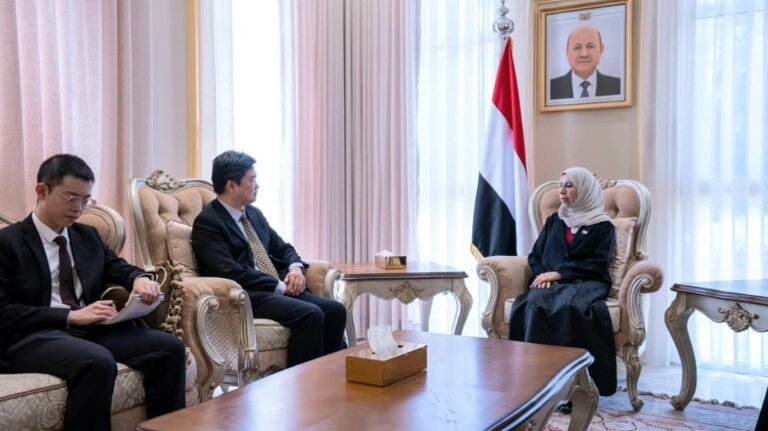
Foreign Minister Afrah al-Zouba says Yemen is not a bargaining chip for Iran
 Yemen Herald News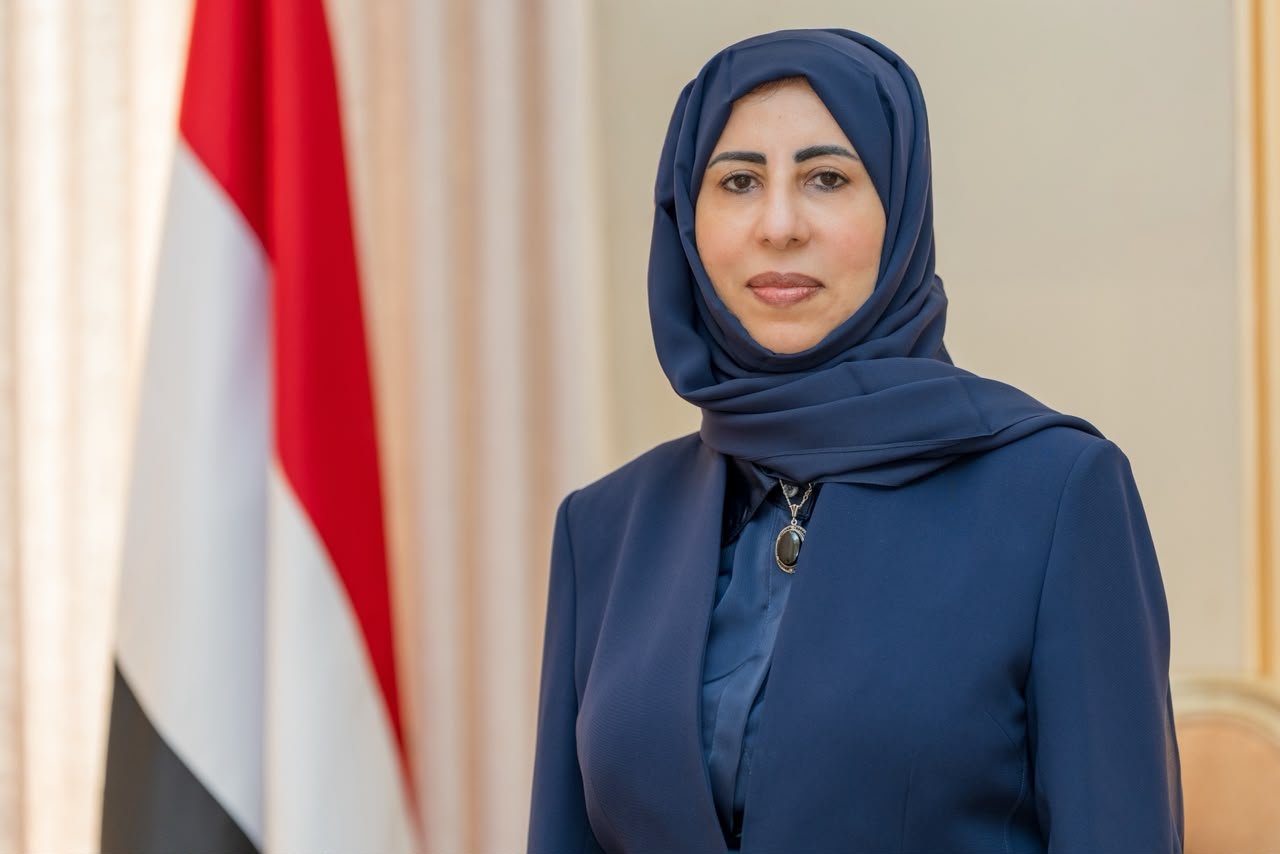
ADEN, Yemen — Yemen’s foreign minister said the government will keep working to restore state institutions and secure its territory and waters despite the Houthi advance on the western coast.
Afrah al-Zouba told the Russian news agency Sputnik that events on the coast do not give the Houthis the right to impose a fait accompli by force, the state news agency Saba reported on Saturday.
The account of her remarks rests on Saba’s English report of that interview. No independent transcript has been published, and the Houthi administration in Sanaa disputes the government’s description of the fighting.
Al-Zouba said restoring state institutions is essential to Yemen’s security, to regional stability and to safety at sea.
She said the government was handling recent developments by correcting shortcomings, protecting civilians, supporting affected people and strengthening institutions.
She described the government’s approach as “integrated deterrence”, combining military, diplomatic, humanitarian and institutional work.
On the Red Sea and Bab al-Mandab, al-Zouba said the threat went beyond disrupting navigation to attempts to set conditions on maritime freedom and security.
Military control of territory does not confer the right to control maritime traffic, she said.
She called for closer cooperation on maritime security, port protection, coast guard capabilities, action against smuggling and enforcement of the arms embargo.
Al-Zouba praised Saudi Arabia’s support for Yemen and described the partnership as rooted in shared interests and regional security.
She welcomed Russia’s position at the UN Security Council on freedom of navigation and its rejection of attacks on commercial ships.
She said the crisis began with the Houthi takeover of state institutions in 2014, which she called a coup, and that Yemen’s future must be settled by Yemenis through their own political process.
“Yemen is not compensation for anyone’s loss on another battlefield, a venue for settling scores, or a bargaining chip for improving the regional negotiating position of any regional power,” she said.
She said Iranian support strengthens Houthi military capabilities and uses Yemen’s location to threaten neighbouring countries and shipping routes. The Houthis reject that account of their ties with Tehran.
Al-Zouba said lasting stability requires ending the takeover, restoring institutions and safeguarding Yemen’s unity, sovereignty and territorial integrity, citing UN Security Council Resolution 2216.
She said future arrangements would require verifiable commitments, with state institutions holding a monopoly on arms and on sovereign decisions.
Resolution 2216, adopted in April 2015, imposed an arms embargo aimed at the Houthi leadership and demanded the group give up territory it had seized.
Al-Zouba took the post in July 2026. She is the first woman to serve as Yemen’s foreign minister.
Her remarks follow three weeks of fighting that redrew the map of the western coast.
Houthi forces pushed south through southern Hodeidah in early September, taking Hays and Khokha before entering Mokha, which government forces and the National Resistance left to reposition, Yemen Monitor reported.
The International Organization for Migration said about 46,000 people had fled by 11 September. Later in the month it put the number who had left their homes at close to 105,000.
The shelter and site coordination cluster tracked roughly 15,400 newly displaced households by 13 September and said the figures were changing from day to day.
The cluster said the Taiz-Mokha road had been disrupted, the main road to Maqbanah was blocked and there were clashes on the road between Mokha and Aden. Telecommunications outages were hampering verification.
Members of the UN Security Council renewed their support for the Yemeni government and pressed for full implementation of Resolution 2216, Saba reported.
The council condemned Houthi attacks on Saudi Arabia, saying they had struck civilian and energy infrastructure and injured civilians, including women and children.
It called for cooperation to stop the group acquiring arms, training and financing, and said all states must enforce the embargo.
Saudi Arabia accused the Houthis on Wednesday of targeting Mecca, calling it a “cowardly terrorist attack”. The group denied it, describing the accusation as a “worn-out lie”.
The Yemeni Network for Rights and Freedoms said it documented 958 violations between 3 and 11 September in Hays and Khokha in Hodeidah and in al-Wazi’iyah, Mawza, Mokha and Dhubab in Taiz.
The group said raids affected 356 homes and facilities that were stormed or looted, among them 11 government facilities. Those counts come from one monitoring group.
Yemen’s Human Rights Ministry accused Houthi forces on 18 September of attacking and looting Saudi-funded humanitarian and medical facilities on the western coast. The Houthi authorities have not answered that accusation publicly.
The World Health Organization says about 60 per cent of health facilities in Yemen are fully operational.
The United Nations humanitarian plan for 2026 puts more than 22 million people in need of assistance, with 18.3 million acutely food insecure and more than 2.2 million children under five acutely malnourished.
The plan counts 5.2 million internally displaced people and seeks $2.16 billion to reach 12 million of them.
Yemen Monitor reported that Houthi technical teams had been sent to Mokha, Khokha, Hays and Dhubab to reconnect those areas to networks run from Sanaa, and that Starlink terminals were being confiscated.
Saba published its English account of the interview at midday on Saturday.
About the Author