Houthi Mortar Fire Wounds Displaced Civilian at Hodeida IDP Camp
 Yemen Herald News
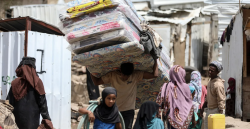
A camp for internally displaced people in the al-Haymah area, south of Yemen’s Hodeida governorate, came under mortar fire from Houthi forces, wounding at least one civilian and spreading panic among families who had already fled their homes once before. According to local sources, the bombardment struck the al-Tuhaita district and involved three mortar shells that landed in and around the settlement, where many of the residents are women and children living in makeshift shelters with little protection from the violence that continues to scar the country’s Red Sea coast.
One man, identified by local sources as Abdulmajid Abdullah Ali Nahari, was seriously wounded when shrapnel tore into his abdomen and lower chest. He was rushed to the al-Khawkha field hospital for emergency treatment. The shelling caused acute distress across the camp, particularly among children who have grown up amid the sounds of war, and it renewed longstanding fears that sites sheltering displaced families are neither safe nor spared from the front lines that run close to their tents.
Hodeida has long been one of the most sensitive theatres of Yemen’s conflict. The governorate’s Red Sea ports are a lifeline for a country that imports the overwhelming majority of its food, fuel and medicine, and control of that coastline has been fiercely contested since the war escalated in 2015. The al-Tuhaita and al-Khawkha districts, on the southern stretch of the Hodeida coast, sit near the shifting boundary between areas held by the Houthi movement and those controlled by forces aligned with the internationally recognised government, leaving the civilians between them dangerously exposed.
The targeting of an IDP camp underscores a grim feature of the war: those who have already lost the most remain acutely vulnerable. Yemen is home to one of the largest displacement crises in the world. The United Nations estimates that around 5.2 million people remain internally displaced, many of them uprooted multiple times and now living in informal camps that lack reliable water, sanitation, healthcare or shelter capable of withstanding either the weather or the fighting.
Efforts to calm the situation around Hodeida date back to the Stockholm Agreement of December 2018, which produced a fragile ceasefire covering the city and its ports and was intended to avert a catastrophic battle for the area. While that understanding helped avert a full-scale assault and kept the ports functioning, sporadic shelling, sniper fire and skirmishes have persisted along the governorate’s front lines in the years since, repeatedly endangering civilians and undermining hopes for a durable calm.
The attack lands against the backdrop of a humanitarian emergency that shows little sign of easing. Aid agencies project that some 22.3 million people, roughly half the population, will require humanitarian assistance and protection in 2026, while more than 18 million are acutely food insecure. Around 14.4 million people are expected to need water, sanitation and hygiene support, needs that are especially acute in displacement sites where overcrowding and damaged infrastructure heighten the risk of disease outbreaks such as cholera.
International humanitarian law obliges all parties to a conflict to distinguish between combatants and civilians and to take every feasible precaution to spare non-combatants. Camps for displaced families, populated overwhelmingly by people with no role in the fighting, fall squarely within the category of protected civilian sites. Rights groups have repeatedly warned that indiscriminate shelling near such settlements may amount to violations of those obligations, and they have called for independent investigations into incidents that kill or maim civilians.
For humanitarian organisations operating in Hodeida, incidents like the al-Haymah shelling complicate an already difficult task. Insecurity restricts the movement of aid workers, drives up the cost of delivering assistance and can force the temporary suspension of programmes on which thousands depend. Each escalation also deepens the trauma carried by displaced families, many of whom have endured years of upheaval and now face the prospect of being uprooted yet again if the violence around their shelters intensifies.
Much of northern Yemen, including the city of Hodeida and its main ports, has remained under the control of the Houthi movement since the group seized the capital, Sanaa, in 2014 and pushed into surrounding regions the following year. The southern districts of the governorate, by contrast, are held by forces loyal to the internationally recognised government, and the front lines dividing them have proved stubbornly difficult to stabilise. It is along these seams that displaced families have gathered, often because the land is available and cheap, only to find themselves within range of the very weapons they fled.
The United Nations Mission to Support the Hodeida Agreement, deployed to monitor the 2018 ceasefire, has documented repeated violations along the coast, and aid officials say the psychological toll on children in the camps is particularly severe. Many have known nothing but conflict, and each new burst of shelling reinforces a sense that nowhere is truly safe. Humanitarian workers argue that lasting protection will come only through a negotiated settlement, and they continue to press all parties to keep civilian sites well away from military activity.
Local authorities and aid workers continue to call for restraint and for stronger protection of civilian sites, but with the wider political process stalled, displaced Yemenis remain caught between competing armed forces. Until a comprehensive and durable settlement takes hold, the safety of camps like the one in al-Haymah will depend on the fragile and often unreliable calm along Yemen’s contested front lines, leaving some of the country’s most vulnerable people exposed to the next round of shelling.
About the Author