IMO Council condemns Houthi attacks on merchant ships as Aden calls for anti-piracy pact
 Yemen Herald News
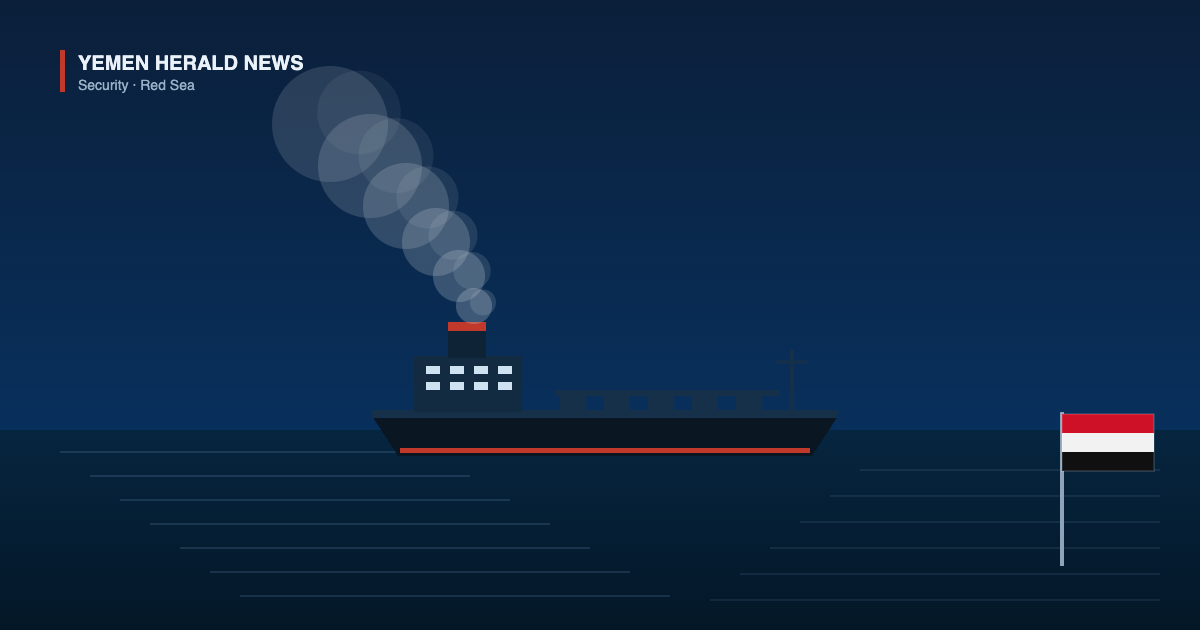
LONDON, United Kingdom — The International Maritime Organization’s governing Council condemned Houthi attacks on merchant ships in the Red Sea, and Yemen’s government welcomed the decision four days later.
The Council acted at its 138th session, held at the organization’s London headquarters from Nov. 2 to Nov. 6.
Its decision condemned attacks on merchant and commercial vessels and their crews in the Red Sea and the Bab al-Mandab Strait, and named the Houthis as responsible, according to accounts of the session published by Cyprus Shipping News and gCaptain.
A third account, published by Safety4Sea on the day the session closed, described the same condemnation without naming the Houthis.
The Council also condemned attacks by the Russian Federation on merchant vessels and on Ukraine’s special maritime corridor, those accounts said.
It called on member states to refrain from unlawful measures that would place seafarers and shipping at risk.
Yemen’s minister of transport, Mohsen al-Omari, welcomed the condemnation in a statement carried Nov. 10 by Saba, the state news agency of the internationally recognized government seated in Aden.
Al-Omari called for the Djibouti Code of Conduct, a regional agreement against piracy and armed robbery at sea, to be activated, Saba reported.
His statement referred to the Red Sea, the Bab al-Mandab Strait, the Gulf of Aden and the western Indian Ocean.
Yemen is administered by two rival authorities. The government that issued the statement sits in Aden. Houthi-run institutions administer the north, including the capital, Sanaa.
The IMO has verified at least 130 attacks on commercial vessels in the region since the conflict began, according to figures attributed to the organization in the trade accounts of the session.
The organization has not published a start date for that count, so the period it covers is not established.
It also counts 25 seafarer deaths. The published accounts differ on what that figure covers.
Cyprus Shipping News and gCaptain describe it as spanning the conflict in the Middle East. Safety4Sea ties it to the conflict in the Strait of Hormuz.
Neither framing is reconciled in those accounts, and the IMO’s own definition of the period has not been published.
The most recent of those deaths followed an attack on the Velos Sapphire, a Marshall Islands-flagged tanker, in the Strait of Hormuz on Nov. 5, Safety4Sea reported. The crew member killed was Filipino.
Accounts of the cause differ. Some maritime outlets described a suspected missile strike. Others reported that tankers in the strait had struck mines.
“Seafarers continue to lose their lives, suffer serious injuries,” IMO Secretary-General Arsenio Dominguez said in closing remarks on Nov. 6.
The Council directed Dominguez to keep monitoring developments, gCaptain reported.
The agreement al-Omari wants activated was adopted on Jan. 29, 2009, by Djibouti, Ethiopia, Kenya, Madagascar, Maldives, Seychelles, Somalia, Tanzania and Yemen, according to MarineLink. Eleven further states joined later.
Signatories to the Code and its Jeddah Amendment agreed this year to establish a combined task force against piracy in the western Indian Ocean and the Gulf of Aden.
The recommendation was agreed at an extraordinary meeting of the Code’s steering committee on July 29 and endorsed by its national focal points on Aug. 5, MarineLink reported. The task force’s composition has not been determined.
Pirates operating off Somalia typically strike in the Gulf of Aden between Somalia and Yemen, Africa Defense Forum reported on Nov. 10.
The IMO recorded 17 attempted and actual cases of piracy and armed robbery in the western Indian Ocean and the Gulf of Aden since the start of 2026, the accounts of the session said. Saba cited the same figure, attributing it to the session’s proceedings.
A separate figure attributed to the organization puts 24 piracy incidents in the Red Sea and the Gulf of Aden between April and June, according to SupplyChainBrain. That count covers a different area over a shorter period, and no reconciliation of the two has been published.
The IMO dates the campaign against shipping to November 2023, when the Houthis seized the vehicle carrier Galaxy Leader, according to a press briefing on the organization’s website.
Its Maritime Safety Committee adopted what that briefing describes as the first resolution by IMO member states on the attacks, at the committee’s 108th session in London. The briefing carries no year.
The resolution stated that the Houthis’ actions were putting innocent lives at risk, the briefing says. The committee called for the immediate and unconditional release of the Galaxy Leader’s 25 crew members.
The committee also urged any party with influence over the Houthis to use it to seek an end to the attacks.
That briefing names the Red Sea and the Gulf of Aden. The Council decision this month named the Bab al-Mandab Strait as well.
The briefing states that all 176 IMO member states are obliged to prevent the direct or indirect supply of arms and related materiel to the Houthis under a targeted UN arms embargo.
The Council reaffirmed the principles of resolution C.81(137), Safety4Sea reported.
It recommended renewing Dominguez’s mandate to Dec. 31, 2031, a decision that falls to the organization’s 35th Assembly.
The Council set its next session for July 19 to July 23, 2027.
About the Author


 Adel Haddad