Iran Said US and Israeli Strikes Hit Natanz as the IAEA Reported No Radiation Rise
 Yemen Herald News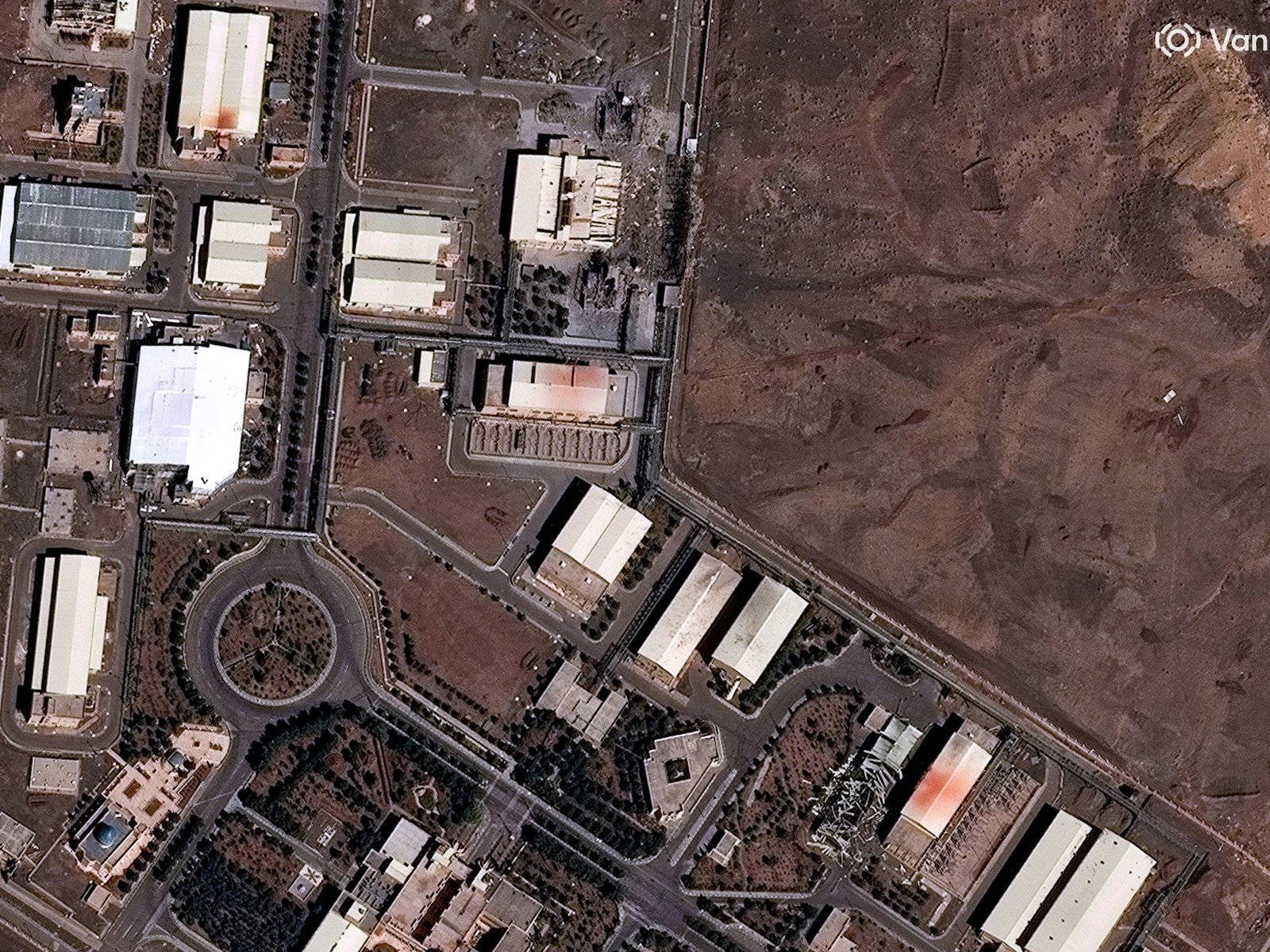
Iran said that United States and Israeli forces struck the Natanz uranium enrichment complex on 21 March 2026, the first day of Nowruz, in what the Atomic Energy Organisation of Iran described at the time as a criminal attack by the two countries. The statement was carried by the Tasnim news agency and referred to the Shahid Ahmadi Roshan facility, roughly 220 kilometres southeast of Tehran.
Iranian officials said no radioactive material had leaked from the site and that people living nearby were not in danger. Iran’s nuclear regulatory authority reported that the strikes began at about 9:30 local time and involved both aircraft and missiles, and it notified the International Atomic Energy Agency the same day.
The IAEA confirmed that it had been informed and said its monitoring showed no increase in off-site radiation levels. Rafael Grossi, the agency’s director general, repeated a call for military restraint to avoid any risk of a nuclear accident, a phrase he used repeatedly through the war whenever nuclear installations were reported to have been hit.
Natanz is the centrepiece of Iran’s enrichment programme. Its centrifuge halls, part of them built below ground and protected by concrete and earth cover, have long been the country’s main site for producing enriched uranium. The complex had already been struck once before, during the twelve-day exchange between Iran and Israel in June 2025, and it was hit again in the opening week of the 2026 war.
That earlier strike in the 2026 campaign had drawn a similar sequence of statements. Iran reported on 2 March that the underground enrichment plant had been attacked, and the following day the IAEA said it had observed recent damage to buildings at the entrances to the site, while again finding no radiological impact outside the perimeter.
The war had begun on 28 February 2026, after talks between Washington and Tehran collapsed. The United States and Israel opened a joint air and missile campaign that killed Iran’s supreme leader along with other senior figures, destroyed a large number of military and government targets, and caused civilian casualties. The American component was designated Operation Epic Fury.
The White House said at the time that one of the campaign’s central objectives was to ensure Iran never acquired a nuclear weapon, alongside stated aims of destroying its ballistic missile arsenal and production capacity and severing its support for allied armed groups across the region.
Grossi’s own assessment sat awkwardly beside that framing. He said the agency’s inspectors had not found evidence of a coordinated Iranian programme to build a nuclear weapon. At the same time he confirmed that Iran had enriched uranium to 60 percent purity, a level far above what civilian power generation requires and one that narrows the technical distance to weapons-grade material.
Israel’s defence minister, Israel Katz, said in the days around the Natanz strike that the intensity of operations against Iran would increase, describing the targets as the Iranian government and the infrastructure supporting it. Iranian officials in turn characterised the attacks on nuclear installations as violations of international law and demanded that the IAEA condemn them.
Natanz sits within a wider network of Iranian nuclear sites that includes the deeply buried Fordow enrichment plant and the Isfahan conversion facility, and the enrichment question had been at the centre of diplomacy with Tehran for two decades. The collapse of the negotiating track in February 2026 removed the mechanism through which earlier disputes over inspections and stockpiles had been managed.
Iran answered with missile salvoes at Israel. Between 28 February and 4 March alone, more than ninety attempted Iranian strikes on Israel were recorded, with around twenty reaching civilian areas and at least ten people killed. The heaviest single loss came on 1 March, when a strike on a residential neighbourhood in Beit Shemesh killed nine civilians.
The fighting spread quickly beyond the two principals. Hezbollah began launching missiles and drones into Israel from Lebanon on 2 March, and Israeli air strikes reached as far north as the southern suburbs of Beirut. A limited Israeli ground operation in southern Lebanon began on 17 March, and on 24 March Katz announced a plan for Israeli forces to hold territory up to the Litani River.
Yemen was drawn in as well. The Houthi movement launched its own strikes toward Israel during the same period, continuing a pattern established after 2023, and shipping in the Red Sea and the Gulf of Aden operated under heightened risk throughout the conflict. For Yemeni traders and aid agencies, the practical consequences were higher freight and insurance costs on the routes that supply the country.
Attacks on operating nuclear facilities remain among the most contested actions in the laws of armed conflict, and the IAEA has consistently warned that striking them risks a radiological release that no belligerent could control. Grossi’s repeated appeals during the war reflected that concern rather than any judgement on the wider merits of the campaign.
The war ran for more than five weeks. The United States and Iran agreed a ceasefire on 7 and 8 April 2026 that also covered Israel, and Iran accepted the reopening of the Strait of Hormuz. What remains unresolved from the Natanz strikes is the state of the enrichment programme itself: with inspectors’ access disrupted by the fighting, the extent of the damage below ground was not independently established at the time.
About the Author