Israeli Airstrike Claims Life of Gaza Police Colonel, According to Palestinian Medical Sources
 Yemen Herald News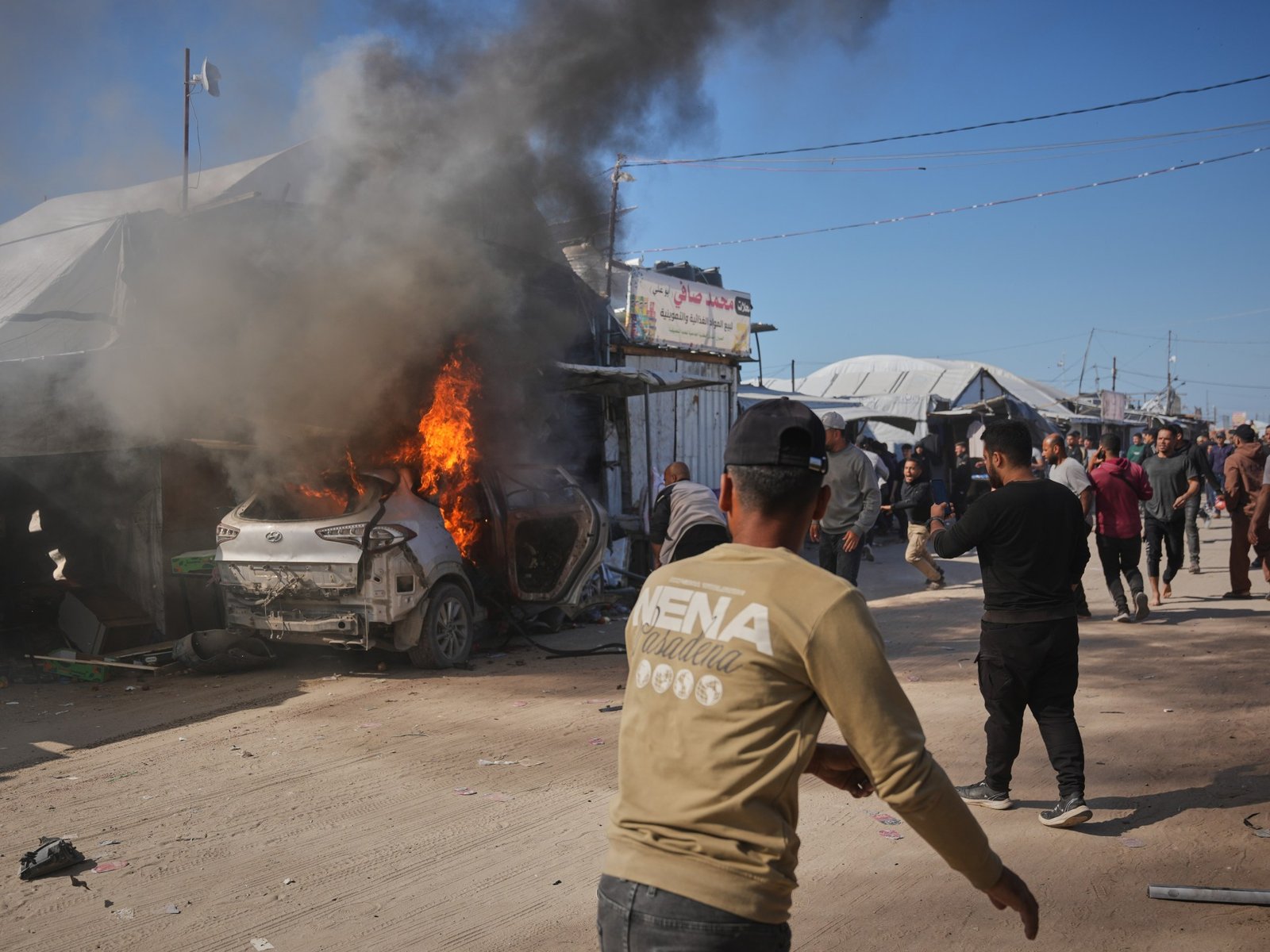
The Escalating Violence in Gaza: A Dangerous Precursor to Regional Instability
The recent Israeli airstrike that killed Colonel Naseem al-Kalazani, a senior officer in Gaza’s police force, is not just another tragic incident in a long history of conflict; it represents a significant escalation in hostilities that could have far-reaching implications for the region. This targeted attack underscores the fragility of the current ceasefire and the potential for renewed violence that could destabilize not only Gaza but also the broader Middle East.
Context and Background
The Israeli-Palestinian conflict has been a focal point of geopolitical tension for decades, with Gaza often serving as the epicenter of violence. Following the October 2023 outbreak of hostilities, which has been described by many as a genocidal war, the situation in Gaza has deteriorated dramatically. The ceasefire brokered by the United States was intended to provide a respite from violence, yet it has proven to be tenuous at best. The killing of al-Kalazani, who led the anti-narcotics force in Khan Younis, is emblematic of Israel’s ongoing military strategy to target key figures within Hamas and other militant groups, further complicating an already volatile situation.
Key Developments
<pThe airstrike that claimed al-Kalazani's life also injured at least 17 others, indicating a blatant disregard for civilian safety and a continuation of Israel's aggressive military tactics. This incident is part of a broader pattern of violence, as evidenced by the deaths of at least three other Palestinians in Gaza City on the same day. The Israeli government has justified these strikes as necessary measures to prevent attacks against its forces, yet the reality on the ground paints a different picture—one of escalating violence and humanitarian crisis. The recent uptick in attacks comes despite the supposed ceasefire, which has seen over 830 Palestinians killed since its implementation, raising serious questions about the efficacy and sincerity of the agreement.
Impact Analysis
The implications of this targeted killing extend beyond immediate casualties. Politically, it signals a breakdown of trust between the parties involved and raises the stakes for future negotiations. The Israeli security cabinet’s discussions about renewing military operations in Gaza reflect a growing impatience with Hamas’s refusal to disarm unconditionally. Economically, the ongoing violence exacerbates the humanitarian crisis in Gaza, where aid flows remain insufficient to meet the needs of the population. The United Nations has reported deteriorating conditions, with over 72,500 Palestinians killed since the onset of the conflict, highlighting the dire need for a sustainable resolution.
Strategic Insight
From a strategic standpoint, the assassination of a high-ranking official like al-Kalazani could be seen as a calculated move by Israel to undermine Hamas’s operational capabilities. However, such actions risk inflaming tensions further, potentially leading to a cycle of retaliation that could engulf the region. The insistence of Hamas on linking disarmament to the establishment of a Palestinian state reflects a fundamental shift in their strategy, indicating a willingness to engage in negotiations but also a firm stance against unilateral disarmament. This presents a significant challenge for Israeli policymakers, who must navigate the complexities of military action while addressing the political realities on the ground.
Looking ahead, several scenarios could unfold. If Israel continues its military operations, it risks provoking a larger conflict that could draw in regional actors, including Iran and other militant groups sympathetic to the Palestinian cause. Conversely, if diplomatic efforts are made to address the underlying issues, there may be a chance for a more stable ceasefire. However, the current trajectory suggests that violence will likely escalate, with both sides entrenched in their positions. The international community must act decisively to mediate and prevent further bloodshed, but the political will to do so appears lacking.
Conclusion
The assassination of Colonel Naseem al-Kalazani is a stark reminder of the volatility that defines the Israeli-Palestinian conflict. As violence continues to spiral, the prospects for peace diminish, and the potential for regional instability grows. The international community must recognize the urgency of the situation and take meaningful steps to facilitate dialogue and address the humanitarian crisis in Gaza. Without such intervention, the cycle of violence is poised to continue, with devastating consequences for all involved.
About the Author