Yemen Presses for Sustainable Agriculture at FAO Conference
 Yemen Herald News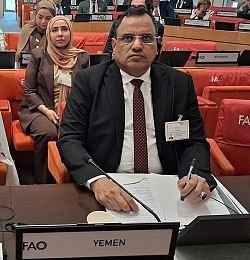
Yemen has pressed for sustainable agriculture at an FAO regional conference on food security, in a step that reflected the country’s profound food insecurity and its need for a more resilient agricultural framework. Yemen’s participation in the session of the Food and Agriculture Organization’s Regional Conference for the Near East underscored the importance of agriculture to a nation contending with a severe and multifaceted crisis.
Yemen stands at the intersection of humanitarian, economic and other challenges, and its agricultural sector, crucial to the livelihoods of millions, has been devastated by years of conflict. With much of the population reliant on assistance, the need for a sustainable agricultural framework capable of strengthening food security has become increasingly pressing.
The FAO’s Regional Conference for the Near East serves as a platform for countries of the region to address agricultural and food security issues. Yemen’s participation reflects its engagement with the international effort to address these challenges and its interest in advancing sustainable agriculture as a means of strengthening food security and resilience.
Agriculture has long been central to Yemeni society and a source of livelihood for a large share of the population, particularly in rural areas. The health of the sector has direct implications for employment, incomes and the availability of food, making its revival and sustainability important to both the economy and the humanitarian situation.
The devastation of the agricultural sector during the conflict has been profound. Fighting has damaged infrastructure, disrupted supply chains and displaced farmers, while the collapse of the economy has raised the cost of inputs such as fuel, seeds and fertiliser, undermining production and deepening food insecurity across the country.
Food insecurity remains among the gravest dimensions of Yemen’s crisis. With large numbers of Yemenis unable to secure adequate food, the risk of malnutrition and its consequences looms over the population, and strengthening domestic agricultural production is regarded as an important means of easing this pressure.
The emphasis on sustainable agriculture reflects a recognition that the revival of the sector must be pursued in ways that do not deplete the country’s already fragile resources. Sustainable practices, including efficient water use and the protection of land, are essential to ensuring that gains in production can be maintained over time.
Water scarcity is among the most significant challenges facing Yemeni agriculture. The country ranks among the most water-stressed in the world, and much of its farming depends on increasingly depleted groundwater, making the sustainable management of water central to the future of agriculture and to the strengthening of food security.
The reliance of much of the population on assistance underscores the stakes of strengthening agriculture. Reviving domestic production could help reduce dependence on imports and aid, easing the pressure on households and contributing to food security, and the pursuit of a sustainable agricultural framework is central to this goal.
The FAO, as the United Nations agency focused on agriculture and food security, plays an important role in supporting efforts to address these challenges. Its regional conference provides a forum for engagement and cooperation, and Yemen’s participation reflects its interest in drawing on the agency’s expertise and in advancing its priorities.
The regional dimension of the conference reflects the shared interest of countries of the Near East in addressing agricultural and food security challenges. Many countries of the region face pressures related to water scarcity, climate change and food security, and cooperation on these issues can support efforts to strengthen resilience across the region.
The pursuit of a sustainable agricultural framework encompasses a range of considerations, from water management and the protection of land to the support of farmers and the development of resilient practices. Addressing these interlocking challenges is a demanding undertaking, and cooperation with partners such as the FAO can support the effort.
The connection between sustainable agriculture and stability, reflected in Yemen’s participation, underscores the significance of the sector. A functioning and sustainable agricultural sector supports livelihoods and food security, both of which are essential to stability, and its revival is bound up with the broader recovery of the country.
The effects of climate change add urgency to the pursuit of sustainable agriculture. Rising temperatures and increasingly erratic rainfall threaten to intensify the pressures on agriculture and water, and building resilience to these changes is important to safeguarding food production and the livelihoods that depend on it.
Realising the goals of sustainable agriculture will depend on resources, sustained effort and the trajectory of the conflict. Strengthening the sector and building resilience are long-term undertakings, and progress will require attention to the many dimensions of the challenge as well as favourable conditions and international support.
Yemen’s engagement in such forums also reflects a longer-term calculation about the country’s food future. Decades of dependence on imports left it acutely exposed to the disruptions the war would later bring, and officials have increasingly spoken of the need to rebalance toward greater domestic production, not in the illusory hope of self-sufficiency, but as a buffer against the shocks that a heavily import-reliant food system transmits so readily. Advancing that agenda requires the kind of patient investment in irrigation, seeds, research and rural markets that regional cooperation and the technical support of bodies such as the FAO are well placed to assist, even as the immediate imperative remains the relief of a population much of which cannot reliably feed itself.
For now, Yemen’s participation in the FAO conference and its emphasis on sustainable agriculture reflected the importance of the sector to the country’s food security and recovery. As Yemen contends with profound food insecurity, the pursuit of a sustainable agricultural framework remains central to its efforts to strengthen resilience and to address the needs of its population.
About the Author