

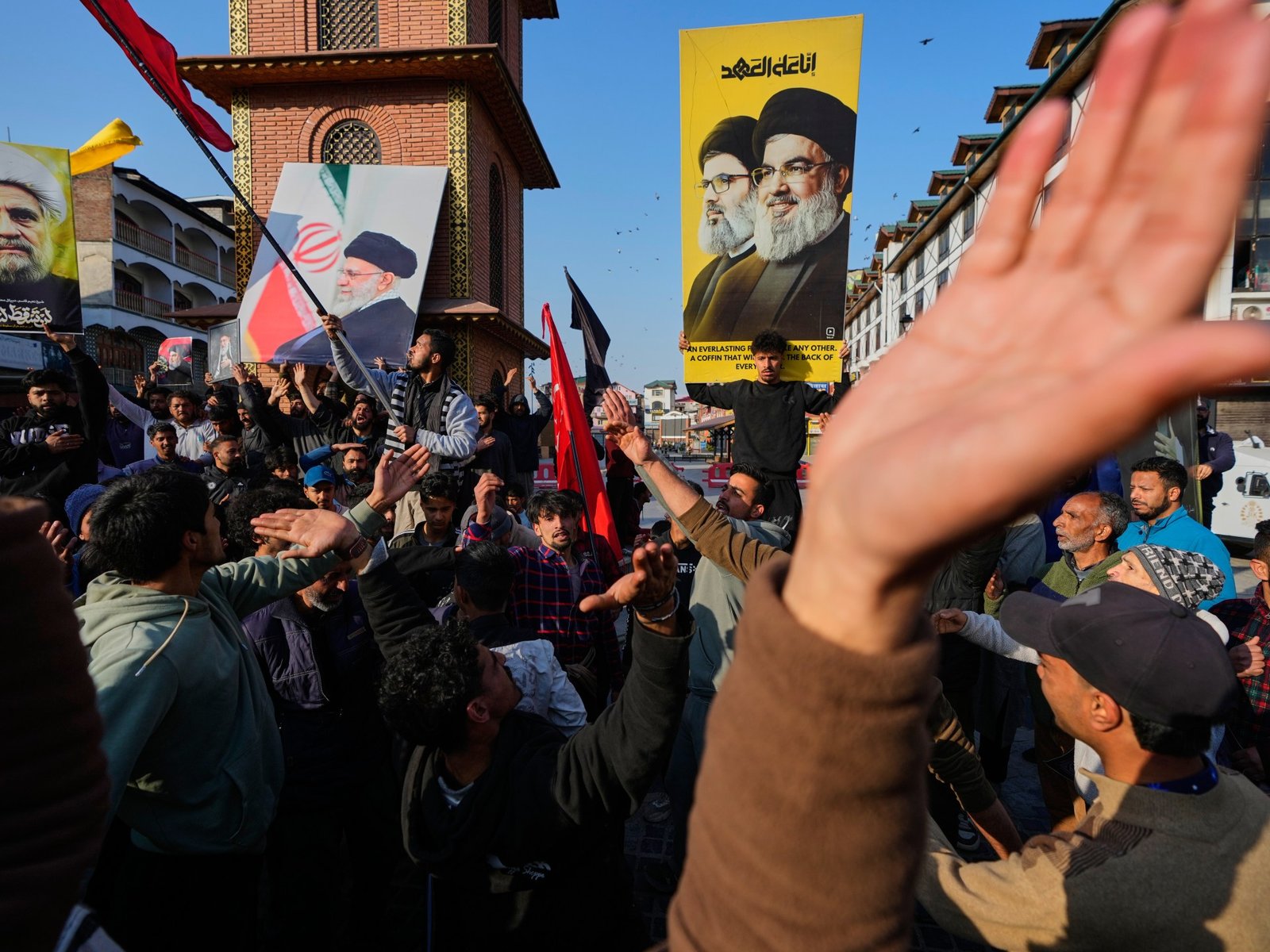
The assassination of Iranian Supreme Leader Ali Khamenei in a U.S.-Israeli airstrike has significantly disrupted the operational cohesion of Iran’s “axis of resistance,” a coalition of allied groups that has historically served as Tehran’s frontline defense in the Middle East. This event has left the alliance fragmented, with its leadership decimated and logistical support severely compromised, leading to a chaotic situation where individual factions are now fighting for their own survival rather than as a unified force.
In the wake of Khamenei’s death, Iranian Foreign Minister Abbas Araghchi asserted that Iran does not rely on its proxies for defense, claiming, “We can defend ourselves by ourselves.” However, this statement contrasts sharply with the actions of Hezbollah, Iran’s most powerful proxy, which has escalated its military operations against Israel in response to Khamenei’s assassination. Analysts suggest that Hezbollah’s recent rocket attacks on northern Israel are driven by an existential fear of being the next target, indicating a shift from solidarity with Iran to a focus on self-preservation.
The Houthis in Yemen are also grappling with the implications of the assassination. Their leader, Abdel-Malik al-Houthi, has expressed readiness for conflict while emphasizing Iran’s strength, a move interpreted as an attempt to deflect the burden of war from the Houthis themselves. With the Yemeni government gaining momentum against the Houthis, the group faces a precarious situation, balancing the need for solidarity with Iran against the risk of losing control over their territory.
In Iraq, the situation is particularly precarious as Iran-aligned militias, which are part of the state-sanctioned Popular Mobilization Forces, find themselves in a direct confrontation with U.S. forces. The absence of key Iranian commanders who previously mediated tensions raises the risk of unilateral actions by these militias, potentially dragging Iraq into a broader conflict. The assassination of Khamenei has effectively dismantled the command structure that once unified these groups, leading to a landscape characterized by chaos and unpredictability.
As the region grapples with the fallout from Khamenei’s killing, the “axis of resistance” is no longer a coordinated entity but rather a collection of armed factions, each navigating their own survival strategies in a rapidly changing environment. The implications of this fragmentation could lead to increased instability across the Middle East, as these groups act independently in the absence of centralized leadership from Tehran.