KSrelief signs agreement to provide shelter and food for 70,000 Yemeni refugees in Djibouti
 Yemen Herald News
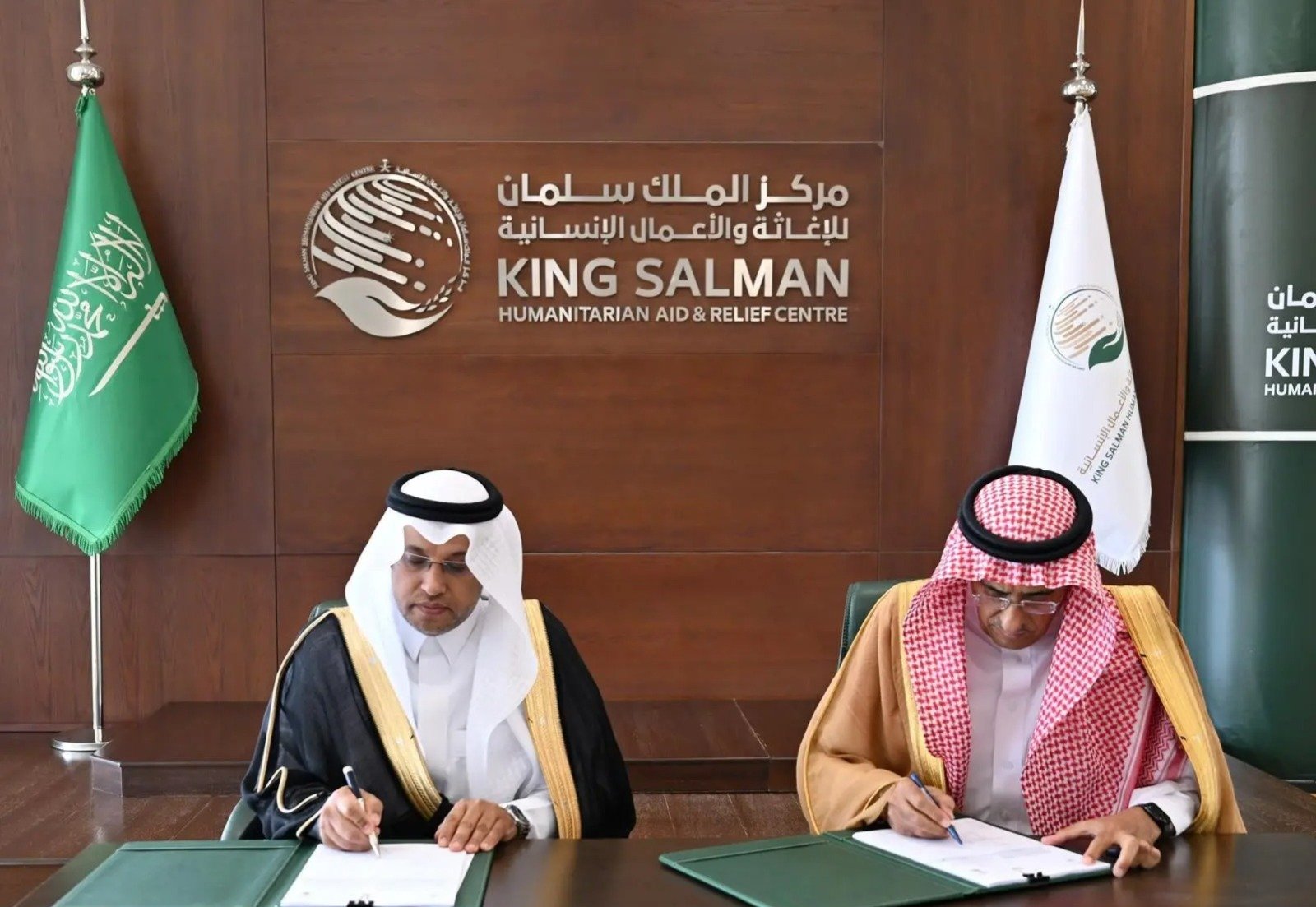
RIYADH, Saudi Arabia — Saudi Arabia’s King Salman Humanitarian Aid and Relief Centre has signed an agreement to deliver shelter and food to 70,000 Yemeni refugees in Djibouti.
The centre, known as KSrelief, said it signed the cooperation agreement with the Benaa Charity Association for Orphan Care in Saudi Arabia’s Eastern Province.
The Saudi Press Agency announced the signing on Oct. 30 and said it had taken place the previous day.
The project covers 2,000 shelter kits, 2,000 tents and 10,000 food baskets, according to the announcement. It runs through 2026.
KSrelief said the aim is to improve food and shelter conditions for Yemeni refugees in Djibouti affected by recent events in Yemen.
The centre said the project would ease living burdens on refugee families affected by recent developments in Yemen.
The Yemeni News Agency Saba reported that KSrelief Assistant Supervisor-General for Operations and Programmes Ahmed al-Baiz signed for the centre, and that Benaa Chief Executive Abdullah al-Khalidi signed for the association. The Saudi Press Agency account did not name the signatories.
This account rests on KSrelief’s own announcement. Yemen Herald found no independent confirmation of the agreement or its terms.
Djibouti lies across the Bab al-Mandab from Yemen, at the strait’s narrowest point. Yemenis arriving by sea land mainly at Obock on the northern coast and at the smaller post of Khor Angar.
Djiboutian authorities said 3,400 people reached the north of the country in September, after fighting in Yemen intensified.
Finance Minister Ilyas Dawaleh said on X that cumulative arrivals reached about 500 on Sept. 11, about 1,400 the next day and more than 2,000 by that evening.
Djibouti has fewer than 1.2 million people. UNHCR figures from March put its registered refugees and asylum seekers above 36,000, most of them Somali, Ethiopian and Yemeni.
The Markazi camp near Obock is taking in new arrivals. It holds about 5,000 people and was built for Yemenis who crossed in 2015, when IOM and Djiboutian government figures recorded more than 15,700 arrivals.
The camp’s residents are mainly Yemeni and Eritrean, according to aid agencies.
Authorities said in September that they were preparing to receive up to 10,000 people if arrivals continued at that pace.
Others are staying with Obock residents. Alexandre Coissac, who heads the IOM office in Djibouti, called the local population’s generosity “huge.”
Coissac said arrivals came on “all kinds of sea vessels, from small dhows to larger ships.” He warned that at September’s rate “we’ll not be able to manage.”
Early groups crossed in small fishing boats, some without motors. Later groups used larger commercial vessels, one of them carrying hundreds of people.
Some families remained stranded on the Yemeni side because of fuel shortages.
Dawaleh said UN agencies “appear to be lacking resources to receive and protect these vulnerable people with dignity,” and urged international help.
Sandrine Dominique Desamours, UNHCR’s representative in Djibouti, said some arrivals had asked for permission to return to Yemen briefly to bring out vulnerable relatives.
Prime Minister Abdoulkader Kamil Mohamed visited Obock in September to meet UNHCR, the World Food Programme and IOM.
UNICEF said children making the crossing faced extreme heat, dehydration and a lack of safe drinking water.
Inside Yemen, IOM recorded more than 85,000 people displaced in the first two weeks of September, with residents leaving entire districts including Maqbanah and Jabal Habashi.
IOM said last week that nearly 300,000 Yemenis had been displaced this year. The UN humanitarian office put displacement at more than 281,000 as aid routes into Taiz narrowed.
The UN humanitarian plan for Yemen, published in March, said more than 22 million people needed assistance.
It put the number of acutely food insecure at 18.3 million, and the number of children under five with acute malnutrition at more than 2.2 million, of whom 516,157 were severely malnourished.
The plan recorded 5.2 million internally displaced people inside Yemen and sought $2.16 billion to reach 12 million of them.
Houthi forces seized the Red Sea port of Mocha during the September fighting and advanced toward the strait. They also took Mayyun island, known as Perim.
Aden Omar Abdillahi, of Djibouti’s Institute of Political and Strategic Studies, said that if the conflict reached maritime security, “it will have a massive impact.”
Saba carried the announcement on Oct. 31, a day after the Saudi Press Agency.
KSrelief was established in 2015 and runs Saudi Arabia’s foreign aid programmes from Riyadh.
Djiboutian officials described the September influx as a surge concentrated in about 48 hours.
The World Food Programme said last week that it had assisted more than 1.4 million people in government-held areas of Yemen.
The UN humanitarian office said aid routes into Taiz had narrowed as the fighting spread. Yemen’s health ministry said 42 health facilities in the governorate could stop work within days without urgent assistance.
Aden International Airport reopened on Oct. 31 after missile strikes damaged its runway.
Saudi Arabia presents the Djibouti agreement as part of KSrelief’s relief work for refugees worldwide.
President Rashad al-Alimi, chairman of Yemen’s Presidential Leadership Council, launched a separate Saudi relief package for Yemen during a visit to Riyadh on Oct. 28.
Benaa, the implementing partner, is registered in Saudi Arabia’s Eastern Province and works on orphan care.
About the Author


 Adel Haddad