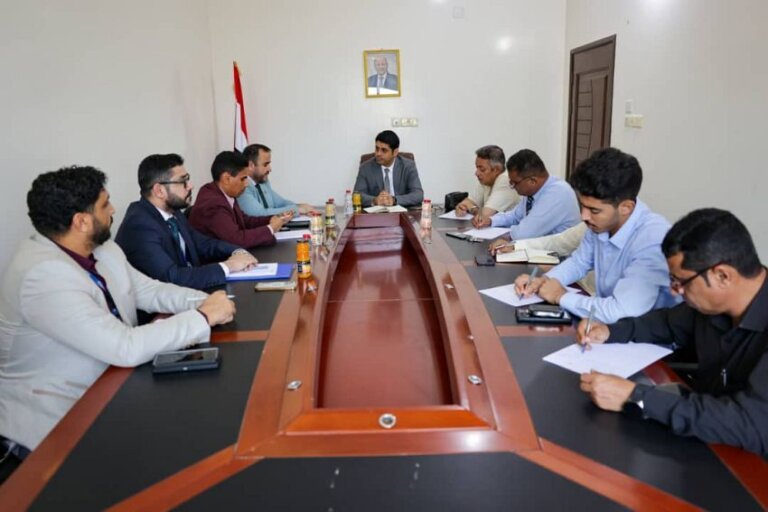
Leadership Council Evaluates Strategies to Address Local and Regional Developments
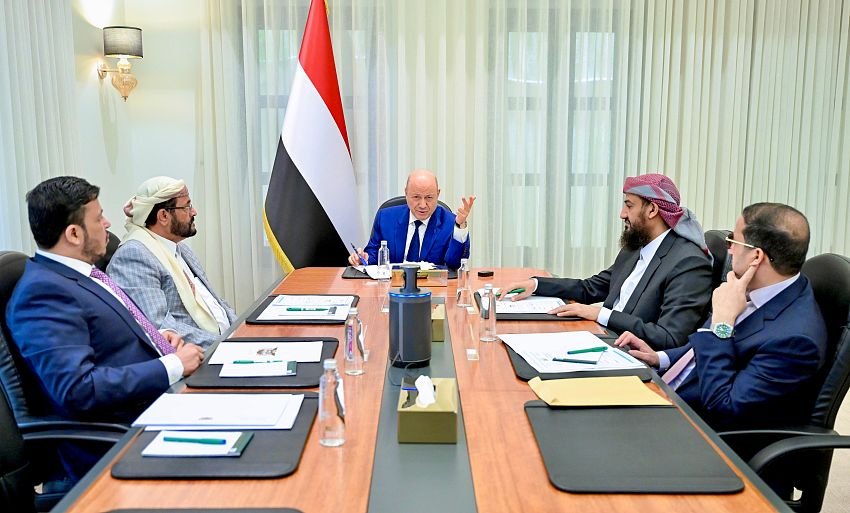
The recent meeting of Yemen’s Presidential Leadership Council (PLC) underscores the urgent need for decisive action in the face of escalating regional tensions. As the Iranian-backed Houthi militias intensify their military activities, the implications for Yemen’s stability and the broader Middle East are profound and alarming.
Yemen has long been a focal point of geopolitical strife, caught in the crossfire of regional power struggles. The ongoing civil war, exacerbated by foreign interventions, has transformed the country into a battleground for Iranian influence and Saudi-led countermeasures. The PLC, formed to unify Yemen’s fragmented leadership, faces the daunting task of navigating these treacherous waters while addressing the dire humanitarian crisis that has ensued. The recent discussions within the PLC reflect a growing recognition that local developments cannot be viewed in isolation; they are intricately linked to broader regional dynamics, particularly the aggressive posture of Iran and its proxies.
During the latest PLC meeting, chaired by President Dr. Rashad al-Alimi, members addressed critical local and regional developments that threaten Yemen’s security and stability. The council’s discussions highlighted the urgent need for economic reforms and measures to mitigate the impact of the Houthi militias’ actions on the Yemeni populace. Economic Team Leader Hussam al-Sharjabi presented alarming indicators of financial distress, prompting the PLC to approve recommendations aimed at ensuring the flow of goods and maintaining essential services. Notably, the resumption of Article IV consultations with the International Monetary Fund (IMF) after over a decade of stagnation signals a potential shift in Yemen’s economic trajectory, contingent upon the government’s ability to stabilize the national currency amidst ongoing challenges.
The implications of the PLC’s discussions extend far beyond Yemen’s borders. The Houthi militias’ involvement in regional military escalations poses a direct threat not only to Yemen’s national security but also to international maritime navigation and economic stability in the Gulf region. The PLC’s condemnation of Iranian aggression against Gulf Cooperation Council (GCC) nations and Jordan highlights the interconnectedness of regional security. As the Houthis leverage their military capabilities to further Iranian interests, the potential for conflict escalation increases, jeopardizing trade routes and heightening tensions among regional powers. The humanitarian crisis in Yemen, exacerbated by these developments, continues to deteriorate, with millions facing food insecurity and lack of basic services, further complicating the political landscape.
The strategic landscape in the Middle East is shifting, and Yemen is at the epicenter of this transformation. The PLC’s recognition of the Houthis as a tool of Iranian expansionism is a critical insight into the broader geopolitical chess game. The Iranian regime’s attempts to use Yemen as leverage against its adversaries not only threaten Yemen’s sovereignty but also challenge the stability of the entire region. The PLC’s warnings to the Houthis about the consequences of their military actions reflect a growing urgency to counteract Iranian influence. However, the effectiveness of these warnings hinges on the PLC’s ability to unify its internal front and garner support from international allies, particularly in the face of Iranian defiance and regional complexities.
Looking ahead, several scenarios could unfold depending on the PLC’s strategic decisions and the responses from regional actors. If the PLC successfully implements its economic reforms and stabilizes the national currency, it may bolster its legitimacy and strengthen its position against the Houthis. However, failure to address the humanitarian crisis could lead to increased domestic unrest, undermining the council’s authority. On the regional front, continued Houthi provocations may prompt a more robust response from Saudi Arabia and its allies, potentially escalating military confrontations. The international community’s role will also be pivotal; increased diplomatic pressure on Iran to curb its support for the Houthis could alter the dynamics, but such efforts require a unified and concerted approach.
The discussions within Yemen’s Presidential Leadership Council are not merely administrative; they represent a critical juncture in the country’s struggle for stability amidst regional turmoil. The PLC’s proactive stance against the Houthis’ threat and its commitment to economic reform are commendable, yet the path forward is fraught with challenges. As Yemen navigates this precarious landscape, the stakes are high—not only for its own future but for the broader geopolitical equilibrium in the Middle East. The world must pay attention, for the repercussions of Yemen’s fate will resonate far beyond its borders.
About the Author