Marib Deputy Governor and Islamic Relief France Discuss Aid Efforts
 Yemen Herald News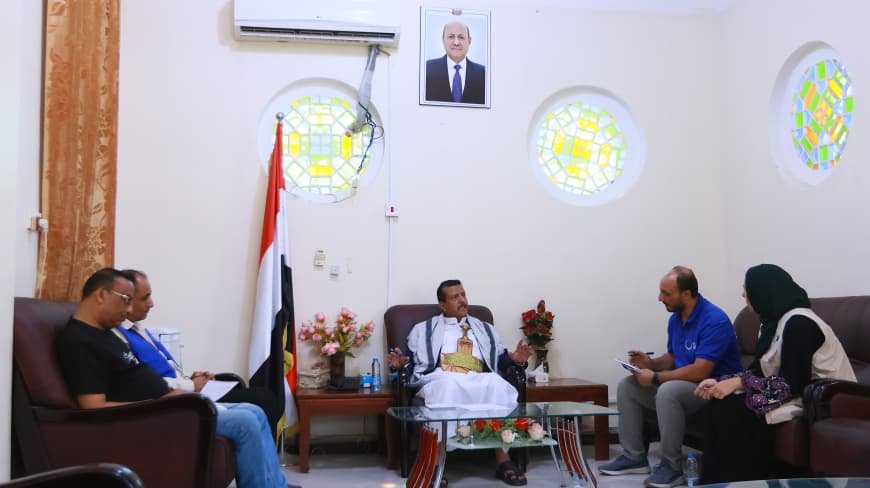
Marib’s Deputy Governor and Islamic Relief France have discussed humanitarian efforts in the province and future initiatives to address urgent needs, in a meeting that highlighted the pressures facing one of Yemen’s most heavily affected regions. Dr. Abdrabuh Miftah met Morgen Villoen, the organisation’s Yemen Programmes Coordinator, on Tuesday to review ongoing interventions and plans for the period ahead.
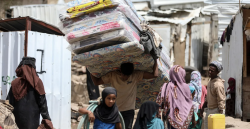
During the meeting, the two sides highlighted the escalating humanitarian crisis in Marib, a region significantly affected by the conflict and by a large influx of internally displaced people. The governorate has become a refuge for many of those uprooted by the fighting, placing immense strain on its services and resources.
The conflict, which escalated from 2015, has produced one of the world’s worst humanitarian crises. By the accounts cited in the discussions, more than 18 million people in Yemen require some form of assistance, with over 4.5 million displaced from their homes by violence and instability, figures that underscore the scale of the emergency.
The humanitarian situation in Marib has been intensified by the arrival of displaced people, which has driven up demand for services, shelter and assistance. The concentration of displaced families in the governorate has created acute needs, and meeting them requires sustained effort and support from humanitarian organisations and authorities alike.
Marib has occupied a significant place in the conflict, both as a government stronghold and as a destination for those fleeing fighting elsewhere. Its role as a refuge has swelled its population and created sprawling settlements of displaced people, whose needs far outstrip the capacity of local resources to meet them.
Islamic Relief France, the organisation represented at the meeting, is among the humanitarian actors engaged in supporting communities in Yemen. Its work encompasses interventions aimed at addressing urgent needs, and its engagement with local authorities reflects the collaborative effort required to deliver assistance effectively in a challenging environment.
The review of ongoing interventions allows officials and organisations to assess the impact of current efforts and to identify where support is most needed. Such reviews are important to ensuring that assistance is directed effectively and that programmes remain responsive to the evolving needs of the population.
The discussion of future initiatives reflects a forward-looking dimension of the engagement, considering how assistance might be developed and expanded to address needs in the period ahead. Planning for future interventions helps ensure continuity of support and allows organisations to respond to emerging challenges in the governorate.
The plight of internally displaced people is among the most pressing humanitarian concerns in Marib and across Yemen. Displacement strips families of their homes, livelihoods and support networks, leaving them acutely dependent on assistance, and addressing their needs is central to the humanitarian response in the governorate.
The strain on host communities, which have absorbed large numbers of displaced people, is another dimension of the crisis. The arrival of the displaced places demands on the resources and services of the communities that receive them, and supporting host communities as well as the displaced is important to easing tensions and sustaining stability.
The role of local authorities, represented by the deputy governor, is important to the coordination and delivery of humanitarian assistance. Cooperation between authorities and organisations helps identify needs, facilitate access and integrate assistance with local structures, enhancing the effectiveness of the response in the governorate.
The engagement of international humanitarian organisations such as Islamic Relief France reflects the collaborative nature of the response to Yemen’s crisis. Such organisations bring resources, expertise and operational capacity to bear on addressing needs, complementing the efforts of local authorities and contributing to the broader humanitarian effort.
The escalating nature of the crisis in Marib, highlighted in the meeting, underscores the ongoing and growing character of the needs. Rather than easing, the demands on the humanitarian response have continued to grow, reflecting the persistence of the conflict and its consequences and the continuing arrival of displaced people.
Sustaining and expanding humanitarian assistance in Marib depends on adequate funding and continued commitment. Humanitarian operations in Yemen have frequently faced shortfalls, and meeting the needs of the governorate’s population, including its large displaced community, requires reliable resources and sustained engagement from organisations and donors.
The needs addressed by such efforts are unlikely to ease quickly, given the persistence of the conflict and the scale of displacement. Meeting them will require continued effort and support, underscoring the importance of the engagement between local authorities and humanitarian organisations such as Islamic Relief France.
Marib’s transformation over the course of the war, from a comparatively quiet governorate into one of the largest concentrations of displaced people in the country, has placed it at the centre of Yemen’s humanitarian map. Camps that began as temporary refuges have hardened into semi-permanent settlements, home to families who have now spent years away from their places of origin with little prospect of an early return. Aid workers describe a situation in which needs consistently outpace resources, and in which the arrival of each new wave of displacement tests the limits of what local authorities and their partners can provide. Against that backdrop, meetings such as this one are aimed at ensuring that assistance is not only sustained but adapted to a crisis whose character continues to evolve.
For now, the meeting between Dr. Miftah and Villoen reaffirmed the engagement between Marib’s authorities and Islamic Relief France in addressing the province’s humanitarian needs. As the governorate contends with the pressures of conflict and displacement, cooperation of this kind remains important to supporting its population and to meeting the demands of an escalating crisis.
About the Author