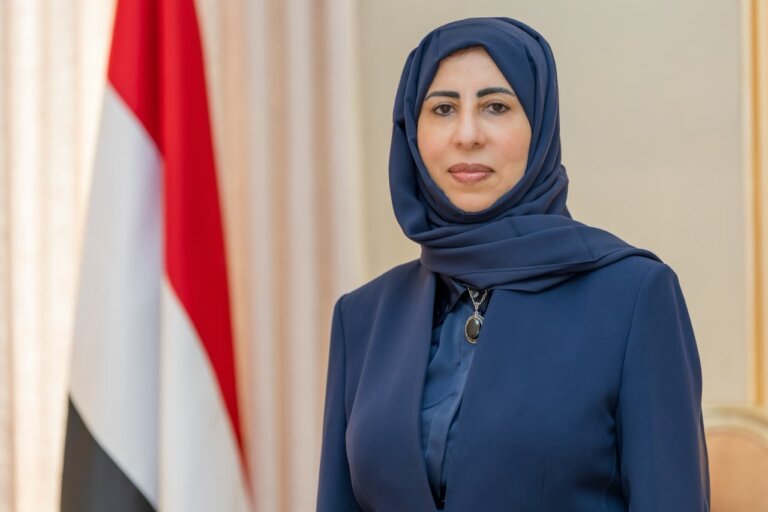
Displacement minister Waleed al-Abara asks OCHA to relocate families sheltering in seven Lahj schools
 Yemen Herald News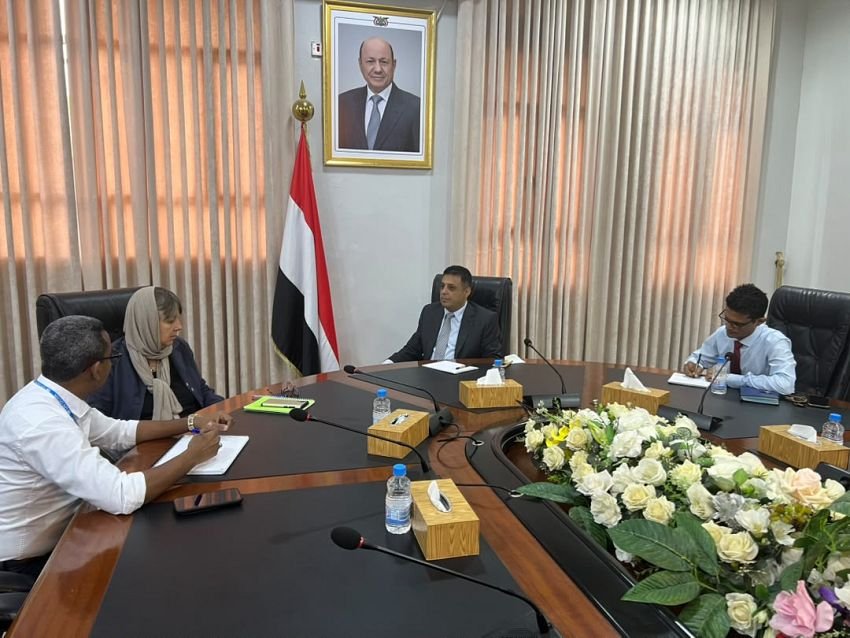
ADEN, Yemen — Yemen’s displacement minister asked the United Nations humanitarian agency on Monday to relocate displaced families sheltering in seven schools in Lahj governorate.
Waleed al-Abara, state minister for displacement and illegal migration, put the request to the UN Office for the Coordination of Humanitarian Affairs, the state news agency Saba reported.
The schools are in the al-Madhariba and Ras al-Ara districts of Lahj, in the south-west. Al-Abara asked that the families be moved to safer locations.
He named emergency shelter as the most urgent need, according to the agency.
He also called for wider aid access, for data to be shared with his ministry, and for work on camp infrastructure.
OCHA told the meeting its emergency response had reached about 90,000 of an estimated 129,000 displaced people, Saba said.
The agency said funding shortages and security conditions remained obstacles to the response.
Both sides agreed to strengthen strategic and operational coordination, according to the report.
The account of the meeting rests on Saba, the news agency of the internationally recognised government. No independent account of the talks has been published.
The United Nations lists Karen Perrin as head of the OCHA office in Yemen. Saba rendered the name differently in its report.
Laurent Bukera serves as resident and humanitarian coordinator for Yemen, according to the organisation.
Al-Abara met Abdusattor Esoev, the International Organization for Migration’s chief of mission in Yemen, on 24 September, Saba reported at the time.
The figures discussed at Monday’s meeting sit below the wider displacement count. IOM said more than 145,000 people had been displaced across eight governorates since fighting escalated on Yemen’s west coast in early September.
UNICEF dated the current escalation to 3 September.
The organisation put the total at 145,308 people, or 24,218 families.
The United Nations said in mid-September that 93,864 people had been newly displaced. It reported clashes in Aden, Hodeidah, Abyan and Taiz, and separately in Marib.
More than 2,400 people crossed to Djibouti within four days of the escalation, the organisation said. It said more than 60 per cent of those arriving were women, children and elderly people.
Sandrine Desamours, the UNHCR representative in Djibouti, was among the officials quoted on those arrivals.
Tom Fletcher, the United Nations emergency relief coordinator, released 9 million dollars from the Central Emergency Response Fund for the response.
The response included emergency shelter cash for 500 households and shelter repair kits for 1,000 households, the organisation said. It said humanitarian supplies in the country were running low.
Schools have been drawn into the emergency across the country. UNICEF said on 16 September that 243 schools had closed or suspended learning, affecting more than 137,000 students.
The agency said more than 104,000 people had been displaced in the preceding two weeks, including more than 57,000 children.
It said 26 health facilities it supports had disrupted services, and that only 60 per cent of health facilities in Yemen were fully functional. It put the number of people without adequate access to health care at 17.8 million.
UNICEF said 12.2 million children in the country need humanitarian assistance.
“Children in Yemen were already living through one of the world’s most grave humanitarian crises, and many have known little but conflict and displacement,” said Edouard Beigbeder, the agency’s regional director for the Middle East and North Africa.
The agency said its emergency assistance was targeting 231,000 people, including safe water for more than 200,000.
OCHA said its Humanitarian Needs and Response Plan for 2026, issued in March, identified more than 22 million people in Yemen as needing assistance.
That plan recorded 18.3 million people as acutely food insecure and more than 2.2 million children under five as acutely malnourished, of whom 516,157 were severely malnourished.
It counted 5.2 million internally displaced people and sought 2.16 billion dollars to reach 12 million of those in need.
Funding has fallen well short of that. The World Bank said in May that the United Nations response plan for Yemen was covered at 28 per cent of assessed needs, down from 56.5 per cent in 2024.
The same report, the Yemen Economic Monitor published on 21 May, estimated that about 75 per cent of Yemenis live below the poverty line.
It said the economy contracted by 1.5 per cent in 2025 and was projected to shrink by a further 0.5 per cent this year, with government revenues at 5.6 per cent of gross domestic product.
The European Union mission to Yemen said on 24 September it had signed three projects worth 24 million euros for the country’s farming and fisheries sectors.
Yemen’s planning minister took part in the fourth Yemen-European Union Partnership Days in Amman on Monday, where he asked the bloc to anchor cooperation in a 2027-2029 development plan, Saba reported.
Yemen’s internationally recognised government is based in Aden. The Presidential Leadership Council, chaired by Rashad al-Alimi, has held executive authority since April 2022 under a power-transfer declaration.
The Houthi movement controls Sanaa and much of the north-west, including the Red Sea port of Hodeidah.
Yemen’s House of Representatives approved a general mobilisation on Monday at al-Alimi’s request, Saba reported.
Saba did not say when the families in the Lahj schools would be moved, or where.
About the Author