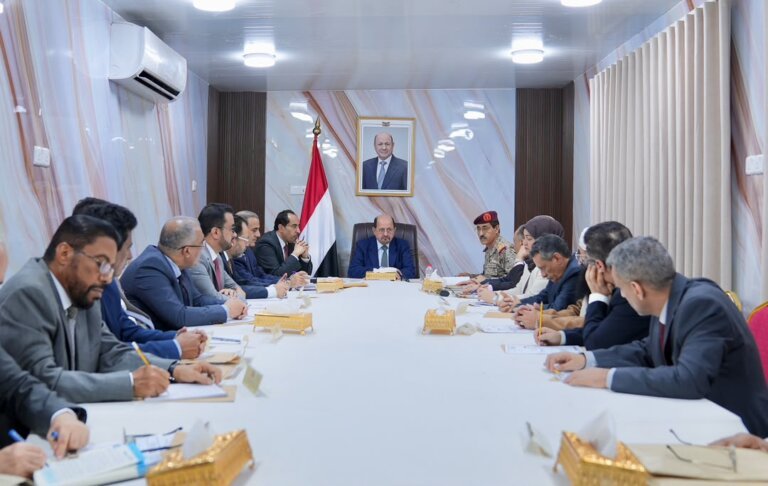
Recovery efforts and salary payments were discussed in the Cabinet meeting led by al-Alimi.
 Yemen Herald News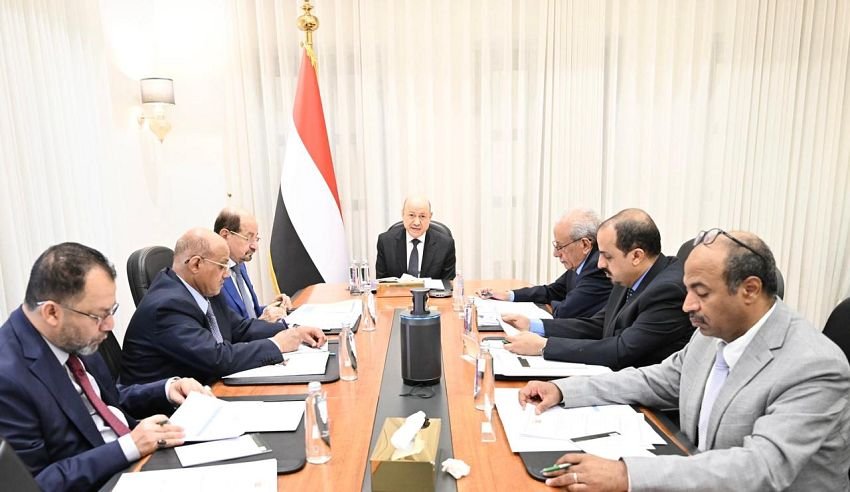
Yemen has been embroiled in a protracted civil war since 2015, marked by violence and severe humanitarian crises. The conflict has pitted the internationally recognized government, supported by a Saudi-led coalition, against Houthi rebels, who have been accused of receiving backing from Iran. This war has exacerbated an already dire situation, resulting in widespread destruction, displacement, and disease outbreaks, with millions in need of humanitarian assistance. As the conflict persists, the economic infrastructure has crumbled, leading to significant challenges for governance and public service delivery.
The Presidential Leadership Council (PLC) was established as part of an effort to unify the Yemeni leadership and provide a coherent response to the ongoing crisis. The council, formed in April 2022, aims to steer the country towards peace and stability while also addressing pressing economic issues and the humanitarian situation. Given the backdrop of fragmentation and chaos, this body represents a glimmer of hope for coordinated governance.
The backdrop of regional geopolitics complicates the crisis. The Red Sea and Bab al-Mandab Strait are critical maritime routes, heightening the importance of Yemen in terms of regional security dynamics. Saudi Arabia’s role as a major player is significant, as its support for the Yemeni government adds another layer to the already complex proxy battleground where Iran and its allies exert influence. The nuanced relationships among various factions underscore the difficulty of achieving peace and stability in Yemen.
On a recent Saturday, President Dr. Rashad al-Alimi presided over a mini cabinet meeting in Riyadh, convening key members of the Presidential Leadership Council. The gathering included notable officials such as the Governor of Marib, Sultan al-Aradah, and the Governor of Hadhramout, Salem al-Khanbashi, alongside Prime Minister Dr. Shaya Zindani. This meeting was crucial in reviewing the implementation of the PLC’s decisions, particularly focusing on moving forward with Resolution No. (11) of 2025, along with addressing long-standing commitments related to urgent financial issues, including salaries and electricity supply.
During the session, participants were updated on a variety of economic and financial performance indicators that reflected the government’s ongoing reforms and plans to combat misinformation. The Prime Minister, the Governor of the Central Bank, and other cabinet members reported on their sectors’ progress in restoring public confidence in government institutions. An important highlight of the meeting was the World Bank’s announcement of its new Country Partnership Framework for Yemen, along with a substantial financial injection amounting to $285 million aimed at supporting economic stability.
Acknowledgment of Saudi Arabia’s continuous support highlighted the regional dynamics influencing Yemen’s recovery efforts. The Kingdom’s assistance extends beyond mere financial contributions; it plays an essential role in rebuilding state institutions through various initiatives, including humanitarian aid efforts to alleviate the suffering of Yemeni citizens impacted by ongoing conflict. Recent initiatives, like the allocation of a new $150 million fuel grant for electricity generation, were deemed critical for enhancing the government’s capacity to deliver essential services amid escalating challenges.
Several stakeholders are central to the current political and economic landscape in Yemen. The Presidential Leadership Council, representing the recognized government, is tasked with uniting various factions to develop a coherent policy agenda in the face of ongoing upheaval. As a key figure within this council, President Dr. Rashad al-Alimi plays a vital role in steering the government’s reform initiatives and extending outreach to local and international partners.
Another significant stakeholder is Saudi Arabia, whose support remains crucial for the governance and development efforts in Yemen. The Kingdom provides vital economic support, humanitarian assistance, and has established initiatives like the Saudi Program for the Development and Reconstruction of Yemen. This framework represents its commitment not only to address immediate needs but also to foster long-term stability and growth within Yemen.
International organizations such as the World Bank also play a crucial role in the ongoing efforts to stabilize Yemen’s economic landscape. Their financial packages signal a growing optimism about the government’s ability to implement reforms effectively and restore public trust. The recent grant approval serves as an essential lifeline, introducing much-needed funds that can be utilized for critical infrastructure improvements and public service enhancements, particularly in the electricity sector.
In addition, local authorities and governors, such as Sultan al-Aradah and Salem al-Khanbashi, have a pivotal role in translating the PLC’s policies into actionable initiatives that benefit the citizens. Their feedback and performance metrics are integral to ensuring that governance remains responsive to local needs, especially in light of the ongoing economic challenges posed by the protracted conflict.
The ongoing situation in Yemen has far-reaching regional implications, particularly for neighboring Gulf states. Saudi Arabia’s engagement in Yemen serves dual purposes: it seeks to counter Iranian influence in the region while aiming to prevent the spillover of instability that could destabilize its borders. The humanitarian crisis in Yemen also poses a challenge to regional security, as mass displacement and emergency situations could result in cross-border migration, potentially straining resources in host countries.
The transformative initiatives launched by the Saudi government, such as the financial aid and developmental projects, are a strategic move to maintain regional stability while reinforcing their position as a pivotal influencer in Yemen’s future. Saudi Arabia’s role as a stabilizing force is underscored by its commitment to supporting the Yemeni economy, serving as both a benefactor and partner, thereby solidifying mutual interests amid the geopolitical complexities.
Moreover, neighboring nations, including the United Arab Emirates, are closely monitoring the situation, understanding that their involvement or lack thereof could significantly affect their own national security and economic interests. The UAE has been supportive of various factions within Yemen, contributing to the complexities of local governance and access to resources. Thus, alignment of local interests with foreign support remains a critical vector in understanding regional dynamics.
The shift in international and regional attitudes towards Yemen’s governance could potentially alter the historical approach to conflict resolution, emphasizing the need for a collaborative dialogue among regional powers. As external actors reassess their involvement, the evolving landscape reflects opportunities for renewed engagement that could lead to a greater emphasis on diplomatic solutions.
The recent cabinet meeting, chaired by President al-Alimi, reveals a concerted effort to invigorate Yemen’s governance amid dire economic conditions. His call for coherent teamwork underscores the necessity to forge a shared vision and goals among various stakeholders. This aligns with the urgent need for comprehensive economic reforms aimed at restoring public trust and improving living conditions for the populace.
Considerable attention was given to the financial support from Saudi Arabia, particularly recognizing the grant aimed at enhancing the electricity sector. This aid not only reflects the strategic partnership between the two nations but also highlights broader regional interests at play. The success of these initiatives is predicated on effective management and deployment of resources to alleviate chronic problems in electricity provision, which continue to beset daily life in Yemen.
The immediate goals identified by President al-Alimi—especially securing regular salary payments and improving critical public services—must be approached through operational plans that prioritize efficiency and response capabilities. The government’s reform agenda should not only focus on crisis management but also entail a long-term vision for economic recovery that promotes transparency, governance, and public engagement.
As existing structures and strategies adapt to ongoing challenges, fostering a culture of accountability and responsiveness will be essential for sustaining support from allies and the public. Attention to these key areas of reform could cultivate renewed international confidence in Yemen’s institutions and create a conducive environment for additional investments.
Looking ahead, a central focus for the Presidential Leadership Council will be the effective allocation and utilization of the newly secured financial support. The strategic implementation of the Saudi fuel grant for power stations will be critical in mitigating immediate energy crises while demonstrating the government’s capacity to address pressing needs. Establishing clear timelines and quantifiable measures for success will be paramount in securing ongoing support from both local and international stakeholders.
Continuing dialogue with international financial institutions, such as the World Bank, will be crucial in maintaining momentum for economic reforms and securing further funding. Yemen’s leadership must actively engage stakeholders in planning and executing rehabilitation efforts across sectors to build a robust framework for recovery that addresses both immediate challenges and sets the groundwork for long-term stability
Additionally, public communications will be vital as the government must keep citizens informed of progress and cope during periods of adjustment. Effective outreach will help manage expectations and reinforce confidence in the government’s ability to deliver essential services, thereby mitigating potential dissent or unrest.
Finally, ongoing engagement with Saudi Arabia and enhancing collaboration with other regional and international partners will be crucial. As Yemen navigates through these complex dynamics, finding innovative solutions that respond to the unique challenges it faces will be key in steering the nation toward a pathway of stability and sustainable development.
About the Author