Saudi Fuel Grants, Salary Payments and Deposits Underpin Yemen’s Public Finances
 Yemen Herald News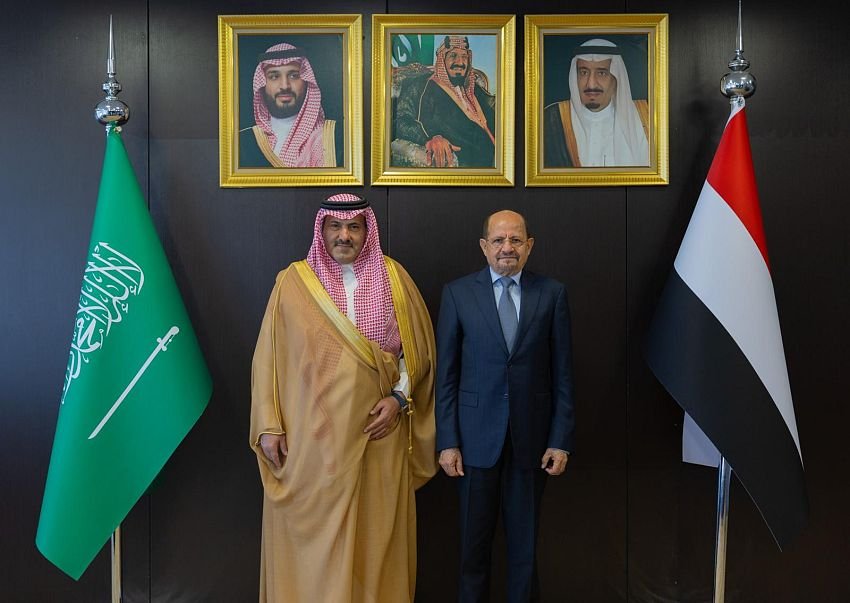
Saudi Arabia’s financial and fuel support has become one of the load-bearing elements of the Yemeni government’s ability to function, and senior officials in Aden have said so repeatedly through 2026. The support runs through several channels at once: budget assistance to the Aden-based central bank, grants of oil derivatives that keep power stations running, and project spending managed by the Saudi Development and Reconstruction Program for Yemen, known by its initials as SDRPY.
Fuel is the most visible of these. Saudi grants of oil derivatives have been used to operate more than 70 power generation plants across the country, an arrangement that determines how many hours of electricity households in Aden, Mukalla and other southern cities receive during the summer, when temperatures and demand peak together. When a consignment is delayed, the effect is immediate and public, which is why the fuel grant has political weight out of proportion to its cost.
Salaries are the second channel. Riyadh has taken on the payment of security and military forces in areas under government control, including formations that had previously been funded directly by the United Arab Emirates, and has undertaken to clear delayed civilian public-sector salaries carried over from 2025, a liability put at roughly 90 million dollars, as well as covering the operating needs of power stations in the southern governorates. Consolidating those payment streams under a single external funder simplifies the government’s finances while deepening its dependence on one of them.
Direct budget support has a longer history. Saudi Arabia deposited one billion dollars in Yemen’s Aden-based central bank in February 2023, one of a series of deposits intended to defend the value of the Yemeni riyal and give the bank room to finance imports of food and fuel. Deposits of that kind steady the exchange rate for a period, but they do not by themselves address the underlying problem, which is that government revenue collapsed when oil exports were halted and has not recovered.
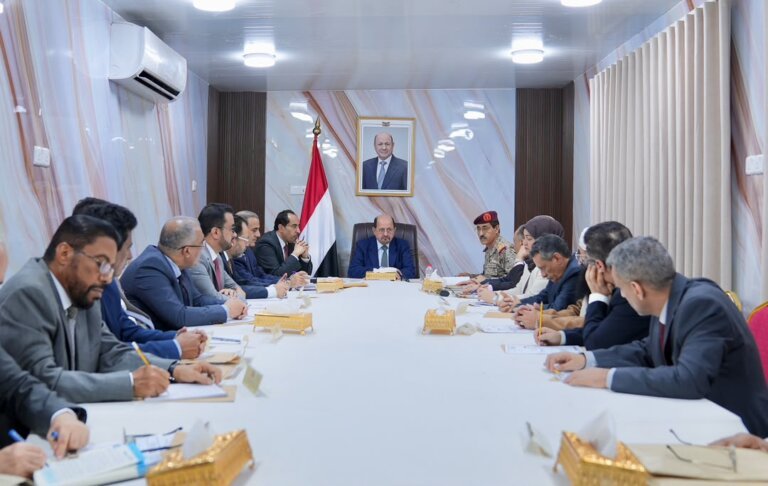
The SDRPY programme covers the development side. Its director reviewed the programme’s portfolio in Aden and other governorates with the Prime Minister and Foreign Minister, Dr. Shaya al-Zindani, at a meeting in Aden in July 2026, at which al-Zindani described the programme as a strategic partner in implementing Yemen’s development priorities and supporting economic recovery. The portfolio spans health, education, energy, transport and water projects, and it is administered separately from humanitarian assistance channelled through United Nations agencies.
The strategic context is well established and disputed only in its interpretation. Houthi forces took control of Sanaa in September 2014 and a Saudi-led coalition intervened militarily in March 2015 with the stated aim of restoring the internationally recognised government. The Saudi position has been that the Houthi movement operates as an Iranian-aligned actor on its southern border; the Houthis reject that characterisation and describe their campaign as a response to foreign intervention. Both are claims made by parties to the conflict and should be read as such.
For Riyadh, the calculation has shifted over the past several years from military engagement toward a negotiated exit combined with sustained economic support for the recognised government. That shift followed the resumption of Saudi-Iranian diplomatic relations in 2023 and a long period without major front-line movement. Financial support is the instrument that remains once large-scale military operations are wound down, and it gives Riyadh continuing influence over a government that could not meet its payroll without it.
The dependence cuts both ways in practice. A government whose salaries, fuel and reserve support come from an external partner has limited leverage in disagreements with that partner, and Yemeni critics of the arrangement, including figures within the anti-Houthi camp, have said as much publicly. Others argue that in the absence of restored oil exports there is no domestically financed alternative, and that the immediate question is whether services function at all rather than who pays for them.
Electricity illustrates the limits of the model better than any other sector. Yemen’s generating capacity relies heavily on ageing diesel and heavy-fuel units that were never designed to carry a national load on donated fuel, and transmission losses in the network are substantial. Rehabilitating that infrastructure, or replacing part of it with solar generation, would reduce the recurring fuel bill, but it requires capital spending over several years and a stable security environment. Successive plans have been announced; delivery has been uneven, and the annual fuel grant continues to do the work in the meantime.
The humanitarian backdrop against which all of this operates has not improved. The United Nations estimated that more than 22 million people in Yemen would need humanitarian assistance or protection during 2026, and the appeal covering that caseload has been running far short of its target. Gulf contributions to the humanitarian appeal have varied considerably from year to year, and bilateral support of the kind described here sits outside the pooled humanitarian funding that agencies plan against.
What the arrangement has not yet produced is a durable fiscal base. Restoring oil exports, unifying monetary policy across a divided banking system and re-establishing a predictable revenue stream are the conditions under which external support could taper without services collapsing. None of those is close, which means the fuel consignments, the salary transfers and the deposits are best understood as a mechanism for holding conditions steady rather than as a path out of them.
About the Author