
Yemen’s Public Works Minister and EU Discuss Infrastructure Recovery
 Yemen Herald News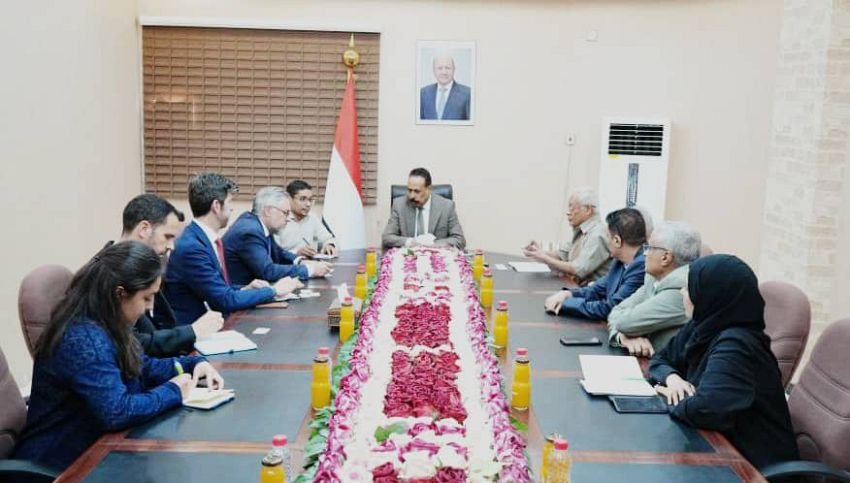
Yemen’s Public Works Minister and the European Union have discussed infrastructure and recovery, in talks that underscored the importance of rebuilding to the country’s efforts to achieve stability. The meeting in Aden between Minister Hussein Al-Okbi and representatives of the European Union focused on the role of infrastructure development in Yemen’s recovery from the effects of prolonged conflict.
Yemen has been embroiled in conflict since 2015, in a war that has produced one of the world’s worst humanitarian crises. The fighting has decimated infrastructure, disrupted basic services and left millions in need of assistance, making the rebuilding of infrastructure a central concern for the government and its partners as they look toward recovery.
The European Union has been a key partner in providing humanitarian and development support to Yemen, and its engagement on infrastructure reflects a recognition that functional infrastructure is essential to any lasting stability. Without the physical foundations of roads, buildings and services, efforts toward recovery and stability are difficult to sustain.
Infrastructure encompasses the physical systems on which society and the economy depend, from roads and bridges to public buildings, water networks and other essential facilities. The extensive damage inflicted on these systems during the conflict has had profound consequences for the functioning of the country and the daily lives of its people.
The rebuilding of infrastructure is a demanding undertaking that requires substantial resources, planning and coordination. The scale of the damage in Yemen is immense, and addressing it will require sustained effort over an extended period, as well as the engagement of international partners able to contribute resources and expertise.
The connection between infrastructure and stability, emphasised in the discussions, reflects the foundational role of physical systems in the functioning of society. Reliable infrastructure supports the delivery of services, the conduct of economic activity and the movement of people and goods, all of which are essential to stability and recovery.
The Ministry of Public Works plays a central role in the rebuilding of infrastructure, overseeing construction and the development of physical systems. Its engagement with partners such as the European Union reflects the collaborative effort required to address the extensive needs, drawing on both national leadership and international support.
The disruption of basic services, a consequence of the damage to infrastructure, has been among the most keenly felt effects of the conflict. The functioning of services such as water and sanitation depends on physical infrastructure, and its restoration is central to relieving hardship and to improving the conditions of life for the population.
The European Union’s support for infrastructure aligns with its broader engagement in Yemen across humanitarian, development and political domains. Its involvement reflects a recognition that rebuilding is essential to the country’s recovery and that infrastructure development complements other forms of assistance in supporting stability.
The focus on infrastructure development reflects an understanding that recovery requires attention to the physical foundations of society and the economy. While humanitarian assistance addresses immediate needs, rebuilding infrastructure is central to the longer-term work of restoring services, reviving the economy and creating the conditions for stability.
The urgency of addressing infrastructure needs reflects the scale of the damage and its consequences. The deterioration of physical systems affects many aspects of life, and the longer such needs go unaddressed, the greater the difficulties they pose, lending urgency to efforts to advance rebuilding despite the challenges of the current environment.
Cooperation with international partners is essential to the rebuilding effort, given the constraints on the government’s own resources. The support of partners such as the European Union can help mobilise the resources and expertise required for infrastructure development, complementing the government’s efforts and contributing to recovery.
The rebuilding of infrastructure also carries economic significance, as construction and development can generate employment and activity while restoring the systems on which the economy depends. Infrastructure development can thus contribute to economic recovery as well as to the restoration of services, reinforcing its importance to the broader effort.
Realising the goals discussed will depend on resources, planning, security and the trajectory of the conflict. Infrastructure development is a long-term undertaking, and progress will require sustained commitment and favourable conditions, though the engagement of the government and its partners reflects a shared determination to advance the effort.
The engagement between the Ministry of Public Works and the European Union forms part of the broader web of cooperation on which Yemen’s recovery depends. Sustaining these relationships and coordinating efforts are important to the effectiveness of the rebuilding effort and to the country’s prospects for stability and recovery.
Officials involved in reconstruction planning often stress that the sequencing of infrastructure work matters as much as its scale. Restoring a water network or a stretch of road can unlock disproportionate benefits, reconnecting markets, reopening access for aid and allowing displaced families to return, whereas poorly coordinated projects risk duplicating effort or leaving critical gaps. The emphasis in the discussions on planning and cooperation reflected an awareness that the resources available fall far short of the need, and that directing them wisely, toward the projects with the widest knock-on effects, will be essential if reconstruction is to translate into tangible improvements in the lives of ordinary Yemenis rather than isolated showpieces.
For now, the meeting between Al-Okbi and the European Union representatives reaffirmed the importance of infrastructure to Yemen’s recovery and the value of international cooperation in addressing it. As the country works to rebuild after years of conflict, the development of infrastructure remains a central element of its efforts to achieve stability and to improve the lives of its people.
About the Author




