Drone attack on Shabwa Defence Forces position kills one soldier, southern military sources say
 Yemen Herald News
A drone attack on a Shabwa Defence Forces position killed one soldier and wounded two others, southern Yemeni military sources reported in the spring of 2026. Accounts published at the time attributed the strike to the Houthi movement and placed it in the governorate’s northern desert districts, where southern units hold ground facing Houthi-controlled territory. The incident drew notice less for its scale than for what it illustrated: unmanned aircraft have become a routine instrument of frontline attrition in a war that international attention has largely moved past.
The Shabwa Defence Forces are a locally recruited formation affiliated with the Southern Transitional Council and incorporated into the wider Southern Armed Forces. Raised after the fighting that reshaped control of the governorate in 2022, they hold positions across Shabwa’s interior and along the approaches to Bayhan and Markha, districts that sit at the seam between Houthi-held territory to the north and government- and STC-held areas to the south and east. Similar attacks on their positions have been reported repeatedly, including a strike on a Shabwa brigade position in Markha al-Ulya in late 2025 in which a soldier was killed and two wounded.
Shabwa’s importance is geographic and economic. The governorate stretches from the Gulf of Aden coast inland toward Marib, and it carries road and pipeline infrastructure linking Yemen’s interior oil fields to the sea. Whoever holds its northern districts influences movement between Marib, the government’s most significant remaining stronghold in the north, and the southern governorates. That is why Shabwa has continued to draw attacks even during periods when the broader front lines have been comparatively quiet.
Drones have altered the arithmetic of those attacks. Conflict-monitoring organisations, among them ACLED, have documented how the Houthis expanded their use of unmanned systems from long-range strikes on infrastructure to short-range tactical attacks on fixed positions, checkpoints and vehicles. Small loitering munitions are inexpensive, hard to detect with the equipment most Yemeni frontline units possess, and can be launched in numbers. For units defending static lines, the practical consequence is that no position is reliably safe, and casualties accumulate without any corresponding change in territorial control.
Counter-drone capability on the government and southern side is limited. Air defence in the areas they hold depends largely on coalition-supplied systems concentrated around cities and major infrastructure rather than around frontline outposts, and small aircraft flying low and slowly are precisely the target set those systems handle least well. Southern commanders have repeatedly appealed for detection and jamming equipment, a request that has become a recurring theme in their public statements and one that has not been met at the scale they describe as necessary.
Claims about individual incidents in Yemen are difficult to verify independently. The Houthi movement does not publicly confirm responsibility for every strike attributed to it, and casualty figures given by southern military spokesmen are not routinely corroborated by neutral observers. The account set out here rests on statements from southern military sources carried by regional outlets and should be read as their version of events rather than as an independently established record.
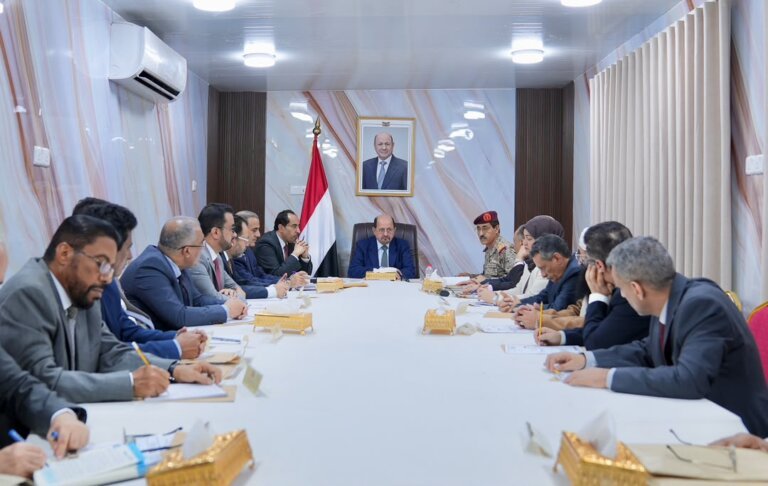
The wider political picture has remained largely static. Yemen’s internationally recognised government, headed since 2022 by a Presidential Leadership Council that brought the Southern Transitional Council and other factions into a single body, controls Aden and much of the south and east. The Houthis hold Sanaa, the northern highlands and the Red Sea coast, including the port of Hodeidah. A United Nations-brokered truce that took effect in 2022 formally lapsed but produced a durable reduction in large-scale offensives. What replaced it is a grinding pattern of local attacks of the kind reported in Shabwa.
That pattern has been complicated by the Houthis’ campaign against commercial shipping in the Red Sea and the Bab al-Mandab strait, which began in late 2023 and drew American and British strikes on Houthi positions in response. The maritime campaign raised the movement’s regional profile and, southern officials argue, hardened its willingness to press ground operations. Iranian material support for the Houthis, denied by Tehran but described in successive United Nations Panel of Experts reports, remains the central external factor cited by the Yemeni government.
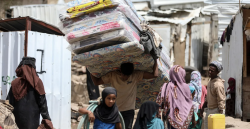
For Shabwa’s residents the consequences are immediate rather than strategic. Displacement from frontline districts, disrupted farming and interrupted road traffic compound a humanitarian emergency the United Nations has repeatedly described as among the world’s most severe, with most of Yemen’s population requiring some form of assistance and aid appeals persistently underfunded. Unexploded ordnance and landmines along shifting front lines add a hazard that outlasts the fighting that created it, and clearance capacity in the governorate is limited. Aid agencies operating in the governorate have reported difficulty reaching communities close to the contested districts, where movement requires clearance from more than one armed authority.
No resolution appears close. Successive rounds of Omani- and Saudi-mediated contacts have produced partial understandings on prisoner exchanges, salary payments and port and airport access, but no agreement on the core questions of governance or the future of the south. Until those questions are addressed, incidents of the kind reported in Shabwa are likely to continue: individually small, cumulatively significant, and largely invisible to an international audience whose attention to Yemen now tends to follow events at sea rather than events on land.
About the Author