Yemen’s Social Affairs Minister and Swiss Ambassador Discuss Social Protection and Child Welfare
 Yemen Herald News
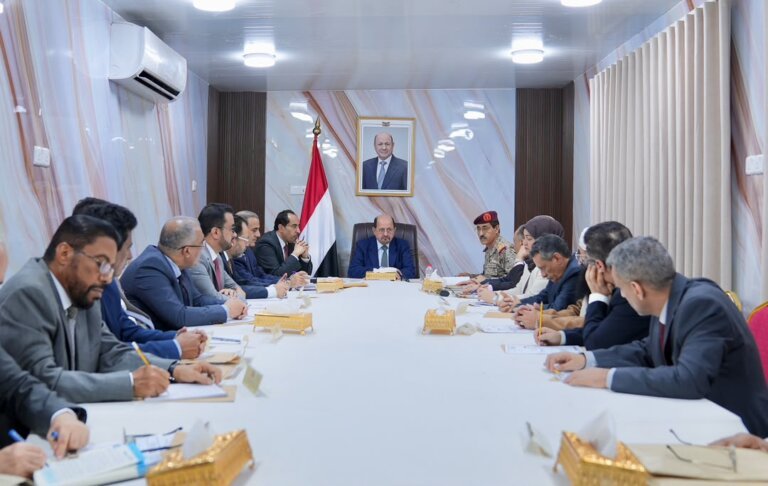
Yemen’s Minister of Social Affairs and Labour, Mukhtar al-Yafai, met the Swiss Ambassador to Yemen, Dr. Thomas Ortle, in the interim capital Aden on Monday, 4 May 2026, for talks on expanding cooperation over social protection, child welfare and sustainable development. The official Yemeni news agency Saba, which reported the meeting the following day, said the two reviewed existing areas of Swiss funding and assistance and discussed deepening the partnership.
Al-Yafai told the ambassador that his ministry wanted to broaden the relationship to strengthen both humanitarian and longer-term development work, according to the agency’s account. He also said the ministry was committed to regulating civil society organisations against standards of efficiency and transparency, a recurring theme in the government’s dealings with the aid sector.
The minister reaffirmed government support for expanding the activities of international and local organisations across all governorates, arguing that a wider operational footprint would help address imbalances in the labour market and contribute to economic and social stability. He repeated the government’s welcome to organisations basing themselves in Aden and pledged to provide the necessary facilitation, while stressing that the neutrality of humanitarian work must be preserved so that assistance reaches people without discrimination.
Al-Yafai also used the meeting to announce plans for an international conference to mobilise support for child protection programmes, and called on international partners to back it. He linked the initiative to economic pressures that he said were worsening conditions for families and falling disproportionately on children. Saba did not report a date or venue for the proposed conference.
The Ministry of Social Affairs and Labour occupies an awkward position in Yemen’s aid architecture. It is the government body formally responsible for social welfare, labour regulation and the licensing of non-governmental organisations, yet much of the assistance reaching Yemenis is delivered by United Nations agencies and international charities operating alongside rather than through it. The ministry’s stated push to regulate civil society organisations reflects a longstanding government complaint that it has limited visibility over programmes carried out in territory it administers.
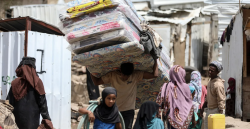
The talks took place against a humanitarian picture that remains among the world’s most severe. In its 2026 Humanitarian Needs and Response Plan, published in March 2026, the United Nations Office for the Coordination of Humanitarian Affairs estimated that more than 22 million people in Yemen would require humanitarian assistance and protection during the year, including 10.95 million women and girls. That caseload takes in some 5.2 million internally displaced people, around 329,000 migrants and roughly 63,000 refugees and asylum seekers.
Child protection has become a particular concern for Yemeni officials and aid agencies alike. Years of conflict and economic collapse have driven increases in school dropout, child labour and early marriage, and the United Nations has documented the recruitment of children by armed groups. Programmes in this area are typically among the first to lose funding when appeals fall short, because they are harder to present as immediately life-saving than food or medical assistance.
Food insecurity accounts for much of that need. OCHA reported that 18.3 million people were acutely food insecure, with the most recent Integrated Food Security Phase Classification analysis pointing to further deterioration, including districts moving from crisis to emergency levels and pockets of catastrophic conditions in the most fragile communities. Malnutrition figures remain high: more than 2.2 million children under five were assessed as acutely malnourished, of whom 516,157 were suffering from severe acute malnutrition.
The response plan seeks 2.16 billion US dollars to reach 12 million people, with 9.4 million in the highest-severity areas treated as the priority caseload. Those targets are already a narrowing of ambition against the total number in need, reflecting what aid agencies have described as sustained funding shortfalls. Appeals for Yemen have been underfunded for several consecutive years, forcing agencies to ration assistance.
Social protection sits at the intersection of the emergency response and any eventual recovery. Cash transfer schemes, support to the Social Welfare Fund, and child protection services are intended to reduce the number of households falling back into acute need each year rather than simply meeting immediate shortfalls. Yemeni officials have argued that shifting a greater share of donor spending towards these systems would lower the cost of the response over time, though donors have generally been cautious about channelling funds through state institutions in a fragmented governance environment.
Switzerland runs a substantial humanitarian programme in Yemen and supports United Nations efforts towards a settlement. Swiss cooperation in the country has focused on water use, protection and the resilience of civilians, and Switzerland has also engaged with initiatives on the localisation of humanitarian action, which aim to route more funding and decision-making to Yemeni organisations.
Yemen’s conflict has run since 2014, when Houthi forces seized Sanaa, and the country remains divided between the Houthi authorities in the north-west and the internationally recognised government operating from Aden. Currency depreciation, disrupted public salary payments and damaged infrastructure have compounded the direct effects of fighting.
Meetings of this kind between ministers and resident diplomats are routine, and Saba’s report did not indicate that any new funding commitment was made. Their significance lies mainly in signalling priorities: in this case, the government’s interest in placing child protection and social safety nets higher on the donor agenda, and its continued effort to establish Aden as the operating base for international organisations working in the country.
About the Author