Taiz health office says 12 hospitals and 18 centres risk closure as fuel and oxygen run low
 Yemen Herald News
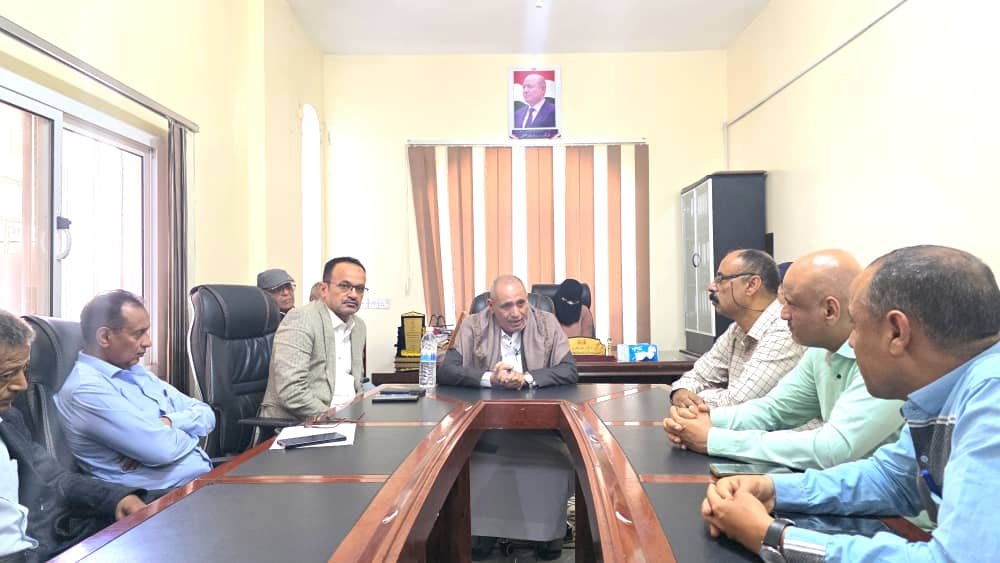
TAIZ, Yemen — Taiz’s deputy governor has warned that the governorate’s health system is near collapse, citing shortages of fuel, oxygen and medicine.
Dr. Abdulqawi al-Mikhlafi, first deputy governor of Taiz, gave the warning during a visit to the Public Health and Population Office on Monday, the state news agency Saba reported.
He reviewed the condition of medical services and the pressures facing facilities across the governorate, according to the agency.
Al-Mikhlafi attributed the deterioration to the continued Houthi siege of the city and to shortages of essential supplies. He said health facilities, ambulances and civilians had been subjected to attacks.
He directed the Health Office to compile a documented report on violations against the health sector in the coastal districts and al-Hujariyah. The report is to cover attacks on medical facilities and their use as military barracks, he said.
Al-Mikhlafi said the use of medical premises as barracks breached international conventions protecting medical facilities and personnel.
The office’s director general, Dr. Fahd al-Nadhari, set out the figures at the meeting.
Services at 12 hospitals and 18 health centres are at risk of shutting down, al-Nadhari said.
A further 120 health facilities have ceased operations entirely, according to his account. He said 66 others were only partly working in districts under Houthi control.
The governorate’s two dialysis centres are also under threat. They provide about 6,300 treatment sessions a month to around 1,100 patients, according to the office.
Al-Nadhari put the number of children under five affected by the deterioration at 186,415. He said 22,986 pregnant women had also been affected.
The office recorded 5,057 children with severe acute malnutrition and 27,752 with moderate acute malnutrition.
A further 9,454 infants under one year have been deprived of routine immunisation, al-Nadhari said.
Stocks of emergency medicines and medical supplies have fallen to about 30 percent of requirements, according to the office. Fuel availability has dropped to 5 percent and oxygen to 2 percent.
The health sector has lost or had damaged 15 ambulances and 22 intensive care beds, he said. Some medical facilities have been turned into military barracks, according to the same account.
Yemen Herald could not independently confirm the governorate’s figures. They rest on the Taiz health office’s own account as carried by Saba, and no separate count of them has been published.
Laurent Bukera, the United Nations humanitarian coordinator for Yemen, said on Oct. 20 that the health system in Taiz was close to collapse. He said shortages threatened hospital energy supplies and medical oxygen, according to Human Rights Watch, which cited his statement.
Water production in Taiz city had been halved, Bukera said in the same statement.
The World Food Programme said on Oct. 14 that it had not been able to reach more than 600,000 people in Taiz who depend on humanitarian assistance, according to the rights group.
Jens Laerke, a spokesperson for the U.N. humanitarian office, said on Oct. 23 that the city had been cut off for 20 days.
Akhil Iyer, UNICEF’s representative in Yemen, said diesel shortages threatened to halt water pumps and that the cost of trucked water had tripled since the escalation began, according to the same report.
Human Rights Watch said on Oct. 29 that Houthi forces had encircled Taiz in October and blocked the main roads linking it to the rest of the country. It said the road to Aden was the most important of them.
Niku Jafarnia, a Yemen and Bahrain researcher at Human Rights Watch, said the Houthis had bombed, starved and denied humanitarian aid to residents of the city over the course of the siege.
The group said it interviewed fifteen people in October, among them five residents, four doctors and six civil society workers.
One doctor said a facility had stopped working for three days after running out of diesel. A health worker said the oxygen shortage threatened emergency surgery, intensive care, dialysis and neonatal care.
A resident who runs an aid organisation said the price of cooking gas had risen by about 400 percent. Vegetable prices had doubled, another resident said.
The cost of moving goods by truck has doubled, the leader of a local civil society group told the rights group.
Human Rights Watch said the siege may amount to the war crime of using starvation as a method of warfare.
The Houthis reject that account. A Houthi spokesperson told Human Rights Watch on Oct. 21 that government forces, not Houthi forces, were blocking roads into the city.
Al Jazeera reported on Oct. 24 that a hospital in Taiz had warned it could close within days because of fuel shortages.
Al-Mikhlafi commended health workers for keeping services running and urged closer coordination among health authorities.
The meeting called for intervention to supply medicines, equipment, fuel and oxygen, Saba reported.
Taiz has been divided by front lines since 2015. Government forces hold the city centre and Houthi forces hold ground around it.
The United Nations humanitarian response plan for Yemen, issued in March, recorded more than 22 million people in need of assistance. It put the number of acutely food insecure at 18.3 million.
The plan counted more than 2.2 million children under five as acutely malnourished, including 516,157 severe cases. It recorded 5.2 million internally displaced people.
The appeal sought $2.16 billion to reach 12 million people.
Al-Nadhari gave no figure for deaths linked to the shortages.
About the Author


 Adel Haddad