
Yemen’s Deputy Foreign Minister Meets Outgoing ICRC Mission Head
 Yemen Herald News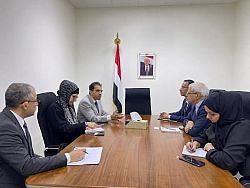
Yemen’s Deputy Foreign Minister has met the outgoing head of the International Committee of the Red Cross mission in Aden, in an exchange that highlighted the intersection of humanitarian work and diplomacy in a country enduring one of the world’s worst crises. Mustafa Noman, the Vice Minister of Foreign Affairs, met Mahmoud Abu Haseeba as the latter concluded his tenure leading the ICRC’s mission in the interim capital.
Meetings of this kind, while diplomatic in form, carry significance for the humanitarian response in Yemen. The relationship between the government and humanitarian organisations shapes the environment in which assistance is delivered, and engagement between officials and the leaders of such organisations is part of the coordination that underpins the response to the crisis.
The conflict in Yemen, which escalated from 2014 onward, has produced a catastrophic humanitarian situation, with millions facing hunger and disease. The war has drawn in regional actors, and the resulting environment has posed profound challenges for the delivery of humanitarian assistance across the country.
The International Committee of the Red Cross has been a key humanitarian actor in Yemen, operating amid the complexities of the conflict. Its work encompasses a range of activities, from supporting health facilities and water systems to visiting detainees and assisting with the exchange of prisoners, reflecting its distinctive role and mandate in situations of armed conflict.
The ICRC’s neutrality and its mandate under international humanitarian law allow it to operate across the lines of a conflict, engaging with the various parties to facilitate its work. This role is particularly important in a fragmented environment such as Yemen’s, where reaching those in need requires engagement with the different authorities controlling different areas.
The transition in the leadership of the ICRC’s mission, marked by the meeting, reflects the ordinary rotation of personnel in humanitarian organisations. Such transitions provide occasions to review cooperation and to reaffirm relationships, ensuring continuity in the engagement between the organisation and the authorities in the areas where it works.
The humanitarian crisis that the ICRC and other organisations seek to address remains among the most severe in the world. With a large share of the population in need of assistance, and with millions displaced and food insecure, the scale of the need places enormous demands on humanitarian organisations and on the coordination that supports their work.
The engagement between the government and humanitarian organisations is important to the effectiveness of the response. Cooperation on matters such as access, security and coordination can facilitate the delivery of assistance, while good relationships between officials and organisations help ensure that the response is well coordinated and responsive to needs.
The role of humanitarian diplomacy, reflected in such meetings, encompasses the engagement required to enable and sustain humanitarian work. Negotiating access, building relationships and coordinating with authorities are essential to the delivery of assistance, particularly in a complex and contested environment such as Yemen’s.
The challenges facing humanitarian organisations in Yemen are considerable. Insecurity, access constraints, funding shortfalls and the sheer scale of the needs all complicate the delivery of assistance, and navigating these challenges requires sustained effort and engagement with the various actors involved in the conflict.
The ICRC’s work on issues such as detainees and the missing is of particular significance in the Yemeni context. The fate of detainees and the disappeared has been among the most painful humanitarian issues of the conflict, and the organisation’s role in facilitating exchanges and visits addresses a matter of profound importance to affected families.
The support provided by humanitarian organisations to health and water systems addresses critical needs in a country where services have been severely degraded. The functioning of hospitals, clinics and water infrastructure is essential to the health and survival of the population, and support in these areas is central to the humanitarian response.
The engagement between Yemen’s government and the ICRC reflects the broader web of relationships that underpin the humanitarian response. Sustaining these relationships is important to the effective delivery of assistance, and meetings such as this one contribute to the ongoing coordination between the authorities and humanitarian organisations.
The continuation of humanitarian work in Yemen depends, as ever, on adequate funding and on the maintenance of access and security. Humanitarian operations have faced significant challenges on these fronts, and sustaining the response requires the continued engagement and support of the international community alongside cooperation with local authorities.
The importance of the humanitarian response to Yemen’s population is difficult to overstate. For millions of people, humanitarian assistance is essential to survival, and the work of organisations such as the ICRC, supported by coordination with the authorities, is central to meeting the immense needs generated by the conflict.
The occasion also offered a moment to acknowledge the personal dimension of humanitarian work in a place as demanding as Yemen. Those who lead relief missions there operate under considerable strain, balancing the imperatives of neutrality with the pressures exerted by the parties to the conflict, and the departure of a mission head after a period of service is customarily marked by a recognition of that difficult stewardship. For the government, maintaining warm working relations across such transitions helps ensure that the practical cooperation on which aid delivery depends is not disrupted by changes of personnel.
For now, the meeting between Noman and Abu Haseeba reaffirmed the engagement between Yemen’s government and the ICRC and the importance of cooperation in sustaining the humanitarian response. As the country continues to grapple with its crisis, the relationship between the authorities and humanitarian organisations remains an important element of the effort to assist those in need.
About the Author




