Yemen Herald News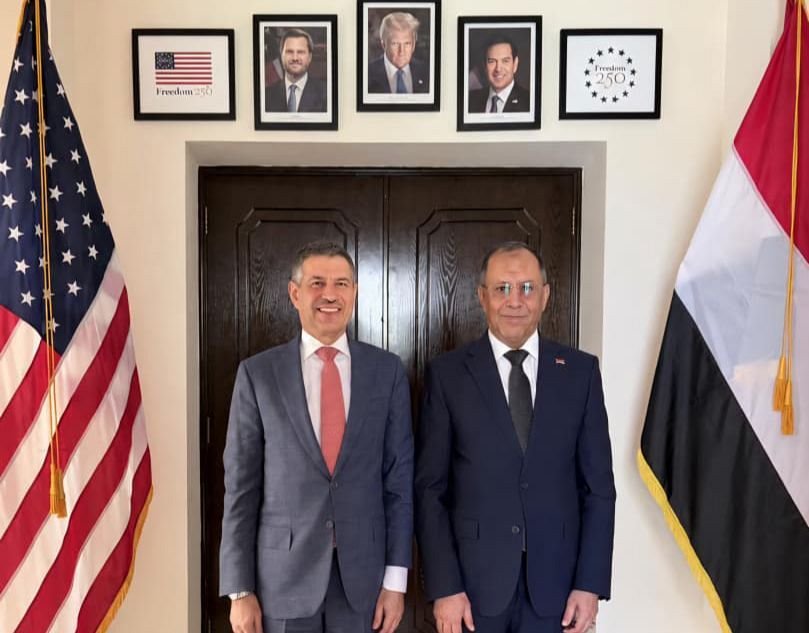
Recent discussions between Yemen’s Minister of Industry and Trade, Mohammed Al-Ashwal, and U.S. Ambassador Steven Fagin mark a pivotal moment in Yemen’s economic landscape. This engagement not only underscores the potential for revitalizing Yemen’s economy but also highlights the strategic importance of U.S. involvement in a region fraught with challenges and opportunities.
Yemen has been embroiled in a devastating conflict since 2015, leading to one of the world’s worst humanitarian crises. The ongoing war has crippled its economy, disrupted trade, and left millions in dire need of assistance. However, amidst this turmoil, there lies a glimmer of hope. The Yemeni government is actively seeking to stabilize and modernize its economy, and recent talks with the U.S. ambassador signal a potential shift in international engagement. The U.S. has historically played a significant role in the Middle East, and its renewed interest in Yemen could be a game-changer, particularly in fostering economic resilience and development.
The meeting between Al-Ashwal and Fagin focused on expanding economic cooperation and investment partnerships. They discussed the urgent need to address challenges affecting trade, particularly the rising costs of shipping and marine insurance due to Houthi attacks on international shipping lanes. These attacks not only threaten the stability of food supplies but also inflate commodity prices, exacerbating the humanitarian crisis. The Yemeni government is keen on creating a more attractive investment environment, emphasizing sectors like energy, agriculture, and industrial development. Al-Ashwal’s mention of digital transformation and modernization efforts reflects a commitment to improving governance and transparency, which are critical for attracting foreign investment.
The implications of U.S. investment in Yemen could be profound. Economically, it could lead to job creation, infrastructure development, and a more stable supply chain for essential goods. Politically, it may strengthen the Yemeni government’s position against the Houthis by demonstrating international support and legitimacy. Moreover, U.S. involvement could serve as a counterbalance to Iranian influence in the region, as Yemen is strategically located near key maritime routes. However, the success of these initiatives hinges on the establishment of a secure environment for investors, which remains a significant hurdle given the ongoing conflict and instability.
The discussions between Yemen and the U.S. reflect a broader geopolitical strategy. The U.S. is likely recalibrating its approach in the Middle East, recognizing that economic stability in Yemen could contribute to regional security. The focus on investment in sectors like energy and agriculture aligns with global trends towards sustainable development. However, the risks are substantial. The volatile security situation, coupled with the entrenched interests of various factions within Yemen, poses significant challenges. The Yemeni government must navigate these complexities while ensuring that reforms are not only implemented but also perceived as legitimate by the populace.
Looking ahead, several scenarios could unfold. If the Yemeni government successfully implements its reform agenda and creates a conducive environment for investment, we could see a gradual influx of U.S. companies exploring opportunities in Yemen. This could lead to a revitalization of the economy and a potential shift in the balance of power within the region. Conversely, if security concerns persist and the Houthis continue their aggressive tactics, foreign investment may remain hesitant, stalling any progress. The international community’s response will also be crucial; sustained diplomatic efforts and support for Yemen’s reconstruction will be necessary to ensure long-term stability.
The dialogue between Yemen’s Minister of Industry and Trade and the U.S. Ambassador is a critical step towards economic recovery and stability in Yemen. It highlights the potential for U.S. investment to play a transformative role in a country that has suffered immensely from conflict. However, the path forward is fraught with challenges that require not only commitment from the Yemeni government but also a concerted effort from the international community to support Yemen’s journey towards recovery and resilience.
About the Author