Al-Alimi Marks 70 Years of Yemeni-Chinese Relations
 Yemen Herald News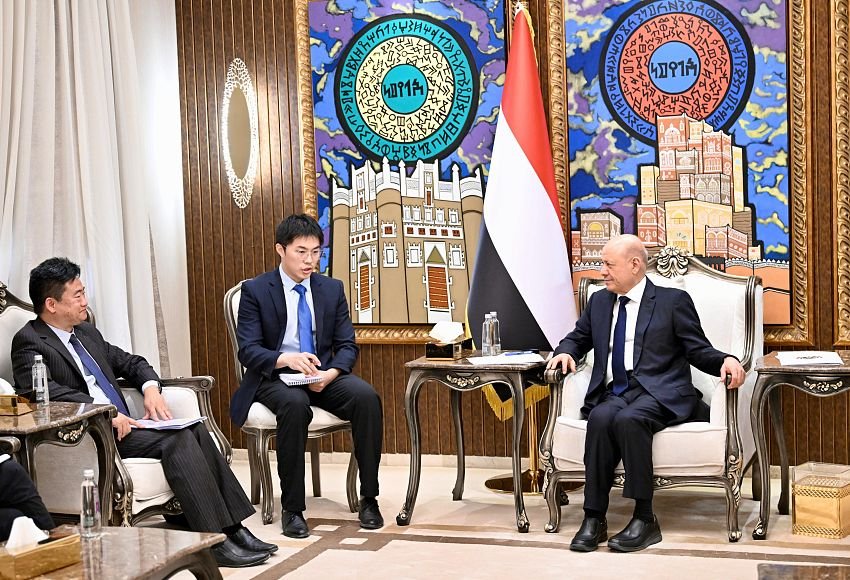
Yemen’s al-Alimi has marked the 70th anniversary of relations with China, praising a partnership that officials describe as significant for the country’s economic prospects and its place in the region. The remarks by Dr. Rashad al-Alimi, Chairman of the Presidential Leadership Council, underscored the value attached to the relationship and to the potential for cooperation with a major global power.
The seven-decade history of relations between Yemen and China is rooted in longstanding ties and shared interests, particularly in the economic sphere. The anniversary provided an occasion to reaffirm the relationship and to look toward its future development, at a time when Yemen is seeking partners to support its recovery.
Yemen’s geopolitical significance has often been overshadowed by its internal conflict and humanitarian crisis. Yet its strategic location at the southern entrance to the Red Sea makes it a country of importance to international maritime trade and to energy security, giving it a relevance that endures despite the difficulties of its situation.
China’s interest in Yemen is shaped in part by its broader engagement in the region and by its Belt and Road Initiative, an expansive programme of infrastructure and economic cooperation. Yemen’s location, near vital shipping lanes, gives it potential relevance to such initiatives, and cooperation with China could open avenues for support of the country’s development.
The relationship between the two countries has encompassed economic and other dimensions, reflecting shared interests over the decades. The anniversary served to highlight this history and to signal an interest in strengthening cooperation, particularly in areas relevant to Yemen’s recovery and development.
China’s capacity in infrastructure and its experience in development projects worldwide lend significance to its potential role in Yemen. Should cooperation develop, it could bring resources and expertise to bear on the country’s needs, complementing the engagement of other international partners and contributing to efforts at recovery.
The strategic location of Yemen at the southern entrance to the Red Sea, near the Bab al-Mandab strait, is central to its significance in international affairs. The security of these waters, through which a substantial share of global trade passes, is a matter of wide concern, giving Yemen a relevance to global commerce and energy security.
The Belt and Road Initiative reflects China’s broader strategy of expanding economic connections and infrastructure across many countries. Yemen’s potential relevance to such connectivity, given its location, could provide a basis for cooperation, though the realisation of any such potential faces significant challenges in the current environment.
The cultivation of relationships with major powers such as China forms part of Yemen’s broader diplomatic effort. Engaging with a diverse range of partners helps the government sustain its international standing and advance its interests, and the relationship with China represents one avenue through which support for recovery might be pursued.
The economic dimension of the relationship holds particular relevance to Yemen’s recovery. With its economy devastated by conflict, the country requires support and investment to rebuild, and cooperation with a major economic power such as China could contribute to these efforts, subject to the evolution of the situation.
The anniversary reflects the endurance of the relationship over seven decades, spanning significant changes in both countries and in the wider world. The persistence of the ties provides a foundation for their continued development, and references to this history serve to reinforce a sense of continuity and mutual interest.
China’s measured engagement with Yemen reflects its broader approach to the region and its interests. As a major power with global interests, China has a stake in the stability of a country situated near vital shipping lanes, and its engagement reflects the intersection of its economic ambitions and its interest in regional stability.
The prospects for cooperation between Yemen and China will depend on a range of factors, including the security situation and the practical feasibility of economic activity. Translating the goodwill of an anniversary into concrete cooperation requires favourable conditions and sustained effort, and progress may be gradual given the challenges Yemen faces.
The relationship also reflects Yemen’s interest in diversifying its international partnerships. Engaging with a range of partners, including major economies such as China, allows the government to broaden its base of support and to pursue avenues for cooperation that complement its ties with Gulf, Western and other partners.
The significance attached to the relationship reflects the potential that cooperation with China could hold for Yemen’s future. As the country looks toward eventual recovery and reconstruction, the engagement of major economies will be important, and the relationship with China represents one dimension of the country’s efforts to secure such engagement.
Anniversaries of this kind, though largely symbolic, allow a government with few sources of leverage to signal its openness to the world and to keep alive relationships that may bear fruit only in a more settled future. For Yemen, courting an economic giant such as China carries an obvious appeal given the immense scale of the reconstruction that awaits, and officials are conscious that the groundwork for later investment is often laid in precisely such gestures of goodwill. Yet they are equally aware that China’s engagement, like that of other major powers, is calibrated to its own interests and to conditions on the ground, and that warm words at an anniversary are no guarantee of the sustained commitment that genuine recovery would require.
For now, al-Alimi’s remarks marking the 70th anniversary reaffirmed the ties between Yemen and China and the interest in strengthening cooperation. As Yemen seeks partners to support its recovery, the relationship with China, grounded in decades of engagement, represents one avenue through which resources and cooperation might be mobilised for its development.
About the Author