Iranian Attack on Manama Building Kills Woman as Gulf States Intercept Missiles and Drones
 Yemen Herald News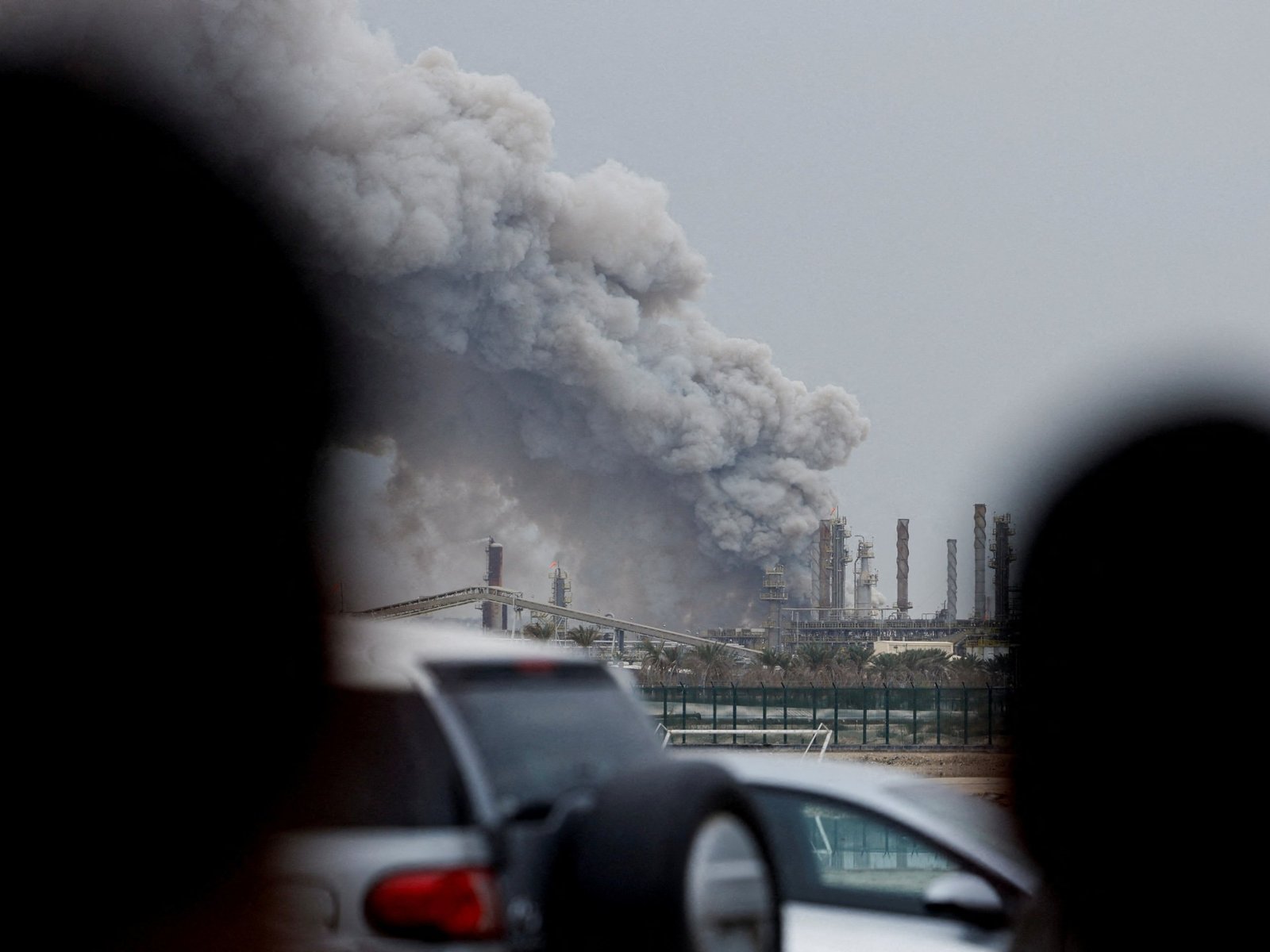
A 29-year-old woman was killed and eight people were injured when a residential building in Manama was struck during Iranian attacks on Bahrain in March 2026, the kingdom’s interior ministry said. The strike was part of a wider Iranian campaign against Gulf states hosting or aligned with United States forces, and it marked one of the first civilian deaths on Bahraini soil since the conflict began.
Bahraini authorities reported that the capital had been hit in successive waves. Earlier attacks damaged a hotel and residential buildings in Manama, and a drone directed at the Bahrain Financial Harbour towers, a complex that houses the Israeli embassy, was intercepted and destroyed before impact. A separate drone strike on the island of Sitra, south of Manama, wounded two people, among them children, according to reports at the time.
The Bahrain Defence Force General Command said the country’s air defences had destroyed 102 missiles and 173 drones aimed at Bahraini territory over the course of the campaign. The figures give a sense of the volume involved and of how much of it was stopped before reaching a target, though a small proportion of leakage through a defensive screen is enough to produce civilian casualties when the objects that get through fall on housing.
Bahrain was not alone. Saudi Arabia reported destroying two drones over its oil-producing Eastern Province, the region that holds much of the kingdom’s export infrastructure. Kuwait’s National Guard said it had shot down six drones aimed at several areas of the country. The United Arab Emirates also intercepted incoming munitions during the same period. Taken together, the pattern indicated a campaign directed not at one state but at the Gulf Cooperation Council states collectively, on the basis of their security relationships with Washington.
Bahrain’s position is particularly exposed. It is the smallest of the Gulf monarchies, it lies close to the Iranian coast, and it hosts the headquarters of the United States Fifth Fleet at Naval Support Activity Bahrain. That combination leaves very little separation between military installations and civilian districts, and very little warning time. Manama’s density means that a munition that misses a military target is likely to land somewhere populated, which is what happened in the strike that killed the woman.
Civil defence procedures were adapted quickly. Bahraini authorities issued guidance on shelter-in-place arrangements, schools moved to remote teaching in parts of the capital for a period, and hospitals were placed on standby for mass-casualty admissions. Residents described alerts arriving at night, followed by the sound of interceptors, and in some districts by debris falling in streets and on parked vehicles after successful engagements — a hazard that persists even when a defence works as intended.
The Gulf states have invested heavily in layered air defence over the past decade, combining long-range interceptors with shorter-range systems and, more recently, counter-drone equipment. The March exchanges tested those investments at scale. Interception rates reported by the defence forces were high, but the economics of the exchange favour the attacker: cheap one-way attack drones are launched in volume against interceptors that cost many times more, and defensive stocks are finite.
Washington’s response was framed around the Strait of Hormuz. President Donald Trump warned that attacks on Iran would escalate sharply if Tehran attempted to close the waterway, through which roughly a fifth of the world’s seaborne oil normally passes. Traffic through the strait had already fallen steeply since the fighting began in early March, with insurers withdrawing cover and owners keeping tonnage out of the Gulf.
Energy markets moved accordingly. Reports at the time described Brent crude spiking towards $120 a barrel before settling around $90, a range that still represented a substantial premium on pre-conflict levels. The volatility reflected two separate risks priced simultaneously: the possibility that transit through Hormuz would stop altogether, and the possibility that production and export facilities in the Gulf states themselves would be struck. The drones over Saudi Arabia’s Eastern Province spoke directly to the second.
There was also a domestic political dimension. Bahrain’s relationship with Iran has been strained for years, and Manama has repeatedly accused Tehran of interference in its internal affairs, charges Iran denies. Attacks that killed a civilian in the capital hardened official rhetoric considerably, and Bahraini officials pressed partners in the Gulf and beyond for a coordinated response to the drone and missile threat rather than national responses taken separately.
For Bahrain the consequences ran beyond the immediate casualties. The country’s economy depends on financial services, aluminium production and refining, all of which require the confidence of international counterparties. Attacks on the capital, and on a tower complex at the centre of its financial district, carry a reputational cost that outlasts the physical damage. Insurance rates for the country rose, and some international staff were withdrawn.
The Bahraini government characterised the attacks as unprovoked aggression against a sovereign state and pressed for international condemnation, while Iranian officials framed the campaign as retaliation against countries facilitating the United States and Israeli operation against Iran. Neither position was likely to persuade the other, and the practical effect for residents of Manama was the same: a period in which air raid alerts became routine and in which the distinction between military and civilian districts, never wide in an island state of that size, effectively disappeared.
About the Author