Yemen’s Women’s Affairs Minister and French Ambassador Discuss Empowerment
 Yemen Herald News
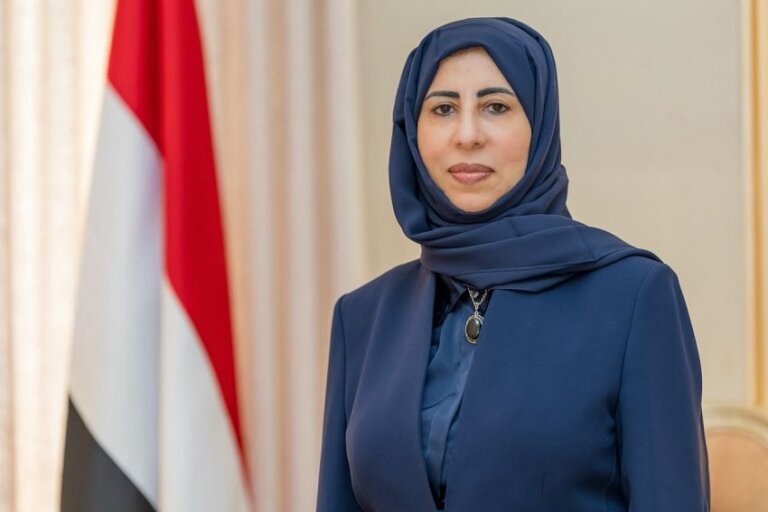
Yemen’s Minister of State for Women’s Affairs, Dr. Ahd Jaasous, has held a video conference with the French Ambassador to Yemen, Catherine Corm-Kammoun, to discuss ways of strengthening cooperation in support of women across the country. The talks, held on Monday, focused on empowering women and promoting their active participation in Yemen’s development, at a time when the needs and potential of women feature increasingly in discussions about the country’s future.
During the meeting, both officials explored mechanisms for coordination that would bolster programmes aimed at women’s empowerment. They emphasised the importance of women playing a significant role in achieving peace, security and sustainable development, framing the advancement of women not as a peripheral concern but as integral to the country’s recovery and stability.
Dr. Jaasous underlined the critical importance of women’s involvement in reconstruction and in decision-making processes, describing it as essential to achieving a lasting peace. She expressed appreciation for France’s ongoing support for women’s issues and empowerment initiatives, and she stressed the need to expand partnerships that could benefit women throughout Yemen.
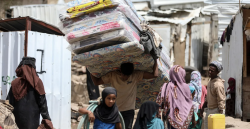
The position of women in Yemen has been profoundly affected by the conflict. Years of war and displacement have placed enormous burdens on women, many of whom have assumed responsibility for households and communities amid the loss or absence of male relatives. Yet their formal participation in public life and decision-making has often remained limited, a gap that advocates and officials have sought to address.
The linkage of women’s empowerment to peace and security reflects an international consensus that has developed over recent decades. The recognition that women have a vital role to play in peacebuilding, and that their inclusion strengthens the prospects for durable settlements, has become a prominent theme in global discussions of conflict and its resolution, and it resonates in the Yemeni context.
Women’s participation in reconstruction, highlighted by Dr. Jaasous, carries particular significance for a country that will eventually face the enormous task of rebuilding. Ensuring that women are involved in shaping and implementing recovery efforts can help make those efforts more effective and more responsive to the needs of communities, half of whose members are women.
The involvement of women in decision-making, similarly, is widely regarded as important both as a matter of principle and for practical reasons. Inclusive decision-making tends to produce outcomes that better reflect the needs and perspectives of the whole population, and the participation of women can contribute to more equitable and sustainable results across a range of domains.
France’s support for women’s issues in Yemen, acknowledged by the minister, reflects the engagement of international partners in this area. Donor governments and organisations have increasingly recognised the importance of supporting women in conflict-affected settings, and cooperation of the kind discussed can provide resources, expertise and encouragement for empowerment initiatives.
The emphasis on coordination mechanisms points to the practical dimension of such cooperation. Effective support for women’s empowerment requires not only good intentions but structured collaboration, clear objectives and the means of translating commitments into programmes that reach women on the ground. Developing these mechanisms is central to achieving tangible results.
The challenges facing women in Yemen are considerable. Beyond the general hardships of conflict, women may face specific risks and barriers, from heightened vulnerability to violence and exploitation to obstacles in accessing services, education and economic opportunity. Addressing these challenges requires sustained and comprehensive efforts across multiple fronts.
Empowerment programmes can take many forms, from supporting women’s economic activity and access to education to promoting their participation in civil society and public institutions. The diversity of women’s needs calls for a range of interventions, and partnerships with international actors can help extend the reach and impact of such initiatives.
The existence of a Ministry of State for Women’s Affairs reflects an institutional recognition of the importance of these issues. Dedicated attention at the governmental level can help ensure that women’s concerns are represented in policymaking and that efforts to advance their interests receive sustained focus, even amid the many competing demands of a country in crisis.
Sustainable development, invoked in the discussions, depends on the full participation of society, women included. Excluding half the population from economic and social life deprives a country of resources and capacities essential to its progress, while inclusive development can enhance resilience and drive broader improvements in wellbeing.
The expansion of partnerships, called for by Dr. Jaasous, reflects an understanding that advancing women’s empowerment in Yemen requires the support of a range of actors. Building and strengthening relationships with international partners such as France can help mobilise the resources and expertise needed to sustain and broaden empowerment efforts over time.
The framing of women’s participation as central to peace echoes principles enshrined in the international agenda on women, peace and security, which holds that the meaningful involvement of women in preventing and resolving conflict makes settlements more durable. Applying those principles in Yemen has proved difficult amid the realities of war and entrenched social barriers, but their persistence in official discourse, as in the exchange between the minister and the ambassador, signals a continued aspiration to ensure that women are not left out of decisions about the country’s future.
For now, the meeting between Dr. Jaasous and Ambassador Corm-Kammoun reaffirmed a shared commitment to supporting women in Yemen and to promoting their participation in the country’s development, peace and reconstruction. As Yemen looks toward its future, the empowerment of women is likely to remain an important element of efforts to build a more stable and inclusive society.
About the Author