UN Human Rights Council adopts Yemen technical assistance resolution without a vote
 Yemen Herald News
GENEVA, Switzerland — The UN Human Rights Council adopted a resolution on technical assistance and capacity-building for Yemen without a vote on Oct. 7.
The text was tabled under agenda item 10 as draft resolution A/HRC/63/L.33.
Yemen’s Ministry of Human Rights welcomed the adoption in a statement the following day.
The ministry said the resolution reflected continued international support for the Yemeni government and its national institutions, according to the state news agency Saba.
It said the outcome followed coordination between the ministry, Yemen’s Permanent Mission in Geneva and what it described as brotherly and friendly countries.
The ministry thanked Iraq, in its capacity as chair of the Arab Group, for submitting the draft.
It also thanked Saudi Arabia and other members of the core group that sponsored the text.
The ministry said it would follow implementation with the Office of the UN High Commissioner for Human Rights and with national institutions, so that programmes address what it called actual needs.
It named no individual officials in the statement.
The Council’s own published summary of the session records the resolution as adopted without a vote.
Under the text, the Council requests all parties to the conflict in Yemen to fully implement Security Council resolution 2216.
The Security Council adopted resolution 2216 in April 2015, by 14 votes to none, with Russia abstaining.
That resolution demanded the Houthis end the use of violence and withdraw from all areas they had seized, including Sanaa.
It further demanded they relinquish arms taken from military and security institutions, including missile systems, and release detained political figures.
It imposed a targeted arms embargo barring the supply of weapons, military equipment, training and armed mercenary personnel to named individuals, among them former president Ali Abdullah Saleh and Houthi figures Abdullah Yahya al-Hakim and Abd al-Khaliq al-Huthi.
The embargo also covers technical assistance, training and financial or other military-related support.
It allows states to inspect cargo bound for Yemen where they have reason to believe it carries prohibited items.
Jordan held the Security Council presidency that month. Saleh was killed in Sanaa in December 2017 after breaking with the Houthis.
The Human Rights Council text encourages the parties to reach a comprehensive agreement to end the conflict, with the full and effective participation of women.
It requests the High Commissioner to report on the implementation of technical assistance at the Council’s sixty-sixth session.
It also asks the Secretary-General to ensure the High Commissioner’s office has the resources it needs for technical assistance and capacity-building work in Yemen.
The adoption came on the closing day of the Council’s sixty-third regular session.
That session opened in Geneva on Sept. 7 and ran to Oct. 7.
Across the session the Council adopted 34 resolutions, two decisions and one President’s statement.
The reporting request falls to Volker Türk of Austria, the UN High Commissioner for Human Rights.
The General Assembly approved a second four-year term for Türk by a recorded vote of 144 in favour, 10 against and 13 abstentions.
That term runs from Oct. 12, 2026 to Oct. 11, 2030.
Türk’s office is based in Geneva, where the Council also sits.
Agenda item 10 covers technical assistance and capacity-building. It is the Council’s cooperative track, framed around support to a state rather than external scrutiny of it.
Yemen has been handled under that item since October 2021.
On Oct. 7 of that year, five years to the day before the current text was adopted, the Council rejected by roll-call vote a resolution that would have renewed the mandate of its Group of Eminent Experts on Yemen.
The Council had asked the High Commissioner to establish that group in resolution 36/31 of 2017, and renewed its mandate in 2018, 2019 and 2020.
The group was mandated to examine alleged violations by all parties to the conflict since September 2014 and, where possible, to identify those responsible.
Its mandate lapsed at the close of the Council’s 48th session, which ended that October.
In a statement after the vote, the group called the decision a “major setback” for victims and said the Council appeared to be abandoning the people of Yemen.
It attributed the outcome to a lack of political will.
Item 10 resolutions on Yemen predate that shift. The Council adopted technical assistance and capacity-building texts on Yemen as resolutions 18/19 in 2011, 24/32 in 2013, 30/18 in 2015 and 33/16 in 2016.
Yemen’s internationally recognised government and the Houthi authorities have run parallel administrations since the Houthis took Sanaa in September 2014.
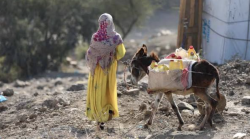
The UN humanitarian needs and response plan for Yemen, issued in March 2026, says more than 22 million people in the country need some form of assistance.
The plan puts the number of acutely food insecure at 18.3 million.
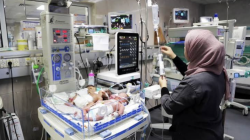
It says more than 2.2 million children under five are acutely malnourished, 516,157 of them severely.
It records 5.2 million internally displaced people.
The plan seeks 2.16 billion dollars to reach 12 million of those in need.
Yemen’s Permanent Mission in Geneva is the government’s standing channel to the Council and its mechanisms.
The ministry’s statement did not say when it expected implementation talks with the High Commissioner’s office to begin.
About the Author