Yemen and Bulgaria Discuss Closer Cooperation on Diplomatic Training in Sofia
 Yemen Herald News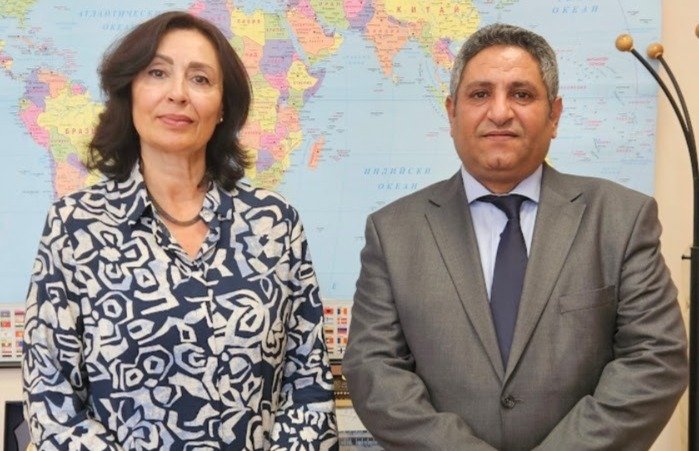
Yemen and Bulgaria have opened talks aimed at deepening cooperation between their foreign services, with a particular focus on the training and professional development of diplomats. In a meeting in Sofia on Wednesday, Ahmed Shammar, the Chargé d’Affaires at the Yemeni Embassy in Bulgaria, sat down with Ambassador Tanya Mihaylova, director of the Bulgarian Diplomatic Institute, to explore how the two countries might build closer institutional ties.
The discussion centred on activating cooperation between the diplomatic training bodies of the two nations. Both sides highlighted the value of shared training programmes, professional capacity-building and the exchange of expertise and best practices, framing such collaboration as a practical way to strengthen each country’s diplomatic capabilities while nurturing warmer bilateral relations.
For Yemen, the significance of the meeting lies less in its immediate substance than in what it represents. A government contending with the aftermath of years of war is working hard to maintain its international reach, and investment in the skills of its diplomats is one of the few levers available to a state whose resources are stretched thin. Well-trained diplomats are essential to securing humanitarian assistance, attracting development support and making Yemen’s case in international forums.
The Bulgarian Diplomatic Institute, which operates under the country’s Ministry of Foreign Affairs, specialises in exactly this kind of work. It provides training for diplomats and public officials, runs professional development programmes and maintains partnerships with counterpart institutions across Europe and beyond. For a partner such as Yemen, access to that expertise offers a route to modernising its own foreign-service training at relatively low cost.
Bulgaria brings a particular vantage point to the relationship. A member of both the European Union and NATO, it sits within the institutions that shape much of the international response to crises like Yemen’s. Closer ties with Sofia could, over time, help Yemen build relationships with the wider European community, where decisions on aid, trade and diplomatic support carry real weight for a country in need of allies.
The backdrop to the talks is Yemen’s long and grinding conflict. Fighting that escalated in 2015 has produced one of the world’s gravest humanitarian emergencies, with millions of people struggling to obtain food, healthcare and basic services. The war has strained the state’s institutions at every level, and rebuilding professional capacity — including within the diplomatic corps — is part of the broader challenge of restoring functional governance.
Yemen’s internationally recognised government, led by the Presidential Leadership Council based in the interim capital, Aden, has sought to reassert civilian authority over areas affected by the conflict and to project stability to the outside world. Diplomacy is central to that effort. Every meeting that reinforces the government’s standing abroad, however modest, contributes to a wider campaign to keep Yemen’s case visible and its partnerships intact.
The emphasis on training reflects a recognition that soft, institutional cooperation can lay durable foundations for relations between states. Rather than focusing solely on high-profile agreements, both Shammar and Mihaylova pointed to the professional development of diplomats as a long-term investment — one that cultivates the habits of dialogue and mutual understanding on which future cooperation can be built.
For a country in Yemen’s position, such capacity-building carries added importance. The diplomats trained today will be the ones negotiating aid packages, representing the government at international conferences and helping to manage the country’s complex relationships with regional and global powers. Strengthening their skills is therefore not a peripheral concern but a component of national recovery.
The geopolitics surrounding Yemen only sharpen the stakes. The conflict has drawn in a range of external actors and remains entangled with wider regional rivalries, making effective diplomacy all the more valuable. In an environment where competing influences pull in different directions, a well-prepared foreign service can help the government navigate pressures that a weaker diplomatic apparatus might struggle to withstand.
Cooperation of this kind also serves Bulgaria’s interests. Building relationships with partners in the Middle East and expanding the reach of its diplomatic institutions enhances Sofia’s international profile and its role within European foreign-policy structures. Bilateral training initiatives are a low-cost, low-risk way to cultivate goodwill and open channels that may prove useful on other issues in the future.
Bulgaria and Yemen have maintained diplomatic relations for decades, though ties have been overshadowed in recent years by the demands of the conflict. The Bulgarian Diplomatic Institute, established in the mid-2000s, has grown into a respected training body that cooperates with institutes across the European Union and with international partners specialising in foreign-policy education. Aligning Yemen’s own training efforts with such an institution could give its diplomats access to modern curricula, simulation exercises and professional networks that would otherwise be difficult for a war-affected government to assemble on its own.
While a single meeting between a chargé d’affaires and an institute director will not transform the fortunes of either country, it illustrates the patient, unglamorous work through which diplomatic relationships are maintained and extended. For Yemen, still fighting to hold its place in the international community amid a devastating war, even incremental steps of this sort matter. The Sofia talks suggest a shared willingness to keep building ties that, in time, could yield tangible benefits for both nations.
About the Author