Yemen’s cabinet condemns drone attacks on Saudi Arabia’s East-West oil pipeline
 Yemen Herald News
ADEN, Yemen — Yemen’s Council of Ministers condemned the drone attacks that struck Saudi Arabia’s East-West oil pipeline, the Saudi Press Agency reported.
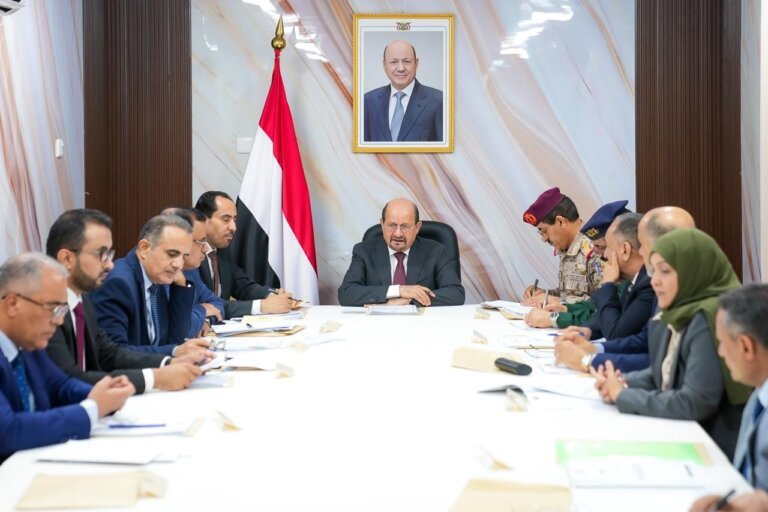
The cabinet met in Aden on Sunday under Prime Minister Shaya Mohsen al-Zindani. It said the drones had been launched from Iraqi territory.
Ministers affirmed what the readout called Yemen’s full solidarity with Saudi Arabia. They said the kingdom had a legitimate right to safeguard its security, its citizens and its national resources.
The cabinet said the use of Yemeni territory as a platform for attacks on Saudi Arabia was an assault on the interests of the Yemeni people before it was a threat to neighbouring states.
It said that reflected what it described as the foreign agenda under which the Houthi movement operates. The Houthi leadership rejects that description and casts its operations as a response to what it calls aggression against Yemen.
The account of the session rests on the government’s own readout, distributed by the Saudi Press Agency and carried by the newspaper Asharq Al-Awsat. Yemen Herald found no independent account of what ministers said in the room.
The cabinet also recorded its appreciation for Saudi political, economic, military and humanitarian support for Yemen’s internationally recognised government.
Drones hit the pipeline in the Riyadh and Madinah regions on the morning of Sept. 10, according to Saudi statements carried by Arab News. The strikes started fires and damaged pump stations.
Several people were injured, the Saudi foreign ministry said. It condemned the targeting of the line by what it described as several drones coming from Iraq.
Saudi Arabia’s energy ministry said on Sept. 11 that the pipeline had been shut as a precautionary measure.
The line will be mostly out of service for several weeks, PBS reported.
The pipeline carries crude from fields in the Eastern Province across the country to the Red Sea port of Yanbu. It runs about 1,200 kilometres and gives Saudi Arabia an export route that does not pass through the Strait of Hormuz.
Saudi Aramco operates the line, which can carry about five million barrels a day.
Yanbu lies on the Red Sea well north of Bab al-Mandab, the strait at the southern end of the same waterway.
Pumping stations on the same pipeline were hit by drones in May 2019, in an attack claimed at the time by the Houthis.
Turkiye, Sudan and Palestine also condemned the attacks, as did the Arab League, according to Asharq Al-Awsat.
Turkiye’s foreign ministry affirmed its support for Saudi sovereignty and territorial integrity. It commended what it called the kingdom’s restraint and its efforts to avoid widening tensions in the region.
The Turkish statement renewed a call for an immediate end to such attacks. It urged all parties to refrain from steps that could escalate tensions further.
The attack on the pipeline followed a series of strikes on Saudi territory attributed to the Houthis. The Saudi-led coalition said missile and drone attacks wounded 73 people in the kingdom’s south, including women and children.
The Houthis have claimed attacks on Saudi Arabia in recent days. They have not claimed the pipeline strike, which Saudi Arabia attributes to drones from Iraq.
Yemen’s foreign ministry condemned Houthi attacks on Saudi Arabia on Sept. 9 and called for enforcement of the United Nations arms embargo on the group.
The Houthis control Yemen’s capital, Sanaa, and much of the country’s north.
Saudi civil defence said a separate threat at Sharurah, on the border with Yemen, had ended, Gulf News reported.
The condemnation came during a week of Houthi advances on Yemen’s Red Sea coast. The group took the port city of Mocha on Sept. 10, Al Jazeera reported.
Houthi fighters reached Mayyun, the island also known as Perim, in the middle of the Bab al-Mandab Strait the following day, Euronews reported. Government forces withdrew from the coast.
Saudi Arabia’s foreign minister, Prince Faisal bin Farhan, addressed the escalation at the BRICS summit in New Delhi on Sept. 13. He spoke on behalf of Crown Prince Mohammed bin Salman.
He said the kingdom’s security, the integrity of its territory and the protection of its national assets were not open to negotiation.
Gulf Cooperation Council states would not accept the targeting of their territories, facilities or vital interests, he said, whatever pretext was invoked.
The priority should be to reduce tensions and create space for political and diplomatic efforts, he said.
Security in the Arabian Gulf could not be achieved without respect for the sovereignty and independence of its states, he added, nor without non-interference, good neighbourliness and the peaceful settlement of disputes.
He said the credibility of the international system depended on how consistently its rules were applied.
Prince Faisal met his Indian, Vietnamese and Bahraini counterparts on the sidelines of the summit. His talks with the Bahraini minister covered the attacks on Saudi areas, the Saudi Press Agency said.
He also took a telephone call from Sheikh Abdullah bin Zayed Al Nahyan, the United Arab Emirates deputy prime minister and foreign minister, on efforts to contain the escalation.
Prince Faisal said any disruption to shipping through the Strait of Hormuz and other maritime corridors would have repercussions for global markets, supply chains and economic growth.
About the Author