Residents say Houthi authorities are enforcing old banknotes in newly captured coastal areas
 Yemen Herald News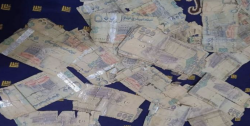
MOKHA, Yemen — Residents of newly captured areas on Yemen’s western coast said Houthi authorities are requiring them to trade in older banknotes and are refusing newer ones.
The accounts come from residents of Mokha and other coastal districts in Taiz and Hodeidah governorates.
Asharq Al-Awsat reported from Mokha that the group has banned notes issued by the Aden central bank, replaced them with older worn notes and newly minted coins, and imposed the exchange rate used in its own territory. Separate reporting from Mokha since the takeover has described the same currency measures. Neither administration has published a formal instruction covering the newly held areas.
The Houthi-run authorities have not announced a currency measure for the coast. The internationally recognised government in Aden has not commented on the reports.
The dispute behind them is documented. The Central Bank of Yemen moved its headquarters from Sanaa to Aden in September 2016, in the second year of the war.
The Aden branch later printed new banknotes to replace worn stock and to pay salaries. The Houthis banned those notes in the territory they control.
The ban left two versions of the same currency in circulation. Each zone came to price goods against its own rate.
The gap between the two rates became a routine feature of commerce between the zones. Traders moving goods across front lines have had to account for it.
The Houthi-run central bank in Sanaa has since issued currency of its own. It put a new 50-rial coin into circulation and announced a 200-rial banknote, saying both would replace worn notes.
The Aden government rejected those issues as unlawful. It has said the Sanaa institution has no authority to print or mint.
The Houthi administration has also moved on fuel pricing. The Houthi-run Yemen Petroleum Company raised petrol and diesel prices in the areas it controls on 16 September.
The coastal districts where the currency reports originate changed hands this month.
The Houthis opened an offensive against the Presidential Leadership Council on 3 September, with the first clashes in Taiz governorate.
The group then advanced along the Red Sea coast. It took Mokha on 10 September and Perim Island the following day, Al Jazeera reported.
That gave the Houthis a position astride the Bab al-Mandab strait. Mokha had been held by forces under Tareq Saleh since 2018.
Fighting has since spread into Lahj governorate and continued across Taiz. Government forces say they have retaken some high ground west of Taiz, an account the Houthis dispute.
Displacement from the offensive has been substantial. A government unit said nearly 147,000 people were displaced in 18 days.
UN agencies put the figure at 112,000 over two weeks. The UN refugee agency said it allocated 2 million dollars for the latest wave.
The UN Office for the Coordination of Humanitarian Affairs said 18,000 displaced families have received aid on the west coast.
A local authority in Taiz counted 65,845 people displaced since August, and said camps in the governorate are over capacity.
Currency and salary payments have been among the war’s longest-running civilian grievances. Public sector workers in Houthi-held areas have gone years without regular pay.
The UN humanitarian response plan published in March 2026 put the number of people needing assistance at more than 22 million.
It recorded 18.3 million people as acutely food insecure. It counted more than 2.2 million children under five as acutely malnourished, 516,157 of them severely.
The plan listed 5.2 million internally displaced people and sought 2.16 billion dollars to reach 12 million of those in need.
Food prices in Yemen are set largely by import costs, because the country buys most of its staple grain abroad. A currency split changes what those imports cost in each zone.
The government has been discussing its finances with international lenders. A member of the Presidential Leadership Council met an International Monetary Fund official this month to discuss the economy.
Yemen’s planning minister met OCHA in Aden to discuss aid for the displaced.
The Houthis have extended the campaign beyond Yemen, saying they struck Riyadh and an Aramco site at Yanbu. The UN Security Council condemned those attacks on 20 September.
EU foreign policy chief Kaja Kallas said the bloc’s naval mission Aspides had raised its alert level in the Red Sea.
Aid agencies work across both zones and hold accounts in each. Exchange rate differences affect what a given budget buys on either side of the front line.
Yemen’s oil exports stopped in late 2022 after Houthi attacks on southern export terminals. The government lost the revenue that had covered much of its spending.
That loss left Aden reliant on external deposits. Saudi Arabia has made periodic transfers to the central bank there.
The Houthis run a separate revenue system in the north. It draws on customs, taxes and fuel imports arriving through Hodeidah.
Wheat and rice make up most of what Yemen imports to eat. Traders price those shipments in dollars and settle locally in rials.
Salary payments have run on separate tracks since the split. Aden pays its employees in the notes it prints, which the Houthi administration does not accept.
That has left some households holding money they cannot spend where they live.
Hodeidah port handles a large share of the food and fuel entering northern Yemen. A UN inspection mechanism has governed commercial traffic through it since 2016.
About the Author