Houthi sources say Revolutionary Guard experts visited Bab al-Mandab to oversee radar work
 Yemen Herald News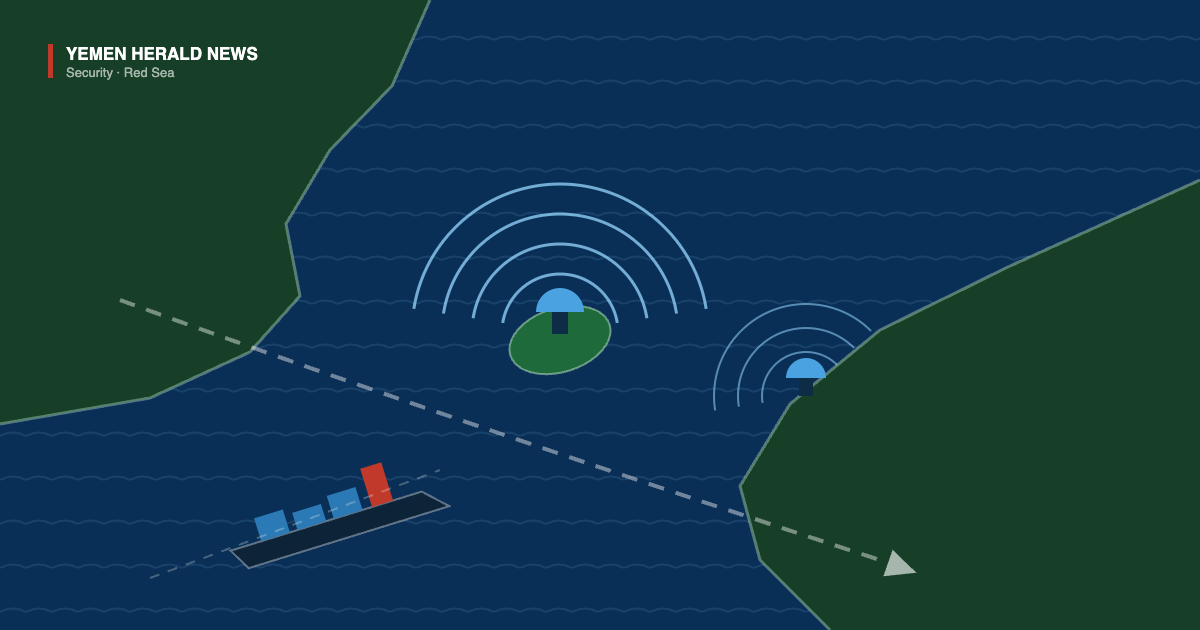
MOCHA, Yemen — Experts from Iran’s Revolutionary Guard visited Mocha and the Bab al-Mandab area to oversee radar installation and tunnel work, two Houthi military sources told Agence France-Presse.
The sources said the Iranian experts visited the port and the airport of Mocha.
They also visited the Jabal al-Nar camp east of the town, according to the same account.
The experts oversaw tunnel excavation in the hills overlooking Mocha and Bab al-Mandab, the sources said.
They discussed installing radars near Mocha and on Zuqar Island in the southern Red Sea.
The Iranian experts met Houthi commanders from the group’s missile force, according to the sources.
The visits followed the group’s capture of areas on Yemen’s western coast in mid-September.
The Emirati outlet Al-Ain reported the same visits hours earlier, citing security sources. It said Iranian experts toured Bab al-Mandab and the port and airport of Mocha and met engineers from the Houthi missile force.
Both accounts come from opposing sides and rest on unnamed sources. Yemen Herald could not verify either.
Neither the Houthis nor Iran has confirmed the visits publicly. Yemen Herald found no on-the-record statement from either side.
Zuqar Island lies in the southern Red Sea, north of the Bab al-Mandab Strait.
The strait links the Red Sea to the Gulf of Aden. It is one of the world’s busiest shipping routes.
The Houthis seized Mocha in the second week of September, Al Jazeera reported.
Mocha sits about 60km from the strait.
Yazeed al-Jeddawy, research manager at the Sanaa Center for Strategic Studies, told Al Jazeera before the town fell that the group appeared intent on moving closer to the Dhubab and Bab al-Mandab area.
He said a substantial advance would strengthen the group’s position near the southern entrance to the Red Sea and give it greater leverage over international shipping.
Fuad Mussed, a Yemeni political analyst, told Al Jazeera that the group was seeking to move closer to the waterway in order to threaten maritime traffic.
He described the aim as keeping the Strait of Hormuz and Bab al-Mandab under Iranian influence and using them as leverage against regional and international powers.
The Houthis declared a blockade on Saudi vessels transiting the Red Sea in July.
Members of the UN Security Council condemned attacks and threats against commercial shipping in the Red Sea and the Bab al-Mandab Strait in a press statement on Friday.
They stressed the importance of safeguarding commercial vessels and their crews.
The statement called for action in line with international law and named the UN Convention on the Law of the Sea. It stressed respect for navigational rights and freedoms.
The Council members called on the Houthis to cease their military escalation.
They also called for practical cooperation with the Yemeni government to prevent the group from acquiring arms, technical assistance, training and financing for military activities.
A senior UN official told the Council this month that the group’s advance toward the chokepoint raised the risk of a wider conflict.
The Council met on the group’s position at Bab al-Mandab on 15 September at France’s request.
The Houthis said on Saturday that they had fired missiles and drones at Riyadh and at an Aramco facility in Yanbu. The Saudi-led coalition said it intercepted a ballistic missile aimed at the Saudi capital.
Fighting has continued on the Taiz front, where government forces said they retook positions in al-Waziyah district.
The UN Office for the Coordination of Humanitarian Affairs says at least 125,000 people have been displaced across Yemen since the start of September.
Yemen’s war began when the Houthis seized Sanaa in 2014. A Saudi-led coalition intervened in March 2015 in support of the internationally recognised government.
The government and Saudi Arabia describe the Houthis as an Iranian proxy. The group says its decisions are its own.
Al Jazeera reported that Iran has blocked the Strait of Hormuz to use it as leverage in its confrontation with the United States, and has warned that its allies could close shipping through Bab al-Mandab.
Khaled Ghorab, a pro-Houthi general, told Al Jazeera the group’s forces had not been caught off guard by the prospect of escalation.
He said they had built capabilities around tactical plans designed to counter a sustained attack launched from land, sea and air.
Ghorab said that readiness allowed a direct response against the source of any threat, deep inside enemy territory or at sea.
He said targets could include military bases or aircraft carriers as far away as the Horn of Africa.
The Houthis attacked Mocha with missiles and drones in August, damaging port facilities and causing civilian casualties, according to Al Jazeera. The group then extended ground operations toward the town.
Al-Jeddawy said the group was trying to seize commanding terrain, cut supply routes between the coastal Mocha district and Taiz, and stop government troops on the western coast linking up with the Taiz Military Axis.
Al Jazeera reported on 10 September that at least 194 people had been killed and 880 wounded in two weeks of fighting across Taiz, the western coast, al-Jawf, Marib and Dhalea, citing aid agencies.
The current offensive began on 3 September, when the group moved against forces loyal to the Presidential Leadership Council.
The group has accused Saudi Arabia of carrying out attacks in al-Jawf, al-Bayda, Marib and Taiz in support of government forces.
Zuqar Island is part of the Hanish archipelago.
About the Author