Yemeni and Syrian Intelligence Chiefs Meet in New York to Discuss Counter-Terrorism Cooperation
 Yemen Herald News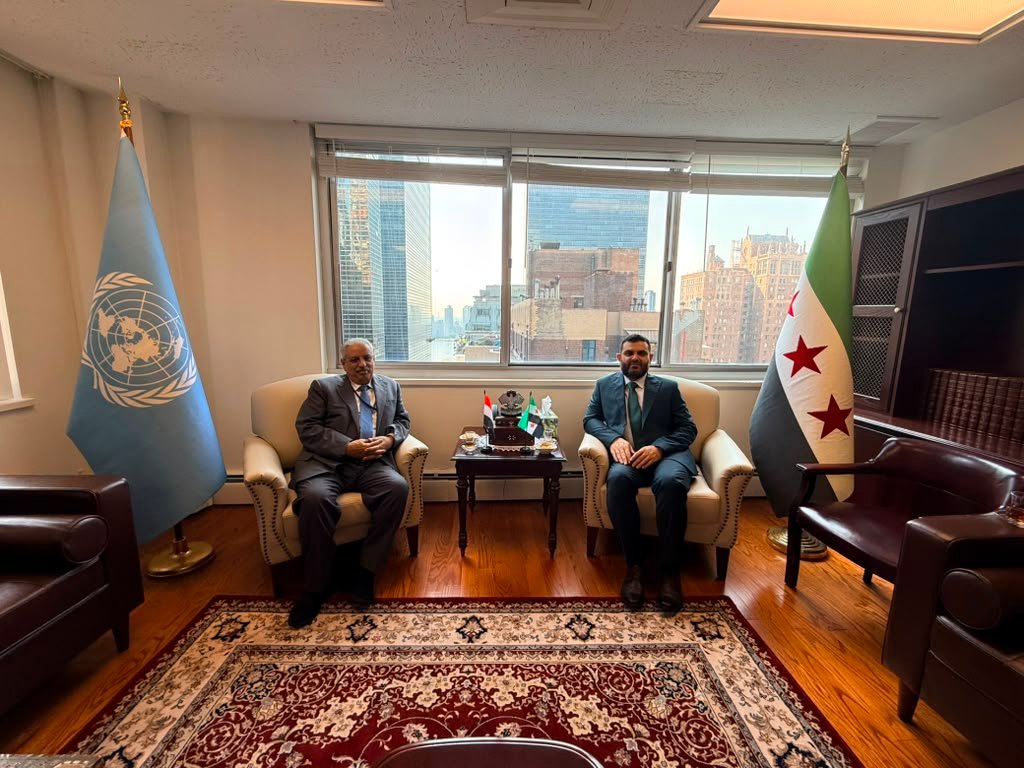
Senior security officials from Yemen and Syria have held talks in New York on deepening cooperation against terrorism, in a meeting that underscored how two states scarred by years of conflict are seeking common ground on shared threats. Major General Muhammad Ayedh, head of Yemen’s Central Agency for State Security, met Hussein al-Salama, director of the Syrian General Intelligence Service, on the sidelines of a major United Nations counter-terrorism gathering.
The encounter took place during the fourth high-level United Nations conference of heads of counter-terrorism agencies, held at UN headquarters as part of the organisation’s 2026 Counter-Terrorism Week. The event drew ministers and intelligence chiefs from across the globe to exchange experience and coordinate responses under the UN Global Counter-Terrorism Strategy, providing a rare venue for bilateral contacts between officials who might not otherwise meet. This year’s gathering was organised around the theme of consolidating global commitment to counter terrorism, with sessions devoted to conflict-affected settings, networked multilateralism and the challenge of emerging technologies such as artificial intelligence.
According to accounts of the meeting, the two men focused on strengthening relations between Sanaa and Damascus, with particular emphasis on joint work against extremist violence. They discussed not only the sharing of intelligence but also the exchange of operational experience, reflecting a view that effective counter-terrorism increasingly depends on cross-border cooperation. Both sides framed the threat as interconnected, noting that instability in one country frequently spills over into its neighbours.
Regional security dominated the conversation. Yemen, still mired in a long civil war, has watched extremist groups exploit the resulting vacuum to entrench themselves in parts of the country. Al-Qaeda in the Arabian Peninsula and offshoots of the Islamic State have long operated in Yemen’s more remote areas, taking advantage of weak governance and continuing fighting. For Yemeni security services, containing these networks remains a central preoccupation even as the wider conflict grinds on.
Syria’s own situation has been transformed over the past two years. The government that al-Salama serves emerged from the upheaval that followed the fall of Bashar al-Assad in late 2024, and the new authorities have sought to reassert control over a fragmented security landscape. Al-Salama, a former commander in Hayat Tahrir al-Sham who was appointed to lead the General Intelligence Service in 2025, has publicly framed stability as tied to reconstruction and economic recovery, while insisting that Damascus has broken with its extremist past. His presence at the UN conference signalled the transitional government’s effort to present itself as a partner rather than a pariah.
Both countries carry the weight of humanitarian catastrophe alongside their security concerns. In Yemen, an estimated 18 million people require humanitarian assistance and more than four million have been displaced, while disease outbreaks including cholera and measles have compounded the suffering. Syria, too, faces enormous reconstruction needs and millions of displaced citizens after well over a decade of war. Those overlapping crises give both governments an incentive to seek stability wherever they can find it.
The broader geopolitics of the Middle East loom over any such cooperation. Yemen’s war has drawn in regional powers, with Saudi Arabia and Iran backing opposing sides in a rivalry that has complicated efforts to counter extremism. Syria’s trajectory, meanwhile, is shaped by the competing interests of outside actors and by lingering pockets of militant activity. In that context, officials on both sides suggested that a coordinated stance against terrorism could help blunt some of the destabilising pressures exerted by external players.
Analysts are likely to read the meeting as part of a wider recalibration in which governments that were once isolated look to rebuild ties on issues of mutual concern. Counter-terrorism offers a relatively uncontroversial starting point, allowing security agencies to establish working relationships that could later extend into other areas. For Yemen’s internationally recognised government and Syria’s new administration alike, being seen to engage constructively at a UN forum carries diplomatic value in its own right.
Any practical cooperation, however, will run up against hard limits. Both security services operate in environments where state authority is contested, resources are scarce, and trust is in short supply. Intelligence-sharing arrangements require institutional capacity and political stability that neither country can take for granted, and commitments made at an international conference do not always translate into sustained collaboration on the ground.
Even so, the symbolism of the encounter is notable. By meeting under the auspices of the United Nations, the two officials placed their bilateral contact within a multilateral framework to coordinate global counter-terrorism efforts. Whether the discussions in New York lead to concrete mechanisms or remain a statement of intent, they reflect a recognition in both capitals that the threats they face cannot be tackled in isolation.
The international community is likely to watch how the relationship develops, given the implications for regional and global security. For now, the meeting between Ayedh and al-Salama stands as a modest but telling sign of how the map of Middle Eastern security cooperation is being redrawn, as governments emerging from years of conflict test whether shared threats can become the basis for durable, practical solutions rather than another round of unfulfilled promises.
About the Author