Yemeni Reconciliation Commission Backs Leadership Council in Defence of Sovereignty
 Yemen Herald News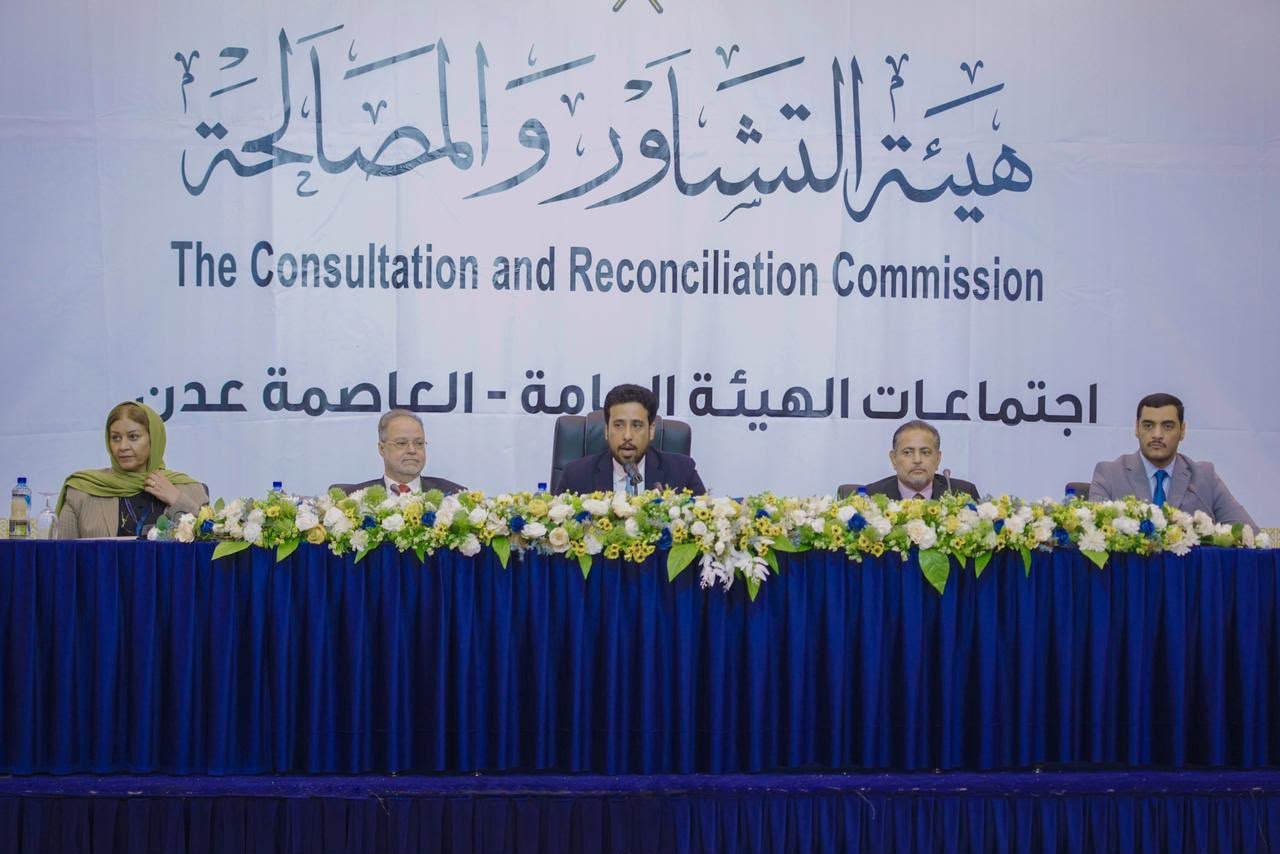
Yemen’s Consultation and Reconciliation Commission, an advisory body that gathers political and social figures from across the country, has declared its firm support for the Presidential Leadership Council and for the measures adopted by the council, the National Defence Council and the internationally recognised government to protect national sovereignty. In a statement, the commission cast the steps as necessary to safeguard security at a time of heightened regional tension, presenting its endorsement as a demonstration of unity behind the state’s institutions.
The commission said its declaration came in response to what it described as an intensification of hostilities by the Houthi movement, which it accused of deepening Iran’s involvement in Yemeni affairs. Such actions, the body argued, challenged not only Yemen’s territorial integrity but also international law and United Nations Security Council resolutions, and it singled out Resolution 2216. Adopted in 2015, that resolution demanded that the Houthis withdraw from areas they had seized and hand back weapons taken from state institutions, and it remains a central reference point for the government and its backers.
According to the commission, Iran continues to supply the Houthis with military, financial and logistical support, a pattern it framed as a violation of Yemeni sovereignty. Tehran and the Houthi leadership have consistently denied that Iran arms or directs the movement, even as government-aligned forces and their coalition partners cite the group’s growing inventory of missiles, drones and naval systems as evidence of outside supply. These competing accounts have long shaped the war, and the commission’s statement restated the government’s position rather than offering fresh proof.
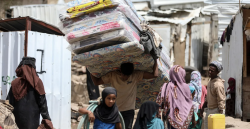
The wider conflict escalated in 2015, when the Houthis consolidated control over the capital, Sana’a, prompting a Saudi-led coalition to intervene in support of the recognised government. More than a decade later, the war has produced one of the world’s gravest humanitarian emergencies. United Nations agencies estimate that upward of 18 million Yemenis require some form of assistance, while more than four million people have been displaced inside the country. Recurrent outbreaks of cholera and measles have compounded the hardship, straining a health system already weakened by years of fighting and economic decline.
The commission argued that these overlapping crises make a coordinated response all the more urgent, urging closer cooperation between the Presidential Leadership Council, local authorities and international partners. Confronting military pressure and meeting humanitarian needs, it said, must proceed together, and a stronger, more unified government is essential to both. Officials aligned with the council have repeatedly maintained that battlefield developments and relief operations cannot be separated in a country where displacement and disease tend to follow closely behind renewed fighting.
Economic conditions have sharpened those concerns. Years of war have battered the Yemeni riyal, eroded household incomes and disrupted the payment of public salaries, particularly in areas outside government control. The administration, based in the interim capital of Aden, has been seeking international assistance to stabilise public finances, arguing that economic recovery cannot be separated from security and that both are needed to weaken the Houthis’ appeal among a population worn down by hardship.
Much of the statement centred on the Red Sea and the Bab al-Mandab Strait, the narrow channel that links the Red Sea to the Gulf of Aden and carries a significant share of global trade. The government and its regional partners have warned that instability along Yemen’s coastline endangers maritime security and the safe passage of commercial shipping, a concern that has drawn attention from governments far beyond the region. For Saudi Arabia, which leads the coalition backing the recognised government, the Houthis’ capacity to disrupt those routes represents a direct security threat.
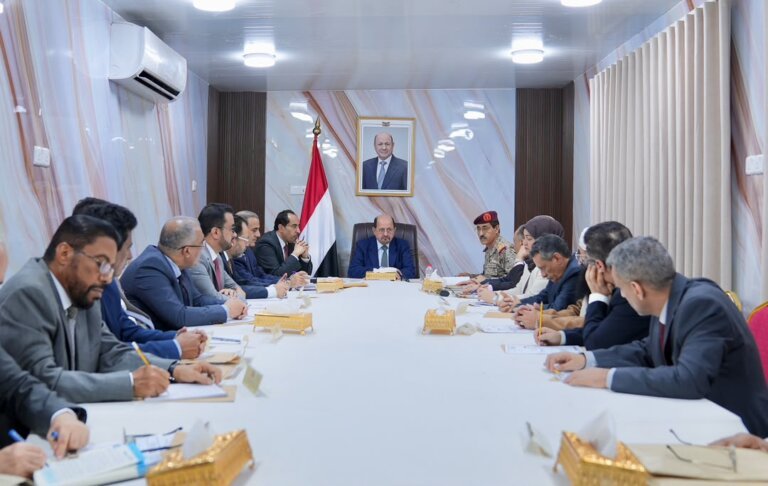
The Presidential Leadership Council was established in April 2022, when former president Abd Rabbu Mansour Hadi transferred his powers to the eight-member body in a move backed by Saudi Arabia and the United Arab Emirates. Since then the council has sought to present a unified front against the Houthis while managing the rival factions and outside sponsors that shape Yemen’s fractured politics. Endorsements from bodies such as the Consultation and Reconciliation Commission are intended to reinforce that image of cohesion, even as the council continues to contend with internal divisions and a fragile economy.
Analysts caution that declarations of institutional unity, however significant, do not by themselves change conditions on the ground. Front lines across much of the country have hardened, and internationally backed peace efforts have struggled to gain traction amid deep mistrust between the warring parties. The government’s supporters contend that sustained pressure on the Houthis, combined with international backing, could gradually shift the balance, while critics of the war warn that further escalation risks deepening the humanitarian toll.
For now, the commission’s statement stands as a public assertion of resolve behind the council and its allies against what they cast as Iranian-enabled aggression. Whether that resolve translates into tangible gains will depend on factors largely beyond any single institution’s control, from the trajectory of regional tensions to the prospects for a negotiated settlement. Officials say the coming period will test both the council’s ability to project unity and its capacity to pair military resolve with the humanitarian outreach that Yemen’s population so urgently needs.
About the Author