Yemen’s Al-Zouba and German Ambassador Schneider Review Cooperation and Red Sea Security
 Yemen Herald News
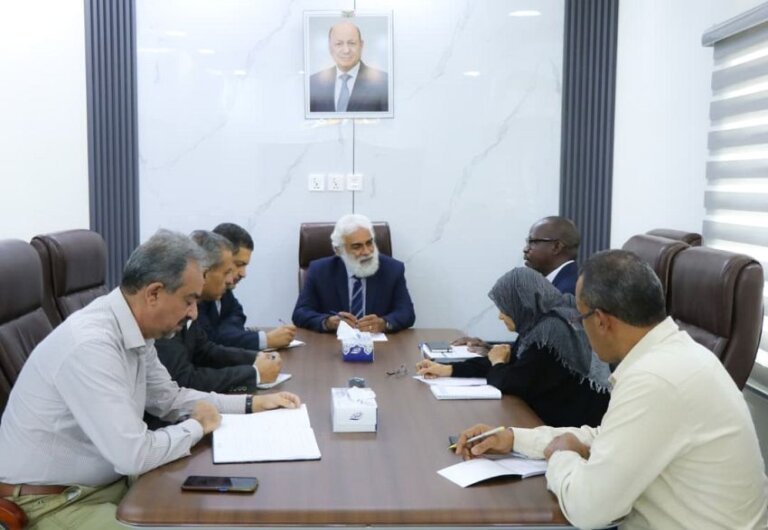
Yemen’s Minister of Foreign Affairs and Expatriates, Dr Afrah al-Zouba, held talks on Sunday with Thomas Friedrich Schneider, Germany’s ambassador to Yemen, in a meeting focused on bilateral cooperation and on the security of shipping lanes off the Yemeni coast. The German embassy to Yemen has operated from Riyadh since the closure of its Sanaa premises, and Yemeni government ministries have likewise conducted much of their diplomatic business from the Saudi capital and from Aden.
The meeting was among the first sustained engagements with a European partner since al-Zouba took over the foreign ministry. She was appointed on 23 July, becoming the first woman to hold the post in Yemen’s modern history, and took the constitutional oath before Rashad al-Alimi, chairman of the Presidential Leadership Council. She had joined the cabinet in February as minister of planning and international cooperation, a portfolio that placed her at the centre of Yemen’s dealings with donors and multilateral lenders.
Her earlier career was built largely outside conventional diplomacy. She spent more than twenty-five years working in development and peacebuilding before entering government, served between 2013 and 2015 as first deputy secretary-general of the National Dialogue Conference, where she helped oversee the technical and organisational side of the process and contributed to drafting its final document, and in 2019 advised then prime minister Maeen Abdulmalik on humanitarian relief and development. She later ran the executive bureau set up to accelerate the absorption of aid and support policy reform.
Ambassador Schneider took up his post in September 2025 and presented his credentials the following month. Since then he has held a series of meetings with Yemeni ministers covering trade, industry and the energy sector, including discussions with the oil ministry on investment prospects in oil and gas. Sunday’s meeting extended that sequence to the foreign ministry itself.
According to the readout of the talks, al-Zouba thanked Germany for what she described as consistent support to Yemen over many years, singling out contributions to infrastructure, food security, health services, access to clean water and education. Germany is among the larger European contributors to the humanitarian response in Yemen, and much of its assistance is channelled through United Nations agencies and international non-governmental organisations rather than directly through Yemeni state institutions.
The minister also briefed the ambassador on what the government describes as escalating military activity by the Houthi movement, including attacks on commercial vessels. The government’s position is that these attacks threaten navigation through the Red Sea, the Gulf of Aden and the Bab al-Mandab Strait, and that they carry consequences well beyond Yemen for the cost and routing of global trade. Shipping through the Suez Canal has fallen sharply since attacks on merchant vessels began, with many operators choosing the longer passage around the Cape of Good Hope, adding time and fuel costs to voyages between Asia and Europe.
Germany has taken a direct part in the international naval response. The Bundeswehr joined the European Union’s Operation Aspides in February 2024, contributing the frigate Hessen, which operated in the Red Sea from late February until the end of April that year and escorted twenty-seven merchant ships. The mission is defensive in mandate, with no authorisation to strike targets on land, and the German contribution was subsequently taken up by the frigate Hamburg in the second half of 2024.
Schneider reaffirmed Germany’s readiness to continue working with Yemen on humanitarian and development files, according to the readout. Both sides framed the relationship in terms of support for state institutions, a theme that recurs across Yemeni government engagement with donors. Ministers argue that funding routed exclusively through international agencies keeps immediate needs met but leaves the civil service, the health system and the local administration progressively weaker, and that rebuilding those institutions is a precondition for any durable recovery.
The humanitarian picture remains severe. United Nations estimates put the number of Yemenis requiring some form of assistance at more than 18 million, with several million people displaced from their homes. Aid agencies have warned repeatedly that funding appeals for Yemen have been met only partially in recent years, forcing reductions in food rations and the closure of some health facilities. Outbreaks of cholera and measles have continued to strain a health system that operates on a fraction of its pre-war capacity.
Economic conditions compound the pressure. The riyal has lost much of its value in government-held areas, imports of food and fuel are financed under persistent foreign-currency shortages, and public sector salaries have gone unpaid or been paid irregularly across large parts of the country. Donor budget support and deposits from Gulf partners have periodically stabilised the exchange rate, but the underlying fiscal position remains fragile.
No comprehensive ceasefire has been in force since the United Nations-brokered truce of 2022 lapsed, and successive rounds of mediation have not produced an agreed political framework. The Yemeni government has used its recent diplomatic contacts to press European partners for continued humanitarian funding, for support to state institutions, and for sustained international attention to maritime security. Whether Sunday’s meeting translates into specific commitments will depend on Berlin’s own budget decisions and on how the situation at sea develops in the months ahead.
About the Author