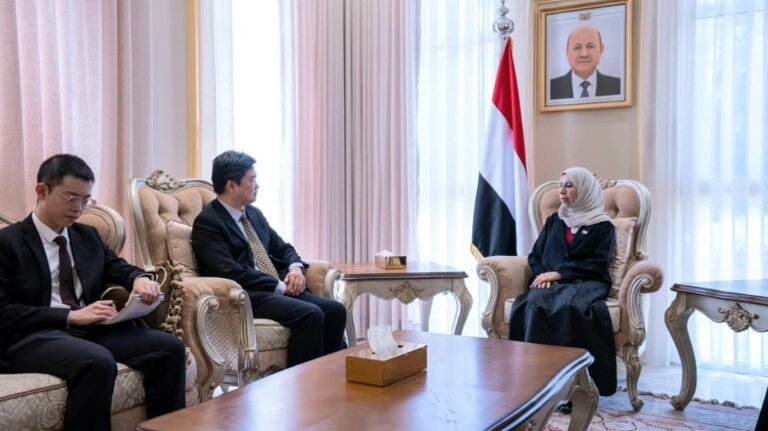
Yemen’s ambassador to Germany discusses Red Sea security with analyst Michael Lüders
 Yemen Herald News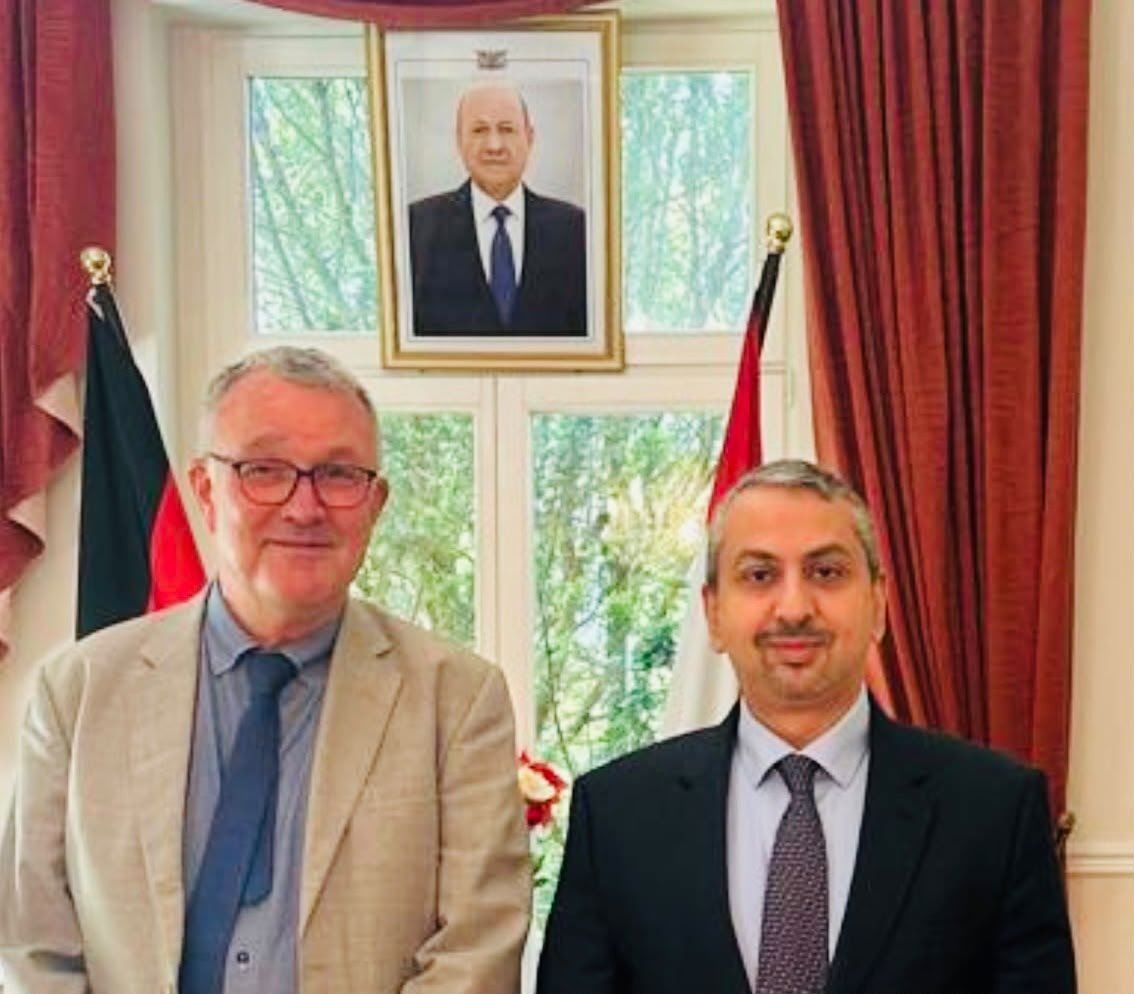
BERLIN, Germany — Yemen’s ambassador to Germany discussed Red Sea shipping and the course of the war with analyst Michael Lüders in Berlin on Friday, the state news agency Saba said.
Ambassador Lou’ay al-Eryani and Lüders reviewed political and security developments in Yemen and the wider region, according to the agency’s account.
The two also discussed the Red Sea and the Bab al-Mandab Strait, Saba said, and what the fighting there means for regional security, international trade and supply chains.
Al-Eryani raised the protection of international navigation, the agency reported.
He set out what Saba described as government efforts to reach peace, strengthen state institutions and preserve Yemen’s sovereignty and stability.
Saba reported no commitment, proposal or outcome from the talks.
The account rests on a single source. Saba is Yemen’s state news agency and was reporting on a Yemeni embassy’s own activity. No independent confirmation of the meeting has been published, and Yemen Herald could not verify it separately.
Lüders is a political scientist and a scholar of Islamic studies. He studied Arabic literature, political science and journalism in Berlin and in Damascus.
He spent years as Middle East correspondent for the German weekly Die Zeit.
Since 2004 he has been a co-owner of the Middle East Consulting Group in Berlin, working as a political and economic consultant, publicist and author.
He led the German-Arab Association from 2015 to 2022. In January 2024 he joined the extended party executive of the Sahra Wagenknecht Alliance.
Al-Eryani was sworn in on Feb. 10, 2025, before President Rashad al-Alimi, chairman of the Presidential Leadership Council, at Yemen’s embassy in Riyadh.
He was appointed ambassador extraordinary and plenipotentiary to Germany, the foreign ministry said.
Al-Alimi told him at the ceremony to head the mission in Berlin and to serve Yemeni citizens living in and arriving in Germany, according to the ministry.
The ambassador met a German official on Aug. 31, the ministry’s record of mission activities shows.
Yemen’s government has pressed European capitals since fighting intensified this month.
Foreign Minister Afrah al-Zouba briefed her German counterpart on the Houthi escalation and its repercussions on Sept. 14, the ministry said.
She discussed Red Sea security with Italy’s foreign minister on Sept. 17 and met the U.S. chargé d’affaires on Sept. 16, according to the same record.
The Berlin meeting fell during an escalation between the Houthis and Saudi Arabia.
The Saudi-led coalition said its air defences destroyed a drone south of Mecca on the evening of Sept. 15, before it entered restricted airspace over the city. The Houthis denied launching it.
Col. Turki al-Maliki, the coalition spokesman, put the interception at about 6:50 p.m. local time. He said it was the second attempt to target Mecca, after a ballistic missile was fired toward the city in 2017.
Houthi leader Abdel-Malik al-Houthi called the Saudi account “a heinous lie” in a televised address on Thursday.
Saudi civil defence said on Thursday that debris from an intercepted drone killed a Yemeni resident and injured two people in Taif, east of Mecca. The Houthis have not claimed that attack, and the casualty account rests on the civil defence statement.
Anouar El Anouni, the European Union’s foreign affairs spokesman, urged the Houthis to halt all military action and expressed solidarity with Saudi Arabia.
Kuwait’s foreign ministry expressed solidarity with Saudi Arabia and condemned the attacks on Taif in a post on X. Bahrain condemned what it called continued Houthi attacks on the kingdom and the targeting of civilians in Taif.
Esmaeil Baghaei, spokesman for Iran’s foreign ministry, said any aggression against Islamic holy sites, and Mecca in particular, was a condemned act. He said a claim of intercepting a drone bound for the city was not on its own enough to accuse the Houthis.
China asked Iranian officials in private to help restrain the Houthis after Saudi Arabia appealed to Beijing, Iranian sources told Reuters. Beijing has publicly called for restraint, dialogue and the restoration of safe navigation.
Pakistan’s defence minister, Khawaja Asif, said the time had come to implement a joint defence agreement that Pakistan and Turkey signed with Saudi Arabia last month.
A U.N.-brokered truce in April 2022 largely stopped Houthi attacks on Saudi territory. Hostilities resumed after the group declared a blockade on Saudi shipping in July and took control of points along the Bab al-Mandab coastline.
Al-Alimi told France’s ambassador this week that Houthi gains along the Red Sea coast were temporary, Saba reported.
Al-Alimi said Houthi forces were taking losses on fronts in Taiz, Marib, Lahj, al-Jawf, Hajjah, al-Bayda and al-Dhale, Saba reported.
The Houthis said Saudi warplanes hit three telecommunications towers in Taiz province on Thursday.
The humanitarian response plan that the U.N. Office for the Coordination of Humanitarian Affairs published in March put more than 22 million people in Yemen in need of assistance.
It recorded 18.3 million people as acutely food insecure and more than 2.2 million children under five as acutely malnourished. Of those children, 516,157 were severely malnourished.
The plan counted 5.2 million internally displaced people and sought $2.16 billion to reach 12 million of them.
Lüders was born in Bremen in 1959.
About the Author