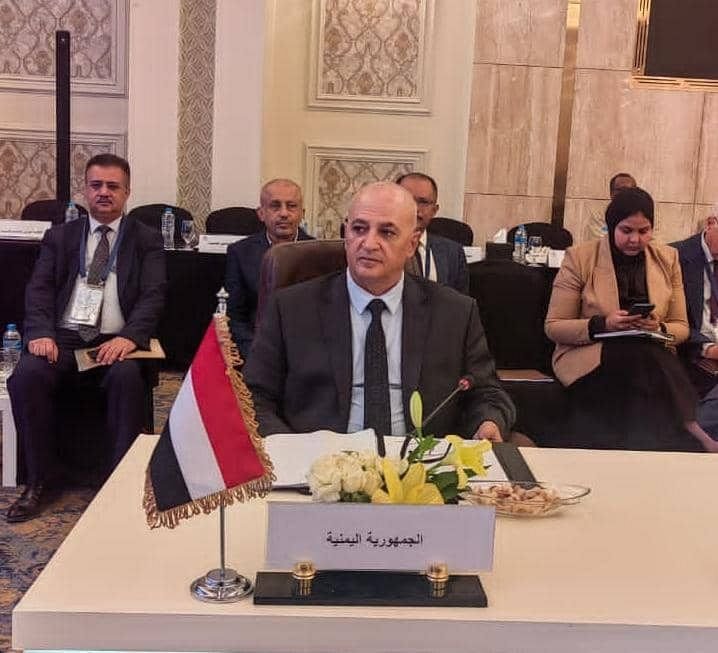
Yemen’s ambassador to Malaysia discusses Operation Yemen Dawn with foreign ministry official
 Yemen Herald News
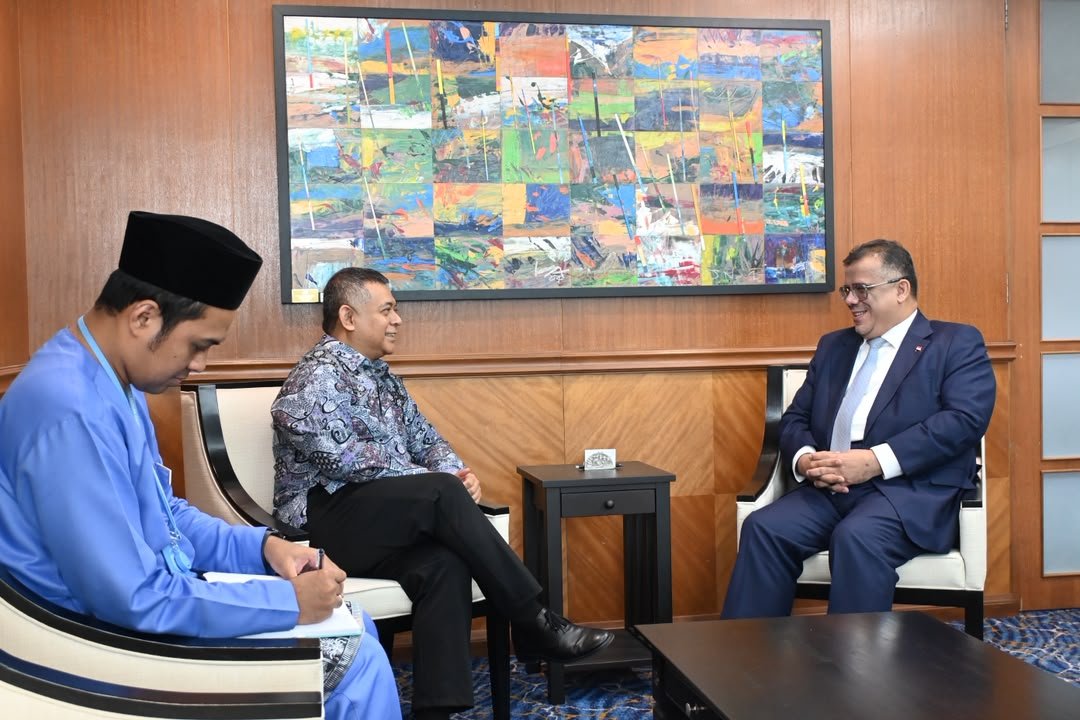
KUALA LUMPUR, Malaysia — Yemen’s ambassador to Malaysia briefed a senior Malaysian foreign ministry official on Friday about the government’s offensive against the Houthis.
Adel Mohamed Ba Hamid met the ministry’s deputy secretary-general for multilateral affairs in Kuala Lumpur, the state news agency Saba reported.
The account of the meeting rests on Saba, which is run by Yemen’s internationally recognised government. No independent confirmation has been published, and Yemen Herald could not verify it.
Saba named the Malaysian official as Ambassador Dato Dr. Ahmad Mohammed. Malaysia’s foreign ministry gives the holder of that post as Dato’ Dr. Ahmad Faisal Muhamad.
The ministry identified him in that role in its own announcements in July, when he received the Libyan ambassador and closed a media programme in Kuala Lumpur.
Saba said the two discussed Yemeni-Malaysian cooperation and coordination in international forums and organisations.
Ba Hamid briefed the official on political and military developments in Yemen, including Operation Yemen Dawn, the agency said.
He said the operation aimed to restore state institutions, end the Houthi coup, restore security and stability, provide essential services and create conditions for a fair and sustainable peace.
Ba Hamid thanked Malaysia for what Saba described as its principled support for Yemen’s unity, sovereignty and territorial integrity.
The Malaysian official reaffirmed support for peace efforts in Yemen and said Malaysia wanted to expand bilateral cooperation, according to the agency.
Yemen Herald found no Malaysian account of the meeting.
Ba Hamid is listed by his embassy as ambassador extraordinary and plenipotentiary of the Republic of Yemen to Malaysia. Yemen’s foreign ministry has also rendered his name as Ba Humaid.
The ministry gives his full name as Dr. Adel Mohamed Ali Ba Hamid. He also serves as dean of the Arab diplomatic corps in Malaysia.
The ministry noted that role on March 9, when he paid a courtesy call on its chief of protocol, Ambassador Ikram bin Mohd Ibrahim.
Malaysia’s foreign ministry, known as Wisma Putra, said in December 2025 that it was concerned by escalation in Yemen. It backed de-escalation efforts and said it upheld Yemen’s sovereignty and unity.
Rashad al-Alimi, chairman of the Presidential Leadership Council, announced Operation Yemen Dawn on Oct. 5 in a post on X.
Al-Alimi said it aimed to restore state institutions, retake Sanaa and end Houthi control of the capital. He said the campaign was not directed at civilians.
The Coalition to Support Legitimacy in Yemen said hours earlier that it was providing full operational support to Yemeni forces. It cited the Houthi threat to freedom of maritime navigation.
Saudi seaborne crude exports through Bab al-Mandab were eight times higher from March to mid-July than in the same period of 2025, Al Jazeera reported.
The Houthis reject the government’s account of the campaign. Al Jazeera said it could not independently verify battlefield claims from either side.
Government forces said this month that they had taken the Bab al-Mandab strait and the port of Mokha. The Houthis denied it.
Fighting resumed across Yemen in July, after the Houthis declared a blockade on Saudi shipping.
Hostilities restarted after an Iranian aircraft tried to land in Sanaa without Saudi authorisation, Al Jazeera reported. Strikes on Sanaa airport followed, and the Houthis retaliated.
Al Jazeera described the exchanges as the most serious since a United Nations-brokered truce halted large-scale fighting in 2022.
Yemen’s government said its warplanes struck Houthi positions in Hodeidah, Marib and al-Jawf on Sept. 6. The Houthis said Saudi aircraft and cruise missiles struck al-Jawf, al-Bayda, Marib and Taiz the following day.
Saudi Arabia said Houthi attacks hit Abha, Khamis Mushait, Jizan and Najran in September. Maj. Gen. Turki al-Malki, the coalition spokesman, said at least 73 people were wounded in the kingdom.
The Houthis accused Saudi Arabia of an air strike on a prison in al-Hazm, saying seven people were killed and seven injured. Riyadh did not immediately comment.
Prince Faisal bin Farhan, the Saudi foreign minister, condemned the Houthi attacks. He said the road to diplomacy was not closed.
The World Health Organization said in September that at least 728 people had been killed or wounded since Aug. 23, most of them in Taiz and along the western coast.
The United Nations health cluster recorded 5,166 casualties in Yemen from Aug. 6, including 959 deaths.
The International Organization for Migration said more than 201,000 people had been displaced since September. Taiz accounted for 57 percent of them.
The agency counted 29,519 displaced families across 10 governorates. More than 3,600 people crossed into Djibouti.
Abdusattor Esoev, who heads the IOM mission in Yemen, said displaced families were arriving without shelter or food.
The United Nations humanitarian response plan published in March counted more than 22 million Yemenis in need of assistance. It put 18.3 million people at acute levels of food insecurity.
The plan recorded more than 2.2 million children under five acutely malnourished, 516,157 of them severely. It sought $2.16 billion to reach 12 million people.
Saba reported a second Yemeni diplomatic meeting the same day. Yemen’s ambassador to Germany met a member of the Bundestag in Berlin on Friday.
Saba did not say whether the two discussed Malaysian humanitarian funding for Yemen.
About the Author