Yemen’s Cabinet Says Houthis Will Not Impose New Realities by Force
 Yemen Herald News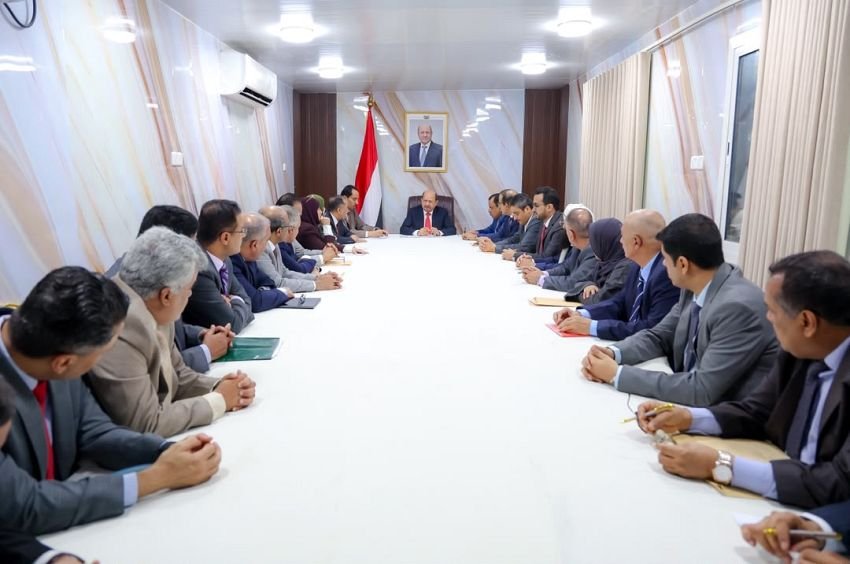
Yemen’s Council of Ministers has told the Houthi movement that it will not be allowed to impose “new equations by force,” rejecting a fortnight of intensified missile and drone attacks as something the state refuses to accept as a fait accompli. The cabinet, chaired by Prime Minister Shaya Mohsen al-Zindani, met in the interim capital Aden on Sunday to assess the security, economic and humanitarian consequences of the escalation and the obligations it places on state institutions. According to the official Saba news agency, ministers concluded that the attacks reflect a deliberate decision by the group to widen the scope of tension.
The government said the continuation of Houthi attacks in recent days showed an attempt to test how far it and the international community are prepared to go in response to what it called reckless behaviour. It pledged to keep protecting citizens, vital facilities and national interests, and to handle developments “with all firmness and strength” as required by its constitutional duties. Ministers presented reports on the military, security, service and humanitarian situations, and on the readiness of institutions to absorb further shocks.
The cabinet also reviewed steps already taken to secure vital installations, keep essential services running, and protect supply chains and the movement of people and goods — a reflection of how quickly the fighting has begun to bite on daily life in government-held areas. Much of the discussion centred on repeated strikes against the Red Sea port of al-Mokha, which the government describes as terrorist attacks on civilian economic infrastructure.
On 9 August the Houthis launched a barrage of ballistic missiles and explosive drones at Mokha, a port on Yemen’s west coast held by government-aligned forces. At least seven people were killed and about 35 wounded, and the assault severely damaged port buildings and the pier along with commercial goods and food supplies stored at the facility. Houthi military spokesman Yahya Saree said the operation was “large-scale and precise” and claimed it had targeted Saudi troops and weapons depots at the site. Local officials said residential neighbourhoods west of Taiz province were also hit.
Mokha’s importance is out of proportion to its size. The port sits on the Red Sea coast of Taiz province, close to the Bab al-Mandab strait, through which a substantial share of the world’s seaborne trade passes on its way to and from the Suez Canal. Damage to the facility is therefore both a domestic supply problem for government-held territory and a signal to shipping companies already wary of the corridor.
Beyond Mokha, the Council of Ministers examined attacks on facilities, institutions, civilian sites and displaced people in Hadramawt, Marib, Taiz and al-Dhalea. Marib and Hadramawt are the centre of Yemen’s oil production, and Shabwa has also come under fire. The pattern suggests pressure applied simultaneously to the government’s energy revenue, its western coastline and its most crowded displacement sites.
The escalation has not stayed inside Yemen’s borders. The Houthis announced a maritime ban on Saudi-linked shipping in July and have since claimed attacks on Saudi-linked oil tankers in the Red Sea as well as on energy facilities inside the kingdom, including a Saudi Aramco refinery struck the same weekend as Mokha. The group says its offensive against government forces answers Saudi-backed military build-ups inside Yemen, and casts its strikes on Saudi territory as retaliation for what it describes as a blockade of areas under its control. The Yemeni government rejects both characterisations.
Rashad al-Alimi, chairman of the Presidential Leadership Council, called the Mokha attack an extension of Iranian escalation against economic facilities and maritime routes. Meeting ambassadors of countries supporting Yemen’s political process in Riyadh, he said government forces are better prepared than before and will no longer allow the Houthis to dictate the timing and scope of confrontations. “The state did not initiate this escalation, nor did it seek it,” he was quoted by Saba as saying, adding that strikes on Marib, Hadramawt and the western coast would no longer go without cost.
Ministers argued that the international community must move past reacting to individual attacks and address what the government says are the sources of the group’s military strength, above all its supply relationship with Iran. The cabinet praised Saudi Arabia’s political, economic and humanitarian support, describing it as an essential element in the government’s capacity to absorb pressure and hold a measure of stability. It reaffirmed that restoring state institutions and ending what it calls the Houthi coup are the foundation of any durable peace.
Yemen has been at war since late 2014, when the Houthis seized much of the north including the capital Sanaa, prompting a Saudi-led coalition to intervene the following year. A United Nations-brokered truce took effect in April 2022 and lapsed that October without formal extension, but a fragile de facto ceasefire largely held afterwards despite sporadic clashes along several fronts. The current wave of strikes is the most serious test that arrangement has faced.
The cabinet did not announce a timetable or specify what a military response would involve. What it offered instead was a declaration that the government no longer regards restraint as costless — a position that, if acted on, raises the prospect of the first sustained large-scale fighting in years, in a country where most of the population already depends on aid.
About the Author