Yemen’s First Female Ambassador to Washington Honoured on Women in Diplomacy Day
 Yemen Herald News
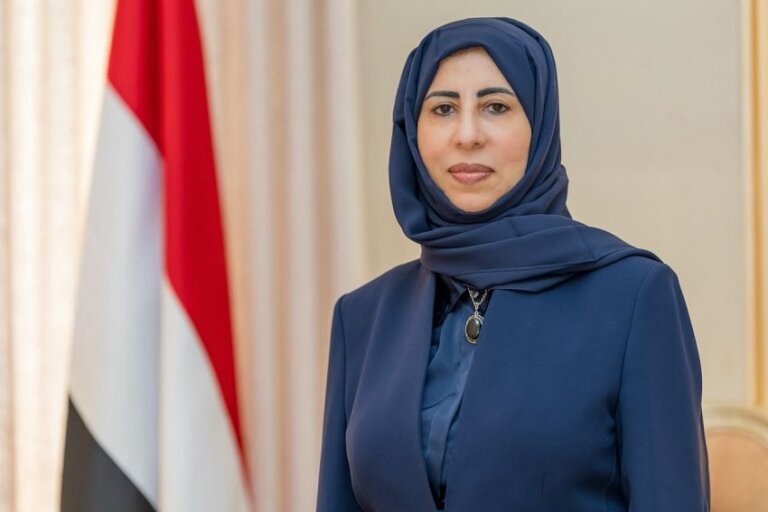
Jamila Ali Raja, Yemen’s Ambassador to the United States, has been recognised for her contribution to diplomacy in connection with the International Day of Women in Diplomacy, an annual observance that draws attention to the role of women in international affairs. The acknowledgement has been framed as part of a wider effort to celebrate Arab women diplomats whose work spans dialogue, negotiation and peacebuilding, and it has placed a renewed spotlight on a career that already carries considerable historic significance for Yemen at a moment when the country’s representation abroad has rarely mattered more.
Raja’s standing rests in large part on a milestone reached in 2026, when she became the first Yemeni woman to serve as her country’s Ambassador Extraordinary and Plenipotentiary to the United States. She presented her credentials to President Donald Trump during an official ceremony at the White House, formally taking up a posting that no Yemeni woman had previously held. Earlier, she had taken the constitutional oath before Rashad al-Alimi, Chairman of Yemen’s Presidential Leadership Council. In a field long occupied almost exclusively by men, the appointment was widely received as a moment of progress for women in public life.
Her path to the role was built on roughly three decades of experience across diplomacy, advisory work and public service. Born in the city of Taiz, she developed a reputation for engagement on questions of peace, governance and women’s rights long before her appointment in Washington. She has previously served in senior advisory positions, including as deputy head of a national consultation and reconciliation body, and she took part in Yemen’s National Dialogue Conference in 2013, a landmark attempt to chart a political transition. Over the years she has worked with a range of international stakeholders on efforts to resolve the country’s conflict.
Education shaped that trajectory as well. Raja holds a master’s degree in journalism from the American University in Cairo and an undergraduate degree in English literature from Cairo University, a combination that paired strong communication skills with an international outlook. Colleagues have pointed to her experience as a mediator and convener, including her involvement in initiatives bringing Yemeni women into peace and security discussions, as evidence of the qualities that have defined her approach to diplomacy and that prepared her for one of the most demanding postings in her country’s foreign service.
The recognition tied to the International Day of Women in Diplomacy reflects a broader regional trend of increasing female representation within diplomatic circles. Advocates argue that the inclusion of women in negotiations and policymaking brings a wider set of perspectives to the search for solutions, a point that carries particular weight in parts of the Arab world affected by prolonged conflict. In that context, the elevation of figures such as Raja is presented not merely as a personal achievement but as a signal of changing norms in societies where women have historically been under-represented in foreign affairs.
The International Day of Women in Diplomacy, observed on 24 June, was established by the United Nations General Assembly to highlight the contribution of women to diplomacy and to encourage their fuller participation at every level. Each year the occasion is marked by events and tributes intended to reinforce the case for broader representation in foreign affairs. Such commemorations are designed to do more than honour individuals; they are also used to underline the argument that decision-making bodies are stronger when they reflect the full diversity of the societies they serve.
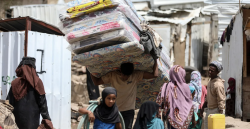
The significance of Raja’s appointment is amplified by the gravity of the situation in Yemen itself. Years of war have produced one of the world’s most severe humanitarian crises, with United Nations agencies estimating that a large share of the population requires some form of assistance and that millions remain internally displaced. Against that backdrop, the work of Yemen’s diplomats abroad carries an added dimension, encompassing not only the conventional business of representation but also the task of keeping international attention focused on the country’s urgent humanitarian and political needs.
Supporters of greater female participation in diplomacy contend that women can play a distinctive role in peace processes, drawing on networks and approaches that complement formal negotiations. Raja’s career, which has intersected with civil society initiatives as well as official channels, is frequently cited as an example of how such engagement can broaden the base of a peace effort. Her work around questions of peace and security, and her involvement in bringing women’s voices into those conversations, has been highlighted repeatedly as part of that record.
Advocates suggest that as more women move into senior positions, their presence could gradually reshape the conduct of negotiations and the priorities that guide them, particularly in regions where women have long been absent from the table. The commemoration of the International Day of Women in Diplomacy is intended to reinforce that argument, framing inclusive representation not as a symbolic gesture but as a practical contribution to the search for durable solutions in conflict-affected states such as Yemen.
For Yemen, the outlook remains uncertain. The country continues to grapple with the consequences of war, political fragmentation and economic strain, and there is no quick resolution in sight. Yet the acknowledgement of Raja’s work offers a measure of encouragement to those who see inclusive governance as part of any lasting settlement. Her trajectory, from the National Dialogue Conference to the embassy in Washington, is presented by supporters as a reminder that even amid crisis, new precedents can be set that may influence how the country is represented and governed in the years ahead.
About the Author