Yemen’s Foreign Minister-Designate and UN Envoy Grundberg Discuss Houthi Escalation in Marib and Hadramawt
 Yemen Herald News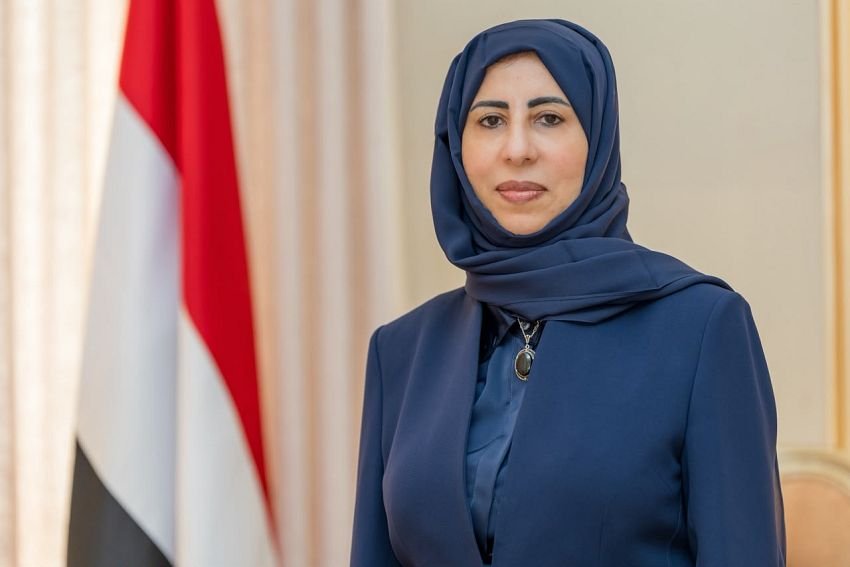
Yemen’s foreign minister-designate, Afrah al-Zouba, held a virtual meeting on Friday with Hans Grundberg, the United Nations Secretary-General’s Special Envoy for Yemen, to discuss what the internationally recognised government describes as a sharp and dangerous escalation by the Houthi movement. The two officials reviewed a series of attacks this week that struck government military positions in central and eastern Yemen and, for the first time in months, civilian areas inside southern Saudi Arabia. The meeting came as the United Nations warned publicly that the country faces a growing risk of returning to full-scale war.
The immediate trigger was a wave of ballistic missile and drone strikes on Thursday against camps housing forces of the internationally recognised government in the governorates of Marib and Hadramawt. Yemeni government sources said the projectiles were fired from al-Jawf governorate, which the Houthis control, and that eight missiles were used in the coordinated assault. Officials initially reported that 17 soldiers and officers had been killed, a figure that rose considerably over the following days as more casualties were recovered and identified.
Casualty tallies for the two strikes remain contested. Yemeni officials cited by international news agencies put the number of government troops killed at at least 30, with roughly 50 wounded, while several outlets subsequently reported tolls ranging from 45 to 58 dead. A Houthi commander said Saudi-backed troops had been targeted and claimed that “hundreds” were killed or injured, an assertion that has not been independently verified.
The escalation crossed Yemen’s northern border the same day, when projectiles struck the Najran region of southern Saudi Arabia. Maj. Gen. Turki al-Maliki, spokesman for the Saudi-led coalition, said on Friday that 11 civilians had been injured, among them a four-year-old child who suffered second-degree burns. Those hurt included seven Saudi nationals, one Yemeni, two Egyptians and one Pakistani. The coalition said it would take deterrent measures in response.
In her exchange with Grundberg, al-Zouba argued that the pattern of attacks amounts to an attempt to turn Yemeni territory into a launch pad for strikes on neighbouring states and on international shipping. The government has consistently linked the land campaign to Houthi operations at sea, where vessels transiting the Red Sea, the Bab al-Mandab Strait and the Gulf of Aden have come under attack. Speaking to reporters in Riyadh in late July, al-Zouba said the group was seeking to replicate Iran’s approach to the Strait of Hormuz by exerting control over shipping flows through Bab al-Mandab.
Grundberg delivered a similar warning in public. He said the attacks in Marib and Hadramawt, which he noted had caused significant casualties including among civilians, together with strikes on commercial shipping in the Red Sea and the Gulf of Aden, risked jeopardising the gains of the 2022 truce. Taken together, he said, the developments could draw Yemen into a broader regional confrontation.
The truce he referred to was brokered by the United Nations in April 2022 and formally lapsed six months later, but its central provisions largely held in practice: a halt to major front-line offensives, the reopening of Sanaa airport to a limited number of commercial flights, and eased fuel imports through the port of Hodeidah. That informal calm is what Yemeni officials and UN mediators now fear is unravelling. Renewed ground fighting around Marib, a governorate that holds much of the country’s remaining oil and gas production, would be particularly difficult to contain.
Grundberg said he had held intensive discussions in recent weeks with Yemeni parties, regional actors and international partners to explore options for de-escalation. His office has spent much of the year trying to revive a roadmap that would pair a nationwide ceasefire with the payment of public-sector salaries, the reopening of roads and a resumption of political talks. Progress has been limited, and the latest attacks have narrowed the space for quiet diplomacy.
The government’s public posture has hardened accordingly. Al-Zouba told journalists during a briefing in the Saudi capital that, whatever the diplomatic track produces, Yemen is prepared for any escalation. Commanders loyal to the Presidential Leadership Council have reinforced positions in Marib and along the Hadramawt desert corridor, and the coalition has signalled it may resume air operations it had largely suspended.
The Yemeni file has also become harder to separate from the wider regional confrontation. The current round of fighting has coincided with a far larger conflict between Iran on one side and the United States and Israel on the other. Intelligence assessments circulated by Washington, Riyadh and other governments in the region have warned that Houthi forces and Iraqi armed groups, coordinated by Tehran, may strike civilian infrastructure across the Gulf. Yemeni officials argue this makes the Houthi arsenal a regional rather than a purely domestic problem.
For Yemenis the consequences are more immediate. Sustained front-line fighting would displace civilians in Marib, where camps already host families uprooted in earlier rounds of the war, and would strain an economy in which the currency has repeatedly lost value and public salaries go unpaid for months.
Neither al-Zouba’s office nor the envoy’s office announced a specific next step after Friday’s meeting. Grundberg is expected to continue shuttling between regional capitals, and the Security Council is due to take up the Yemen file again this month.
About the Author