Yemen’s foreign ministry condemns Houthi attacks on Saudi Arabia and urges arms embargo enforcement
 Yemen Herald News
ADEN, Yemen — Yemen’s foreign ministry condemned Houthi missile and drone attacks on southern Saudi Arabia on Tuesday and called for tighter enforcement of the arms embargo on the group.
The Ministry of Foreign Affairs and Expatriates said in a statement that the attacks struck civilian and economic facilities and energy infrastructure in the kingdom’s southern region.
It described them as an extension of what it called the hostile approach adopted by the Houthi movement.
The account of the statement rests on the ministry itself. Yemen Herald found no independent confirmation of its contents beyond the ministry’s own text.
The ministry said the group benefits from continued Iranian support in weapons, funding and military expertise. That characterisation is the Yemeni government’s own, and the Houthi movement rejects the description of itself as an Iranian proxy.
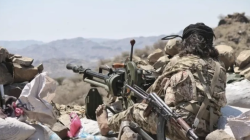
The statement said the cross-border attacks came within a wider escalation inside Yemen, particularly in Taiz and on the western coast. It said they coincided with what it called the group’s failed attempts to change the battlefield.
That escalation undermines the relative calm of recent years, the ministry said.
Targeting civilians, civilian facilities, economic infrastructure and energy facilities is a violation of international law and international humanitarian law, according to the statement.
It warned against the Houthis retaining capabilities that would allow them to widen such attacks.
The government held the Houthi movement and its backers responsible for the attacks and their consequences.
It called on the international community to take firm measures to halt the flow of weapons, funding and military expertise to the group.
The ministry asked that states supporting the movement comply with Security Council resolutions, naming Resolution 2216. That resolution, adopted in April 2015, imposed an arms embargo on Houthi leaders and forces loyal to former president Ali Abdullah Saleh.
Containing successive rounds of escalation is not enough, the ministry said. Yemeni state institutions need support to extend authority over the country’s territory and territorial waters, so Yemeni geography cannot be used to threaten neighbouring states and shipping lanes, it said.
The statement reaffirmed Yemen’s solidarity with Saudi Arabia and support for measures the kingdom takes to protect its security. Saudi security is integral to Yemen’s own, it said.
The attacks the ministry referred to were carried out early on Tuesday.
Maj. Gen. Turki al-Maliki, spokesman for the Saudi-led coalition, said missiles and drones struck civilian and economic sites in Abha, Khamis Mushait, Jazan and Najran. He said 73 people were wounded, among them women and children, and did not break the figure down by city.
Saudi Arabia’s energy ministry said fires broke out at several facilities in the southern region and that operations were suspended for a time. Jazan holds a refinery with a capacity of about 400,000 barrels a day.
The Houthi military said in its own statement that it fired dozens of ballistic missiles and drones. It said the attacks answered more than 100 Saudi airstrikes in Yemen over the preceding three days, which it said had killed many people.
The movement said it would uphold what it called the equation of siege for siege until the attacks stop and the blockade is lifted.
Saudi Arabia’s foreign ministry said the kingdom affirms its right to take all necessary measures to defend its sovereignty.
UN spokesman Stephane Dujarric condemned the cross-border attacks and expressed concern over reports of civilian casualties. He called on all parties to exercise restraint and to refrain from attacks on civilians and civilian infrastructure.
Hans Grundberg, the UN special envoy for Yemen, is engaging directly with the parties, Dujarric said. Grundberg warned that continued military escalation risks what he described as devastating political, economic and security consequences for Yemen.
The European Union condemned the attacks and called on the Houthis to halt operations inside and outside Yemen, including against commercial shipping in the Red Sea.
Egypt described the attacks as a dangerous escalation. Jordan and the United Arab Emirates said they violated Saudi sovereignty. Qatar’s foreign ministry said they showed disregard for civilian lives. Kuwait and Turkey issued similar statements.
Fighting inside Yemen escalated from Sept. 3, when clashes spread across Taiz and the west coast.
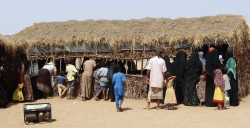
The UN Office for the Coordination of Humanitarian Affairs said more than 5,600 households have been displaced across Taiz and southern Hodeidah since then. The International Organization for Migration put the figure at about 18,500 people over the first 72 hours, drawing on its Displacement Tracking Matrix.
OCHA reported at least 11 civilian casualties in the week to Sept. 8, including two children killed and nine people injured. It said shelling hit displacement sites in Marib over the weekend, killing two children and injuring 15, and destroying shelters.
Aid agencies reached 2,340 households with emergency supplies, mainly in Taiz but also Marib and Abyan, OCHA said. It asked for $7 million for its rapid response mechanism and $3 million for shelter and household items, saying stocks were depleted.
Yemen’s $2.2 billion humanitarian appeal is about 20 per cent funded, with $438 million received, according to the same agency.
Brent crude rose more than 1 per cent after the attacks, trading close to $99 a barrel.
A four-year truce between Saudi Arabia and the Houthi movement ended in July, when the group resumed missile attacks on Saudi territory.
About the Author