Yemen’s Interior Minister and UK Officials Discuss Expanding Security Cooperation
 Yemen Herald News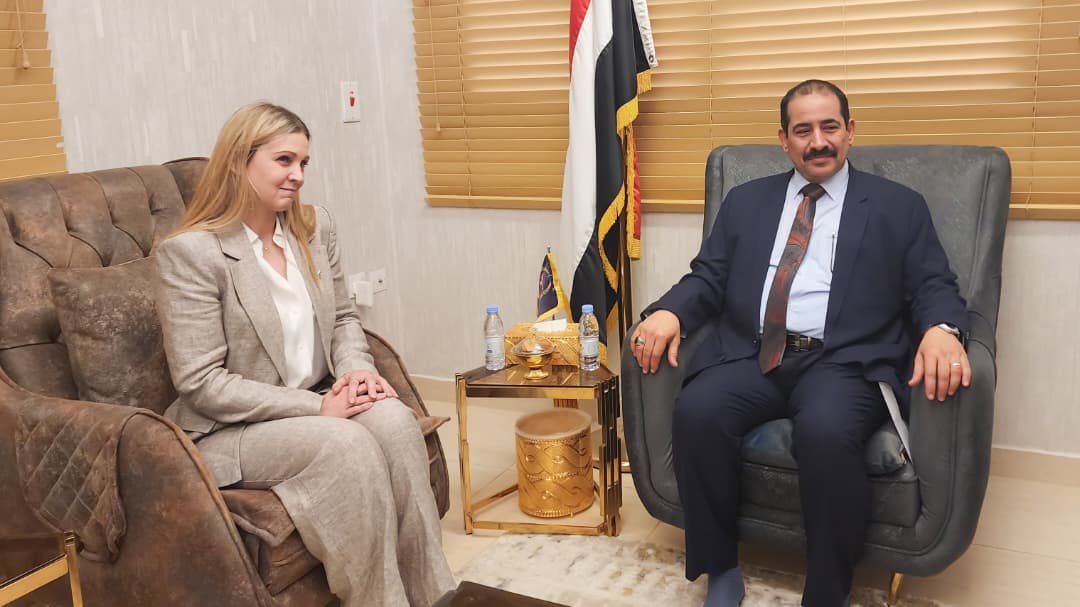
Yemen’s Interior Minister, Major General Ibrahim Haidan, held talks with senior British officials in Riyadh to discuss ways of strengthening security cooperation between Yemen and the United Kingdom, in a meeting that reflected the continuing international effort to shore up the country’s fragile state institutions. Haidan met the UK Deputy Ambassador to Yemen and Political Counsellor, Michelle Atkinson, together with Lieutenant Colonel Martin Omsho, the British Embassy’s Security Attaché for Yemen, Eritrea and Djibouti. The discussion centred on how the two sides could deepen a partnership that both governments regard as important to stabilising a nation worn down by more than a decade of war.
The conversation focused on several practical areas of collaboration. Chief among them was the professional development and training of personnel within the Interior Ministry, an effort aimed at raising the institutional effectiveness of Yemen’s security services as they confront the twin threats of terrorism and organised crime. Building the capacity of these bodies has become a priority for a government whose reach has been eroded by years of fighting, fragmented authority and the loss of experienced staff. British support in this field, the two sides noted, could help modernise training and management practices over the longer term.
Major General Haidan gave his guests a detailed overview of the current security situation, setting out the ministry’s ongoing efforts to restore public order and update the way its agencies operate. He stressed the importance of improving the operational readiness of the security forces and of the Coast Guard, which has a central role in protecting Yemen’s long coastline and in helping to safeguard the strategically vital waters of the Red Sea. Maritime security has taken on added significance as shipping through the region has come under repeated threat, disrupting one of the world’s busiest trade corridors.
Yemen sits astride the Bab al-Mandab strait, the narrow gateway between the Red Sea and the Gulf of Aden through which a large share of global seaborne trade and energy shipments pass. Attacks on commercial vessels in these waters in recent years have raised international alarm and lent fresh urgency to efforts to bolster the country’s maritime and coastal defences. Strengthening the Coast Guard, the minister argued, is therefore not only a domestic concern but part of a shared interest in keeping one of the world’s most important shipping lanes open and secure.
The emphasis on stronger institutions cannot be separated from Yemen’s wider humanitarian emergency. The United Nations estimates that more than 22 million people, about half the population, will need some form of humanitarian assistance and protection in 2026, while over 18 million are acutely food insecure. Recurrent outbreaks of cholera, measles and other preventable diseases have deepened the strain on a society already coping with mass displacement. In such conditions, a functioning security environment is a precondition for delivering aid safely and for preventing further deterioration in the lives of ordinary Yemenis.
The dialogue with British officials also underlined Yemen’s strategic weight in the Gulf and the wider region. The war has drawn in outside actors, with the Iranian-backed Houthi movement controlling much of the north and a Saudi-led coalition backing the internationally recognised government now headed by the Presidential Leadership Council. The United Kingdom, a longstanding partner of that coalition and a permanent member of the UN Security Council, has an interest in preventing Yemen from becoming a haven for armed groups, piracy or trafficking, all of which threaten regional security and global commerce.
For her part, Michelle Atkinson reaffirmed Britain’s commitment to helping strengthen the capabilities of Yemen’s Interior Ministry. The tone of the meeting pointed to a long-term approach built around sustained cooperation rather than one-off assistance, and could encompass areas such as training, technical advice and support for institutional reform. British engagement of this kind is generally framed as part of a broader strategy to help Yemeni institutions gradually rebuild their ability to provide basic order and services after years of collapse.
The exchange with the United Kingdom fits into a broader pattern of international outreach by the Aden-based government, which has held similar security talks with the European Union, the United States, Japan and others. With the Presidential Leadership Council recognised as the legitimate governing authority, foreign partners have sought to reinforce its ability to establish a more secure and stable environment, a step widely seen as essential to any lasting recovery and to the eventual rebuilding of the country’s institutions.
Analysts caution that external support, however welcome, will achieve limited results unless it is matched by internal reform. Tackling corruption, improving accountability within the security services and ensuring that trained personnel are retained and properly managed are all likely to shape whether cooperation of this kind produces durable gains. The challenge is considerable, given the overlapping pressures of armed conflict, economic hardship and competing centres of power that continue to complicate governance across the territory nominally under the government’s control.
Ultimately, the success of any joint security initiatives will be tied to the wider search for peace in Yemen. Continued dialogue, both among Yemeni factions and between the government and its international partners, remains the foundation for a lasting settlement. As the country navigates these intertwined political, security and humanitarian challenges, partnerships such as the one discussed in Riyadh may offer some of the leverage needed to move, however slowly, toward greater stability.
About the Author