Yemen’s New Foreign Minister Presses Egypt on Red Sea Security in First Call With Abdelatty
 Yemen Herald News
Yemen’s newly appointed foreign minister, Afrah al-Zouba, held her first publicly reported telephone call with her Egyptian counterpart, Badr Abdelatty, on Saturday, using the conversation to press for closer coordination on the security of Red Sea shipping lanes and to offer Yemen’s solidarity with Cairo after a drone attack on vessels at the Mediterranean port of Damietta.
Al-Zouba took office on 23 July, becoming the first woman to hold the foreign affairs portfolio in Yemen’s history. She was named in a reshuffle by the internationally recognised government, having served since February as minister of planning and international cooperation. Before moving into government she spent more than 25 years working in development and peacebuilding, and she was first deputy secretary-general of the National Dialogue Conference, the transitional body that oversaw Yemen’s political transition after the departure of former president Ali Abdullah Saleh and began drafting a new constitution. She trained originally as a pharmacist in Sanaa and later took degrees in business administration and health economics.
The most immediate subject of the call was the attack at Damietta. Egypt’s cabinet confirmed on 30 July that a drone strike had caused the fire that broke out aboard shipping at the port the previous day, the first such attack reported on Egyptian soil during the current regional confrontation. Security sources cited in press reports said examination of the wreckage indicated that at least two drones were involved.
The vessel struck was the floating storage and regasification unit Energos Winter, owned by the United States-based company Energos Infrastructure. The fire spread to a second ship moored nearby, the Bermuda-flagged liquefied natural gas carrier GasLog Salem. No casualties were reported, and both vessels were subsequently moved offshore for assessment. Yemen’s state news agency described the ships as Egyptian oil tankers, a characterisation that does not match the vessel details published by Egyptian authorities and international outlets.
The commercial stakes are considerable. The Energos Winter processes roughly 450 million cubic feet of gas a day, equivalent to about 7 per cent of Egypt’s daily gas consumption and around 16 per cent of the country’s total receiving and regasification capacity for liquefied natural gas, according to an assessment by ElAdl Studies. No state or group had publicly claimed responsibility as of 30 July.
Al-Zouba condemned the attack and expressed what Yemen’s government described as full solidarity with Egypt, along with support for the measures Cairo is taking to protect its national security, its sovereignty and its energy infrastructure.
Much of the remainder of the call concerned the Red Sea. The Yemeni government says the Houthi movement’s operations against shipping have grown into a threat extending well beyond Yemen’s own waters. In remarks in late July, al-Zouba warned that the group was attempting to transfer Iran’s approach to the Strait of Hormuz onto the Red Sea and the Bab al-Mandab strait, seeking leverage over two corridors that together carry a substantial share of global trade. The Houthis reject that characterisation of their campaign.
Abdelatty congratulated al-Zouba on her appointment and, according to Egyptian and Yemeni readouts of the call, reaffirmed Egypt’s support for the legitimacy of the Presidential Leadership Council and for Yemen’s unity, sovereignty and territorial integrity. He also restated Cairo’s backing for Yemen’s national institutions.
Egypt has a direct economic interest in the security of the corridor. Traffic through the Suez Canal, one of the country’s principal sources of foreign currency, depends on vessels being willing to transit the Red Sea and pass through Bab al-Mandab at its southern end. Sustained attacks on merchant shipping push carriers towards the longer route around the Cape of Good Hope, with immediate consequences for canal revenues.
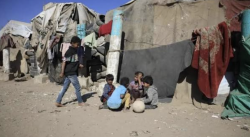
The exchange also touched on Yemen’s humanitarian situation. The war that began in 2015 has left the country dependent on one of the largest relief operations in the world. United Nations agencies have described well over half the population as needing some form of assistance, with millions displaced from their homes and recurrent outbreaks of cholera and measles compounding the strain on a health system badly degraded by the fighting.
Egypt has consistently advocated a negotiated settlement to the Yemeni conflict rather than a military resolution, and has used its position within the Arab League to press that case. For al-Zouba, keeping Cairo engaged sits alongside her government’s relationships with Saudi Arabia and the United Arab Emirates as a core element of Yemen’s external strategy, particularly as the maritime security file draws in states far beyond the immediate region.
The call was one of several al-Zouba made over the same weekend as she opened contacts with governments along the Red Sea. She also spoke by telephone with Djibouti’s foreign minister, Abdoulkader Houssein Omar, about cooperation among the states bordering the waterway, an approach that treats the security of the corridor as a shared regional responsibility rather than a purely Yemeni problem.
Both ministers agreed to maintain coordination on issues of mutual concern and to continue consultations on regional stability and the protection of international navigation, according to the readouts. For al-Zouba, the call forms part of an early round of contacts with Arab and regional counterparts intended to establish her authority in the post and to keep maritime security at the centre of Yemen’s diplomacy.
About the Author