Yemen’s Presidential Leadership Council says Fajr al-Yemen offensive will continue
 Yemen Herald News
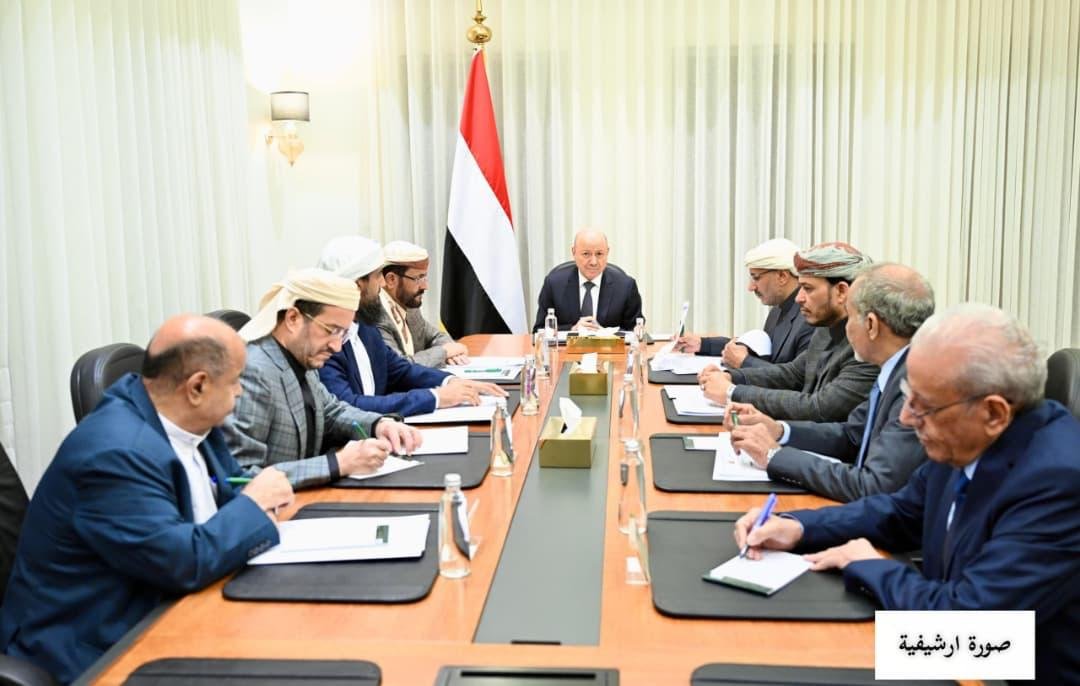
ADEN, Yemen — Yemen’s Presidential Leadership Council said it will continue its Fajr al-Yemen military operation until all its objectives are achieved, the state news agency Saba reported.
The council met under its chairman, President Rashad Mohammed al-Alimi, with all members present, according to the agency.
Saba published the account on Nov. 2. It did not give a separate date for the meeting.
The council said the operation would run until it had ended what it called the coup, restored state institutions and extended government authority across the country.
That account of the meeting rests on Saba, the government’s own news agency, and the characterisations in it are the council’s own. No independent confirmation of the meeting or its conclusions has been published.
The council said it reviewed military reports on the operation’s progress.
It said those reports showed advances on fronts in al-Jawf, Marib and along the western coast. Saba gave no specifics for any of the three.
Yemen Herald has not confirmed any of those advances.
The Houthis dispute the account. The group says it has thwarted government advances in al-Jawf and Marib, according to Al Jazeera.
Territorial claims in Yemen are routinely contested by the opposing side, and neither party’s battlefield reporting is independently verified.
The council also cited what it called the resilience of government forces in Taiz.
It praised the armed forces, the security forces and the popular resistance.
The council thanked Saudi Arabia for what it described as continued military, humanitarian and development support.
Al Jazeera reported that the operation is backed by Saudi Arabia, and that its stated aim is to retake territory held by the Houthis, including the capital, Sanaa.
The Houthis have held Sanaa since 2014.
The council said the families of soldiers who were killed or injured should be supported, and that the wounded should receive medical care.
It called for displaced people to be given access to food, water, medicine and shelter.
The council urged people living in Houthi-controlled areas not to allow their children to be recruited, and to refuse cooperation with the group’s military activities.
It said a safe return remained possible for those who laid down their arms and stopped fighting alongside the Houthis.
Saba did not report any decision, appointment or decree issued at the meeting.
The Presidential Leadership Council was formed in April 2022, when former president Abed Rabbo Mansour Hadi transferred his powers to it.
It has eight members and is chaired by al-Alimi. Aden has served as its seat.
The council is the executive authority of the internationally recognised government, which the United Nations and most states recognise as Yemen’s government.
Fighting has widened across several fronts in recent weeks.
Al Jazeera reported that fighting was active in Lahj, Taiz, al-Jawf and Marib. It reported that Houthi forces took territory along the Red Sea coast from government forces in September.
Al-Alimi announced the operation on Oct. 4, according to the Long War Journal, a publication of the Foundation for Defense of Democracies.
He said it was launched to restore state institutions, take Sanaa and end the Houthi coup, the publication reported, citing a post by the president.
The Southern Giants Brigades and the National Shield Forces are among the groups taking part. Both are anti-Houthi formations affiliated with the Yemeni armed forces.
Government-aligned forces claimed control of the Bab al-Mandab strait on Oct. 5.
The Southern Giants Brigades said they took Dhubab Airport, cutting a supply line to the strait.
The army’s media centre said operations were also launched in Marib, on a smaller scale than those in Taiz.
The Saudi-led coalition said its naval forces struck Hodeidah governorate on Oct. 5, destroying weapons depots, explosive-boat storage and naval mines. The coalition is the only origin for that account.
The coalition said it had destroyed 324 high-value targets as of Oct. 5. That figure is its own and has not been independently checked.
A parallel claim to the port city of Mocha was disputed by Yemeni analysts, who said the government did not control the city at that point, the Long War Journal reported.
Maj. Gen. Turki al-Maliki, the spokesman for the Saudi-led coalition, said the coalition provides full operational support to Yemeni forces.
Saudi Arabia confirmed that two of its southern airports were damaged on Oct. 5.
Most battlefield claims from both sides during the operation’s opening days rested on social media posts by the parties and were not independently confirmed, according to the Long War Journal.
The European Union said on Nov. 2 that it would increase its support to the Yemeni government and to the Presidential Leadership Council.
In the same statement, the bloc said there can be no military solution to the conflict and backed a settlement led by Yemenis and mediated by the United Nations.
The humanitarian needs and response plan published for Yemen in March 2026 recorded more than 22 million people in need of assistance.
It recorded 18.3 million people facing acute food insecurity and 5.2 million internally displaced people.
It recorded more than 2.2 million children under five who were acutely malnourished, including 516,157 severe cases.
The plan sought 2.16 billion dollars to reach 12 million people.
Saba is published by the internationally recognised government from Aden. A separate outlet operating under the same name publishes from Sanaa under Houthi control.
Al-Alimi has chaired the council since its formation.
About the Author


 Adel Haddad