Yemen’s Strategic Engagement at the China-Arab Partnership Conference: A New Era of Influence
 Yemen Herald News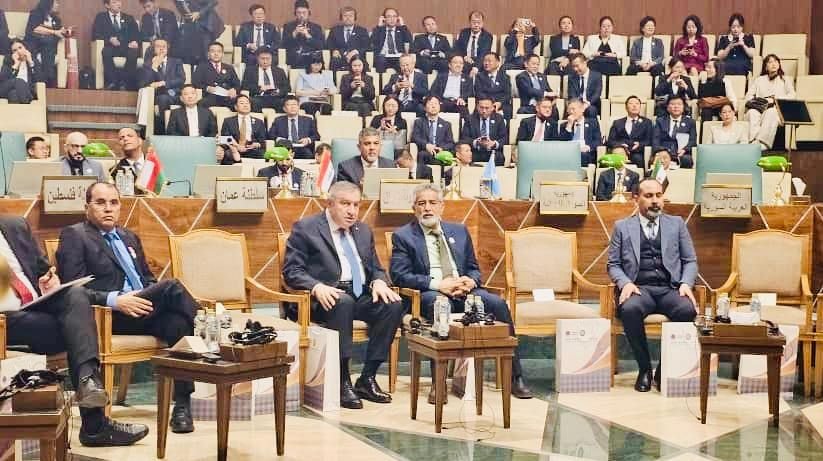
Yemen’s participation in the Media and Think Tank Forum at the China-Arab Partnership Conference marks a pivotal moment in its geopolitical strategy, signaling a shift towards greater integration with global south dynamics and redefining its role in regional politics.
The geopolitical landscape of the Middle East has been in flux, particularly with the ongoing conflict in Yemen that has drawn international attention and intervention. Yemen, long viewed through the lens of humanitarian crises, is now positioning itself as a participant in broader geopolitical dialogues. The China-Arab Partnership Conference, held in Cairo, is emblematic of a growing trend where nations from the Global South seek to assert their influence in a world increasingly dominated by Western narratives. The forum, organized by the League of Arab States in collaboration with Xinhua News Agency, serves as a platform for countries like Yemen to engage with major players in the region and beyond, particularly China, which is expanding its Belt and Road Initiative into the Arab world.
The implications of Yemen’s participation in this forum are profound. Politically, it signals a potential shift in alliances, moving away from a singular reliance on Western powers towards a more multipolar approach that includes China as a key partner. Economically, the discussions around technology and digital transformation could provide Yemen with the tools necessary to modernize its infrastructure and media landscape, which have been severely impacted by years of conflict. Furthermore, the emphasis on peace and development aligns with Yemen’s urgent need for stability, making this forum a critical step towards attracting foreign investment and support. The ability to engage with influential media and think tanks also allows Yemen to reshape its narrative on the global stage, moving from a focus on conflict to one of potential and opportunity.
Yemen’s strategic engagement at the China-Arab Partnership Conference reflects a broader trend of countries in the Global South seeking to redefine their roles in international relations. The risks associated with this shift are significant; Yemen must navigate the complexities of aligning with China while managing its existing relationships with Western nations. The potential for increased Chinese investment in Yemen’s reconstruction efforts could lead to dependency on Beijing, raising concerns about sovereignty and influence. However, if managed wisely, this engagement could empower Yemen to leverage its strategic location and resources, positioning it as a vital player in regional trade and diplomacy. The forum also highlighted the importance of media in shaping perceptions and narratives, which Yemen can utilize to its advantage in fostering a more favorable international image.
Looking ahead, Yemen’s participation in the forum could lead to several realistic scenarios. First, we may see an increase in bilateral agreements between Yemen and China, focusing on infrastructure development and technological cooperation. This could pave the way for a new economic partnership that revitalizes Yemen’s economy. Second, as Yemen strengthens its ties with China, it may also seek to mediate its relationships with other Arab nations, positioning itself as a bridge between East and West. The success of this forum could inspire similar initiatives, encouraging Yemen to take a more proactive role in regional dialogues and collaborations, ultimately enhancing its geopolitical standing.
Yemen’s active participation in the Media and Think Tank Forum at the China-Arab Partnership Conference is not merely a diplomatic gesture; it is a strategic maneuver that could redefine its future. By engaging with key players in the Global South, Yemen is taking significant steps towards rebuilding its political and economic landscape. The outcomes of this engagement will be crucial in determining whether Yemen can transform its narrative from one of conflict to one of opportunity and growth, ultimately influencing the broader geopolitical dynamics of the Middle East.
About the Author