Yemen Herald News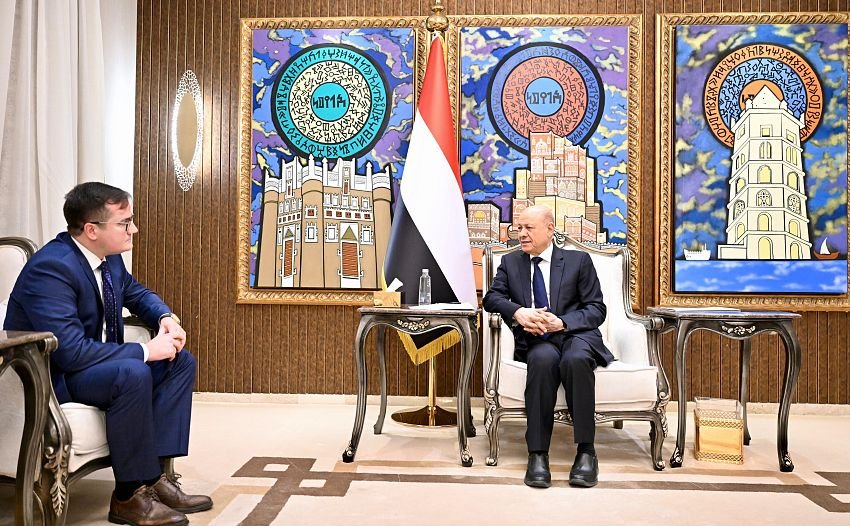
The recent praise from President Rashad al-Alimi regarding the development of Yemeni-Russian relations marks a significant geopolitical shift in the Middle East, highlighting Yemen’s strategic maneuvering amidst a complex regional landscape.
Yemen has long been a focal point of geopolitical interest, caught in the crosshairs of regional rivalries and international power plays. The ongoing conflict, which has devastated the nation since 2015, has drawn in various external actors, most notably Saudi Arabia and Iran. However, the recent warming of relations between Yemen and Russia signals a potential realignment of alliances. Historically, Russia has maintained a presence in the Middle East, often positioning itself as a counterbalance to Western influence. Yemen’s leadership, under President al-Alimi, appears to be leveraging this relationship to gain support for its national recovery and reconstruction efforts, particularly in the wake of years of war and instability.
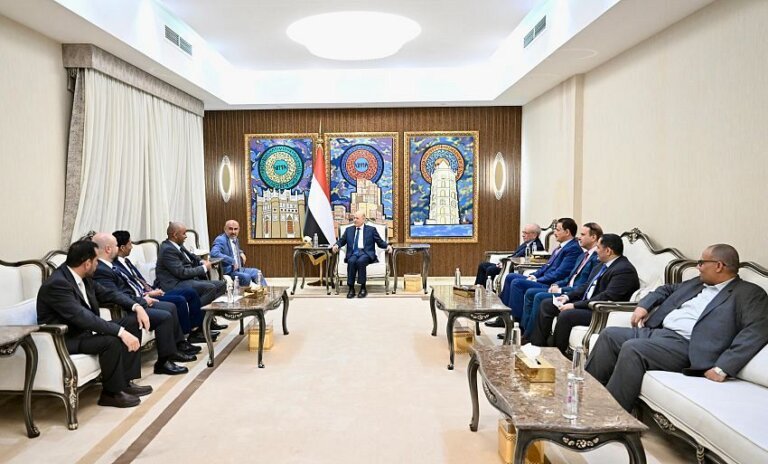
During a recent meeting with Russian Ambassador Evgeny Kudrov, President al-Alimi received a congratulatory message from President Vladimir Putin, underscoring the importance of bilateral relations. This meeting was not merely ceremonial; it was a strategic dialogue aimed at enhancing cooperation across various sectors. Al-Alimi’s emphasis on Russia’s role in supporting Yemen’s sovereignty and territorial integrity reflects a desire for deeper engagement, particularly in the realms of energy, infrastructure, and education. The discussions also touched on the need for Russia’s involvement in Yemen’s reconstruction phase, indicating a clear intent to diversify Yemen’s international partnerships beyond traditional allies.
The implications of this burgeoning relationship are profound. Politically, Yemen’s alignment with Russia could provide a counterweight to Saudi influence, which has dominated Yemeni politics for decades. Economically, Russian investment in Yemen’s energy and infrastructure sectors could catalyze much-needed development, particularly as the country seeks to rebuild after years of conflict. Security-wise, a stronger Yemeni-Russian partnership may alter the dynamics of the region, potentially complicating Saudi Arabia’s strategic calculations. As Yemen seeks to stabilize and recover, support from Russia could be pivotal in fostering a more balanced power structure in the region.
From a strategic standpoint, Yemen’s pivot towards Russia is a calculated move that reflects a broader trend of nations seeking to diversify their alliances in an increasingly multipolar world. The Russian Federation, with its historical ties to Yemen and its current geopolitical ambitions, stands to gain from a closer relationship. This partnership could provide Russia with a foothold in the Arabian Peninsula, enhancing its influence in a region traditionally dominated by Western powers. However, this shift also carries risks; Yemen must navigate the complexities of its relationship with both Russia and its Gulf neighbors, particularly Saudi Arabia, which may view this development with suspicion. The potential for increased Russian involvement in Yemen could lead to heightened tensions in an already volatile region.
Looking ahead, several scenarios could unfold as Yemen continues to strengthen its ties with Russia. One possibility is an influx of Russian investment and expertise in key sectors, which could accelerate Yemen’s recovery and development. This would likely require careful management of relations with Saudi Arabia and other Gulf states, who may feel threatened by a stronger Russian presence. Alternatively, if Yemen’s alignment with Russia leads to increased tensions with its traditional allies, it could exacerbate existing conflicts and complicate the peace process. The coming months will be critical as Yemen navigates these complex dynamics, balancing its aspirations for recovery with the realities of regional geopolitics.
In conclusion, President al-Alimi’s recent remarks on Yemeni-Russian relations signify a pivotal moment in Yemen’s geopolitical strategy. As the country seeks to rebuild and stabilize, its engagement with Russia could reshape the regional landscape, offering both opportunities and challenges. The success of this strategic pivot will depend on Yemen’s ability to manage its relationships with existing allies while forging a new path towards recovery and development. The world will be watching closely as Yemen embarks on this ambitious journey.
About the Author