Flash Floods Kill at Least Five in Yemen’s Taiz Province
 Yemen Herald News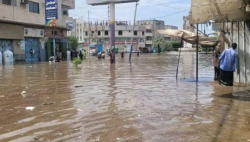
At least five people, among them one woman, were killed when flash floods tore through the Moza district in Yemen’s western province of Taiz, local authorities said. Torrential rain that officials linked to a regional low-pressure system sent fast-moving water surging through villages, leaving several residents missing as rescuers struggled against conditions that continued to worsen. The disaster offered a stark reminder of how exposed Yemen has become to extreme weather after more than a decade of war has hollowed out the country’s roads, drainage systems and flood defences.
The floodwaters struck several communities across the district, with the villages of Al-Hamli and Al-Awshaqa and the central area of Moza among the worst hit. Beyond the loss of life, the deluge caused extensive material damage. Local officials reported that close to 50 homes were left uninhabitable, while farmland, livestock and household possessions were washed away. Rescue teams were still searching for missing residents as accounts of the toll emerged, and authorities cautioned that the final count could rise if further rain arrived.
Local authorities appealed to emergency services and humanitarian organisations to intervene quickly, warning that additional rainfall could deepen the danger. In many parts of Yemen, first responders operate with minimal equipment, and communities often depend on neighbours and volunteers to carry out the initial search-and-rescue effort before outside help can reach them. The remoteness of districts such as Moza, combined with damaged roads, can delay assistance at precisely the moments when it is most urgently needed.
Seasonal flooding of this kind is not unusual in Yemen. Between spring and late summer, low-pressure systems and monsoon-influenced rains regularly unleash sudden, violent downpours over the country’s mountainous interior and coastal plains. Steep terrain funnels the water into valleys and dry riverbeds known locally as wadis, which can turn within minutes into powerful torrents. Years of conflict have weakened the drainage networks, retaining walls and early-warning systems that might otherwise blunt the impact, leaving rural districts especially vulnerable when the rains come. Scientists have also warned that a changing climate is making such extreme rainfall events more frequent and more intense across the Arabian Peninsula, adding to the pressure on communities whose ability to cope has already been eroded by war.
The floods add another layer of hardship to a country already enduring one of the world’s gravest humanitarian emergencies. Even during periods of relative calm on the battlefield, the underlying crisis has continued to deepen, leaving millions dependent on assistance to meet their most basic needs. According to the United Nations, more than 22 million people in Yemen are expected to require humanitarian aid and protection in 2026, out of a population of roughly 34 million.
The UN’s Office for the Coordination of Humanitarian Affairs reports that about 18.3 million people are acutely food insecure, with some communities sliding from crisis into emergency levels of hunger. Aid agencies have appealed for around 2.16 billion US dollars to fund this year’s response, but relief operations have repeatedly run into funding shortfalls that force cuts to food, water and medical programmes. Each new disaster stretches those resources further, widening the gap between needs and the aid available to meet them.
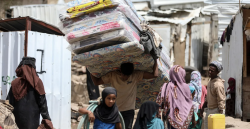
Displacement compounds the vulnerability that events like the Moza floods expose. The UN estimates that Yemen hosts some 5.2 million internally displaced people, many of them living in exposed, informal settlements with flimsy shelters that offer little protection against sudden flooding. For families who have already fled fighting, the loss of a tent or a modest home to floodwater can mean being uprooted a second or third time, often with nothing left to salvage. Temporary shelters are quickly overwhelmed by mud and water, and replacing lost belongings is often impossible for households that have already exhausted their savings.
The public-health risks are equally acute. Yemen has suffered recurring outbreaks of cholera and other waterborne diseases, and standing floodwater creates ideal conditions for their spread by contaminating wells and disrupting sanitation. Measles and malnutrition remain persistent threats, particularly among children. The health system, already stretched thin by years of war and underfunding, struggles to absorb sudden surges in patients during disasters, raising the danger that a natural hazard tips into a broader health emergency.
Mounting a coordinated response is complicated by Yemen’s fragmented control, insecurity and access restrictions. Aid convoys must often navigate multiple front lines and checkpoints, and relief workers face considerable risks in reaching affected areas. Humanitarian officials have repeatedly warned that gaps in funding and access leave populations dangerously exposed when shocks such as flooding strike, and that rebuilding basic protective infrastructure will require investment that the war has made difficult to sustain.
Taiz is one of Yemen’s most populous provinces and among those worst affected by the war, with parts of the city having endured years of siege-like conditions and shifting front lines. That combination of dense population, damaged infrastructure and rugged terrain leaves rural districts on its fringes, such as Moza, especially exposed when heavy rain arrives. Yemen has seen repeated deadly flooding in recent rainy seasons, with earlier downpours killing dozens and displacing thousands across provinces including Hodeidah, Marib and the capital, Sanaa. Aid agencies warn that recovery is slower wherever budgets are already exhausted by conflict, and that without stronger defences the country’s most fragile districts will keep paying a heavy price each time the seasonal rains return.
About the Author