Storms Displace More Than 1,370 Families From Yemeni Camps in Al-Jawf
 Yemen Herald News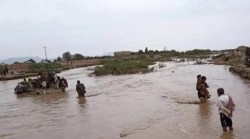
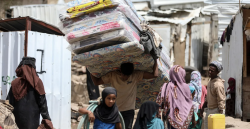
Heavy rainfall and severe storms have battered displacement camps in Yemen’s northern governorate of Al-Jawf, uprooting more than 1,370 families and deepening the misery of people who had already fled their homes because of war. The Executive Unit for the Management of Displacement Camps said the storms had caused extensive damage across the sites, leaving many families without shelter or the few possessions they had managed to keep. According to preliminary assessments cited by the unit, 508 families lost their tents and belongings entirely, while a further 862 suffered partial damage.
The disaster has forced already vulnerable households into even more precarious conditions. Displacement camps in Yemen typically consist of makeshift tents and flimsy shelters that offer little defence against wind and water, and when storms sweep through they can flatten whole sections of a site within minutes. Families who lose their shelter are often left exposed to the elements with nowhere to go, dependent on overstretched local officials and aid workers for emergency tents, blankets and clean water. Belongings soaked or swept away in a single night can represent everything a family owns, and replacing them is all but impossible for people who arrived at the camps with almost nothing.
Officials have stressed the urgency of the needs now facing the camps, particularly for the most vulnerable residents. Children, women and the elderly are considered at heightened risk when shelter, sanitation and basic healthcare are disrupted, and the sudden loss of these services can quickly translate into illness and further hardship. The unit appealed for a rapid response, warning that the window for effective intervention narrows with each passing day as conditions on the ground deteriorate.
The damage was not confined to Al-Jawf. Reports emerged of similar destruction in the governorate of Marib, which hosts the largest concentration of internally displaced people anywhere in Yemen. Many of those living in and around Marib had already endured years of displacement, and the storms compounded conditions that were precarious even before the rains arrived. The simultaneous impact across more than one province underlined how widely exposed Yemen’s displaced population has become to environmental shocks. Aid agencies note that camps in low-lying areas and along the paths of seasonal watercourses are especially prone to sudden inundation when heavy rain falls over higher ground nearby.
These weather emergencies land on a country already enduring one of the world’s most severe humanitarian crises. More than a decade of conflict between the internationally recognised government and the Houthi movement has shattered infrastructure, displaced millions and left the economy in ruins. The fighting has repeatedly interrupted the delivery of aid and destroyed the roads, drainage and services that might otherwise help communities withstand natural disasters, leaving the population unusually vulnerable when storms strike.
United Nations agencies estimate that more than 22 million Yemenis will need humanitarian assistance and protection during 2026, with over 18 million people acutely food insecure and more than five million displaced within the country’s borders. The scale of need has consistently outpaced the funding available, and aid organisations have warned that shortfalls force painful cuts to food, water and medical programmes even as fresh emergencies emerge. Each new shock, whether a flood or a fresh bout of fighting, stretches an already threadbare response still thinner.
Public-health risks loom large in the aftermath of flooding. Standing water contaminates wells, overwhelms latrines and creates breeding grounds for disease, and Yemen has suffered recurring outbreaks of cholera and other waterborne illnesses in recent years. Measles and acute malnutrition remain persistent dangers, especially for young children in crowded camps. With the health system already weakened by years of war and chronic underfunding, aid workers fear that a weather disaster could rapidly evolve into a wider outbreak if sanitation and clean water are not restored quickly.
Local authorities and humanitarian organisations have been urged to move fast, but their capacity is limited. First responders in many areas operate with minimal equipment, and reaching remote or contested locations can be slow and dangerous. Aid convoys must often navigate front lines and checkpoints, and relief workers face real risks in delivering assistance. These access constraints, combined with funding gaps, mean that help does not always arrive in time for families whose situation can turn critical within hours of a storm.
Beyond the immediate emergency, officials and aid agencies point to the need for longer-term measures to break the cycle of vulnerability. Strengthening shelters, improving drainage and site planning, and investing in early-warning systems could reduce the toll of future storms, while more resilient water and sanitation services would blunt the health risks that follow flooding. Such measures, however, require sustained funding and a degree of stability that the ongoing conflict has made difficult to achieve.
Aid workers describe the increasing frequency of storms and flooding as a troubling new reality for Yemen, one that intersects with the man-made crisis to multiply the dangers facing displaced families. For the more than 1,370 families uprooted in Al-Jawf, and for the many others affected in Marib, the priority now is immediate relief: shelter, clean water and medical care before the next round of rain. Without a coordinated and adequately resourced response, aid agencies caution, the suffering will deepen and the recovery, wherever budgets are already exhausted by war, will only grow harder.
About the Author