Yemen’s PM al-Zindani Reviews the Social Development Fund’s Role in Recovery
 Yemen Herald News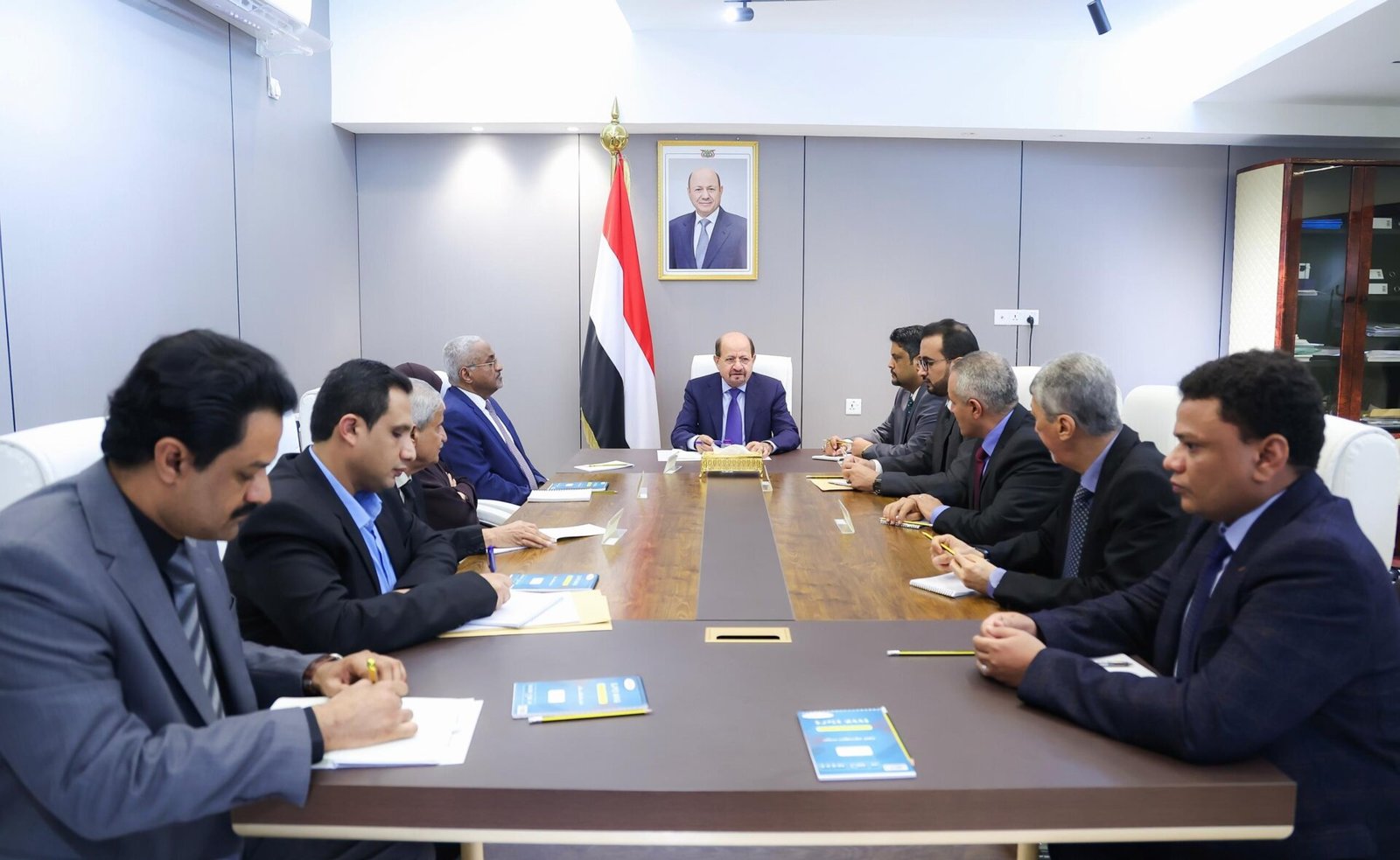
Yemen’s Prime Minister, Dr Shaya Mohsen al-Zindani, chaired a meeting in the interim capital of Aden to review the current work and future plans of the Social Development Fund, one of the country’s most established development institutions. The session, part of the government’s continuing efforts to sustain services amid a prolonged conflict, focused on how the fund can maintain its projects and adapt its priorities to the needs of communities battered by more than a decade of war.
During the meeting, Dr al-Zindani expressed appreciation for the fund’s record, describing it as among the more effective bodies delivering development projects in Yemen. He pointed to its role in tackling social and economic challenges that have deepened since fighting escalated in 2015, and stressed the importance of preserving institutions capable of implementing programmes on the ground even in the most difficult circumstances. The prime minister, who also serves as foreign minister, framed support for the fund as part of a broader commitment to keeping basic services running.
The Social Development Fund has for many years worked on community-level initiatives spanning health, education, water, small enterprise and job creation, often in partnership with local authorities and international donors. Its model of channelling resources into locally identified projects has allowed it to operate across shifting front lines, and it has retained a reputation for relative efficiency in a landscape where many institutions have been hollowed out by conflict. Reinforcing that capacity was presented at the meeting as a priority for the government’s recovery agenda. Programmes of this kind have become all the more important as public salaries have gone unpaid in many areas and families have exhausted their coping mechanisms.
The government based in Aden operates under the Presidential Leadership Council, a body formed in 2022 to unify the anti-Houthi camp and improve governance. The council has sought to mobilise resources and secure international support to ease the humanitarian situation, and it has presented a more coordinated approach to managing the crisis. Strengthening bodies such as the Social Development Fund fits within that wider strategy, which links the restoration of services to the credibility of the government itself.
The stakes are considerable. Yemen remains mired in one of the world’s gravest humanitarian emergencies, with United Nations agencies estimating that more than 22 million people will need assistance and protection in 2026. Infrastructure across much of the country has been damaged or destroyed, the economy has contracted sharply, and millions have been displaced from their homes. In that context, development projects that repair schools, restore clinics or create short-term employment can have an outsized impact on ordinary lives.
Officials argue that empowering local institutions is one of the more sustainable ways to rebuild trust between the state and a population worn down by years of hardship. Community-driven projects, tailored to the specific needs of the areas they serve, are seen as a means of delivering tangible improvements while also fostering a sense of local ownership. For a government keen to demonstrate that it can govern effectively, visible results at the community level carry political as well as practical weight.
There is also an international dimension to the emphasis on the fund. Foreign aid and investment are frequently tied to demonstrable progress from local partners, and donors tend to be more willing to commit resources where they can see programmes being implemented transparently and effectively. Successful projects can therefore have a multiplying effect, encouraging further support and helping to lay the groundwork for longer-term plans that address the underlying drivers of Yemen’s crises rather than only their symptoms.
Yemen’s strategic geography adds another layer to the calculations. The country sits alongside the Bab al-Mandab Strait, a vital corridor for global shipping and energy supplies, which keeps it firmly within the sights of international powers. Stability inside Yemen is closely bound up with the security of these waters, and development that improves living conditions and reduces grievances is often cited as an important complement to security efforts in a region where instability can quickly spread beyond national borders.
Challenges nonetheless remain formidable. Funding shortfalls have repeatedly forced humanitarian and development programmes to scale back, and access constraints, insecurity and fragmented control complicate the delivery of aid. Any plans agreed for the Social Development Fund will have to contend with these realities, and with an economic environment in which currency instability and disrupted public finances make sustained investment difficult. Officials acknowledged that reinforcing the fund is only one part of a much larger recovery effort.
Still, the government presented the meeting as a positive step. By reaffirming its commitment to a body with a track record of delivery, the leadership signalled its intention to prioritise institutions that can translate policy into concrete results for citizens. For many Yemenis, it is precisely such tangible improvements, however incremental, that offer a measure of hope amid the uncertainty, and the emphasis on local solutions may point towards a gradual, if fragile, path to recovery for a country long defined by its resilience in the face of adversity. Whether those commitments can be matched by the funding and stability required to fulfil them will help determine how much difference the fund can make in the months ahead.
About the Author