Yemen’s al-Subaihi and Speaker al-Barakani Discuss Parliament’s Role in Rebuilding State Institutions
 Yemen Herald News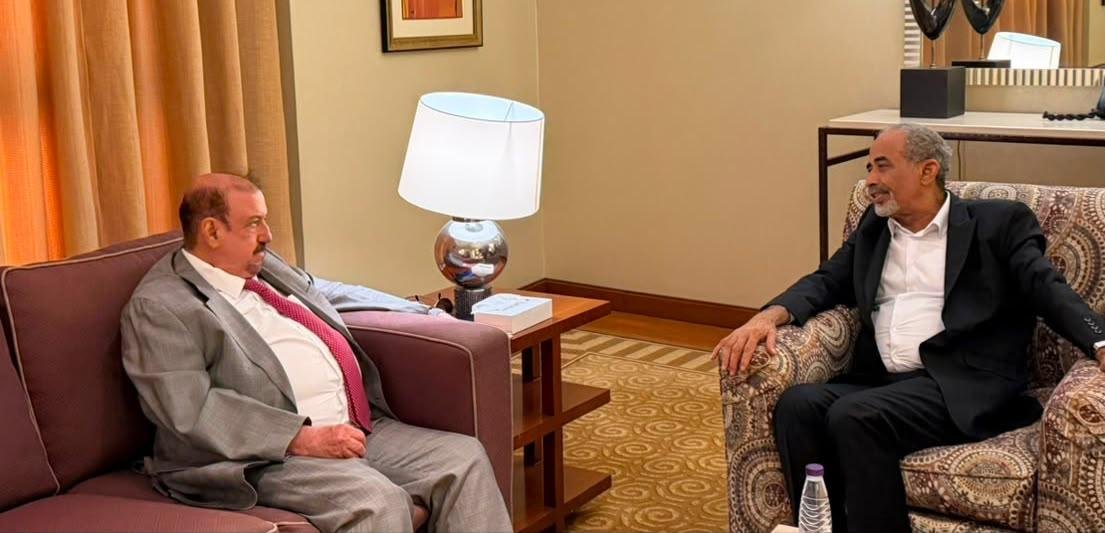
Yemen’s internationally recognized government has renewed its emphasis on the role of the legislature in rebuilding state institutions, as senior officials reviewed the country’s tangled political, economic, and security challenges. Lt. Gen. Mahmoud al-Subaihi, a member of the Presidential Leadership Council, met Sheikh Sultan al-Barakani, the Speaker of the House of Representatives, to discuss the latest developments and the part parliament can play in strengthening institutional governance. According to Yemen’s official news agency, the two men exchanged views on political, economic, and service-related matters, alongside regional developments and the obstacles that continue to confront the state.
During the meeting, al-Subaihi stressed the vital role of the House of Representatives in reinforcing institutional governance and supporting efforts to rebuild state bodies through effective legislation and parliamentary oversight. He framed a functioning legislature as a pillar of any durable recovery, arguing that lawmaking and accountability are as important to stability as security operations. Both leaders agreed that coordinated action across the executive and legislative branches would be needed to steady public services and revive an economy strained by years of war.
al-Subaihi brings a distinctive profile to that message. A career military officer, he served as defense minister under President Abdrabbuh Mansour Hadi before the Houthi seizure of the capital, was later held captive by the group for years, and was freed in a prisoner exchange in 2023. He was promoted to the rank of lieutenant general in 2024 and appointed to the Presidential Leadership Council in January 2026, giving him a prominent voice on defense and security questions within the body that leads the anti-Houthi camp. His engagement with parliament signals an attempt to knit together the military and civilian arms of the state.
al-Barakani, for his part, has presided over the House of Representatives since 2019. The chamber has operated in exceptional conditions since the Houthis took control of Sana’a in late 2014, forcing the internationally recognized institutions to relocate. Sessions of the parliament have convened in government-held cities such as Sayoun and Aden rather than the capital, and the legislature has struggled to reassert its constitutional functions amid the country’s territorial and political fragmentation. Meetings like this one are presented by officials as steps toward restoring the body’s authority.
A significant portion of the discussion, according to the council, concerned the escalating activities of the Houthi movement, which the government describes as an Iranian-backed militia. The leaders voiced concern over how the group’s posture affects security and stability across Yemen, warning that intensified military operations carry grave implications for civilians and for the basic functioning of the state. Yemeni officials have repeatedly cast the confrontation as bound up with a wider regional contest, a characterization the Houthis reject.
The humanitarian backdrop weighed heavily on the talks. United Nations agencies estimate that well over 18 million Yemenis require some form of assistance, and years of fighting have displaced millions from their homes. Recurrent outbreaks of diseases such as cholera and measles compound already harsh living conditions, while damage to essential infrastructure has left many communities without reliable access to water, electricity, and health care. Aid agencies have also warned that funding shortfalls threaten to curtail relief operations at a time of rising need. Officials argued that these pressures make effective governance and legislative action more urgent, not less, and that a working parliament could help channel scarce resources toward the communities that need them most.
Both men also examined how the legislative body could take a more proactive part in addressing those needs. By reinforcing institutional governance, they suggested, the House of Representatives could help shape policies that respond to the population’s most pressing demands and strengthen oversight of public spending. Realizing that ambition, they acknowledged, would require sustained cooperation among all state entities, as well as continued backing from the regional and international partners that sponsor the Yemeni political process.
The domestic agenda unfolds against a volatile regional picture centered on the Red Sea and the Bab al-Mandab Strait, one of the world’s most important maritime chokepoints. Months of Houthi attacks on commercial shipping have rattled global trade and drawn international naval responses, deepening the strategic stakes of the Yemeni conflict. Yemeni officials say outside involvement complicates an already fragile situation and makes the restoration of security harder to achieve, though the details of that rivalry remain contested among the parties.
The Presidential Leadership Council, formed in April 2022 to unify the government and anti-Houthi factions under a single executive body, has sought to project a coordinated front on such issues. The meeting between al-Subaihi and al-Barakani reflected that effort to align senior figures across institutions as the government tries to move from wartime improvisation toward more structured governance. Rebuilding trust in state bodies eroded by years of conflict, officials concede, will demand both immediate measures and long-term planning.
Looking ahead, the dialogue between the two leaders was presented as a modest sign of hope for closer cooperation in confronting Yemen’s difficulties. Officials tied the country’s prospects to a reduction in outside interference, a revival of lawful institutions, and continued international support for the peace process. Whether parliament can reclaim a meaningful legislative role, and whether the government can translate these consultations into tangible improvements for ordinary Yemenis, will be tested in the months ahead.
About the Author