Yemeni Council Member al-Alimi Urges British Lawmakers to Expand Support for Yemen
 Yemen Herald News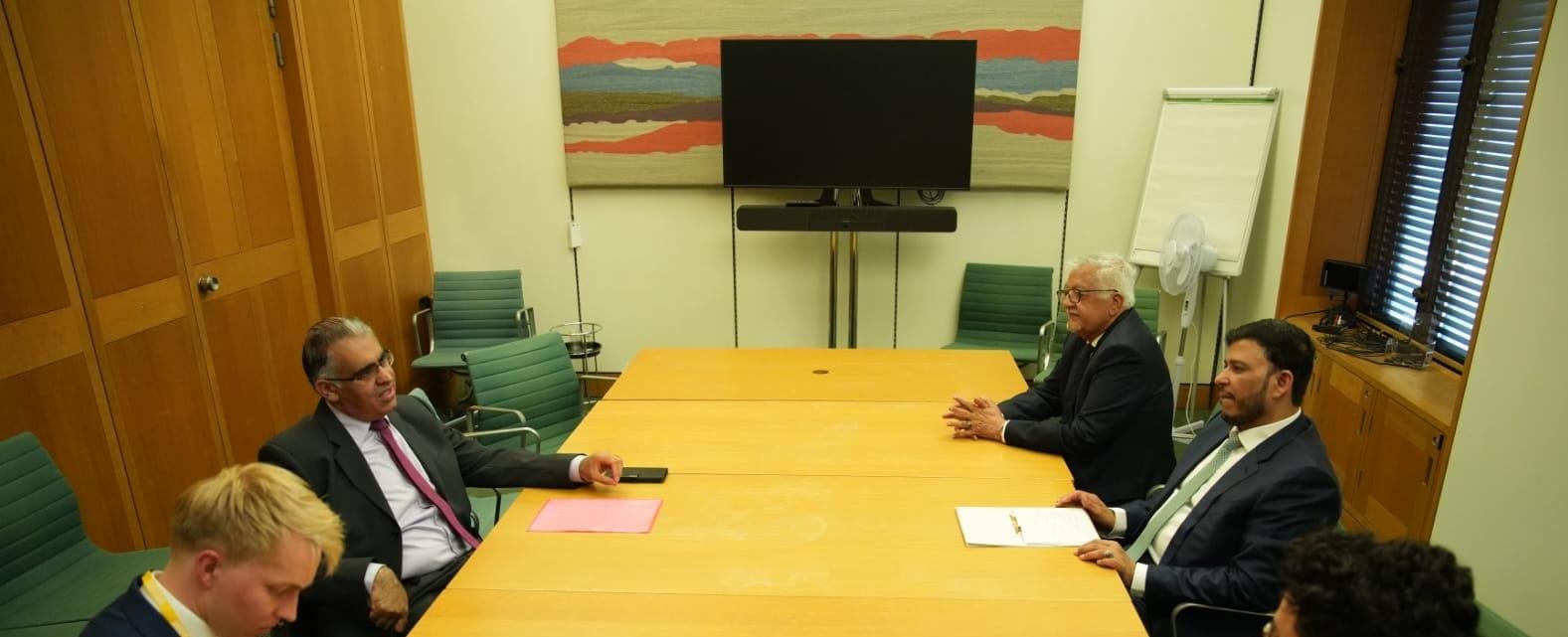
Dr. Abdullah al-Alimi Bawazeer, a member of Yemen’s Presidential Leadership Council, has used a visit to London to press British lawmakers for stronger support for the country’s internationally recognized government. In a meeting with Tahir Ali, the Labour MP who chairs the UK Parliament’s group on Yemen, al-Alimi set out the case for a more active British role in stabilizing Yemen and countering the Iran-aligned Houthi movement. The talks, held in the presence of Yemen’s ambassador to the United Kingdom, Dr. Yassin Saeed Noman, focused on efforts to rebuild state institutions that years of war have left badly weakened.
Yemen has been mired in conflict since late 2014, when Houthi forces seized the capital, Sana’a, and eventually forced the recognized government into exile. Al-Alimi told the parliamentary group that sustained backing from partners such as Britain is essential if the government is to address both the economic collapse the war has produced and the humanitarian emergency that has followed. He argued that international engagement should reach beyond emergency relief to help restore the institutions of the state itself.
The scale of Yemen’s humanitarian need remains vast. The United Nations estimates that more than 22 million people, over two-thirds of the population, will require humanitarian assistance and protection in 2026, with about 18.3 million classed as acutely food insecure. The UN also counts roughly 5.2 million people as internally displaced, many of them uprooted repeatedly by front-line fighting and economic hardship. Aid agencies have warned that funding has fallen far short of what is required, forcing cuts to food, water, and medical programs across the country.
Al-Alimi placed much of the responsibility for the crisis on the Houthis, whom he described as an Iranian-backed militia. He said the group had prolonged the war and deepened the suffering of ordinary Yemenis by obstructing peace initiatives launched by regional and international mediators. According to al-Alimi, the Houthis have treated pauses in the fighting not as openings for negotiation but as opportunities to strengthen their military capabilities, a pattern he said has made a durable settlement harder to reach. Houthi representatives have consistently rejected such characterizations, casting themselves as defenders of Yemeni sovereignty against foreign interference.
The conflict’s consequences extend well beyond Yemen’s borders. The country sits alongside the Red Sea and the Bab al-Mandab strait, one of the world’s busiest shipping corridors, and instability there carries direct implications for global trade and regional security. Since late 2023, Houthi attacks on commercial vessels have disrupted traffic through the waterway and drawn military responses from several navies, underscoring how a domestic war has become entangled with wider geopolitical currents. Al-Alimi’s appeal reflected an argument long made by Yemeni officials: that the country’s internal crisis and international policy decisions are closely linked.
Al-Alimi Bawazeer is one of the more prominent figures on the Presidential Leadership Council, the eight-member body formed in April 2022 under the chairmanship of Rashad al-Alimi to unify anti-Houthi factions and consolidate government authority. He previously served as director of the office of former president Abdrabbuh Mansur Hadi and holds degrees in medicine and in Sharia and law, including a doctorate from the University of Aden. His London engagements form part of a broader diplomatic push by the council to shore up foreign support at a moment when international attention has often been diverted to other crises.
Britain occupies a particular position in Yemen’s diplomacy. As the so-called penholder on Yemen at the United Nations Security Council, the UK leads on drafting resolutions and shaping council action, giving London a degree of influence over the international response that few other governments hold. For that reason, Yemeni officials have repeatedly sought to keep British policymakers engaged, both within government and in Parliament.
Tahir Ali, the Labour MP for Birmingham Hall Green and Moseley, chairs the all-party parliamentary group on Yemen and has been a consistent advocate for greater attention to the country’s plight. In the meeting he reaffirmed the group’s commitment to Yemen and expressed a wish to deepen communication with Yemeni leaders and support initiatives aimed at peace and stability. Such cross-party groups hold no formal power over policy, but they can raise issues in Parliament, press ministers, and help sustain political focus on a conflict that has often struggled to command headlines.
For all the diplomatic activity, the outlook for Yemen remains uncertain. Repeated rounds of talks have failed to produce a comprehensive settlement, and the positions of the main factions remain entrenched. Al-Alimi’s message to his British hosts was that robust and sustained diplomacy, rather than intermittent engagement, offers the best hope of breaking the deadlock. Without it, he suggested, the cycle of violence and humanitarian distress is likely to continue.
The council’s continuing dialogue with international allies is aimed not only at securing immediate relief but at laying the groundwork for a political solution that has eluded Yemen for a decade. Whether appeals such as al-Alimi’s translate into concrete commitments will depend on the willingness of governments and legislators abroad to keep Yemen on their agenda, and on the ability of Yemeni and international leaders alike to steer the country toward a lasting peace.
About the Author